From post-punk pioneers to the Brit-poppers, hip hop collectives and punk rockers, Manchester has long been celebrated for its music heritage.
But in recent years, the landscape for emerging artists has become tougher than ever. The rise of streaming services, the restructuring of local commercial radio, and a troubled media landscape dominated by clickbait and declining print sales have all combined to shrink the platforms that once helped some of the city’s best talent get noticed.
For music writers and storytellers, local, paid journalism jobs are increasingly hard to come by, too.
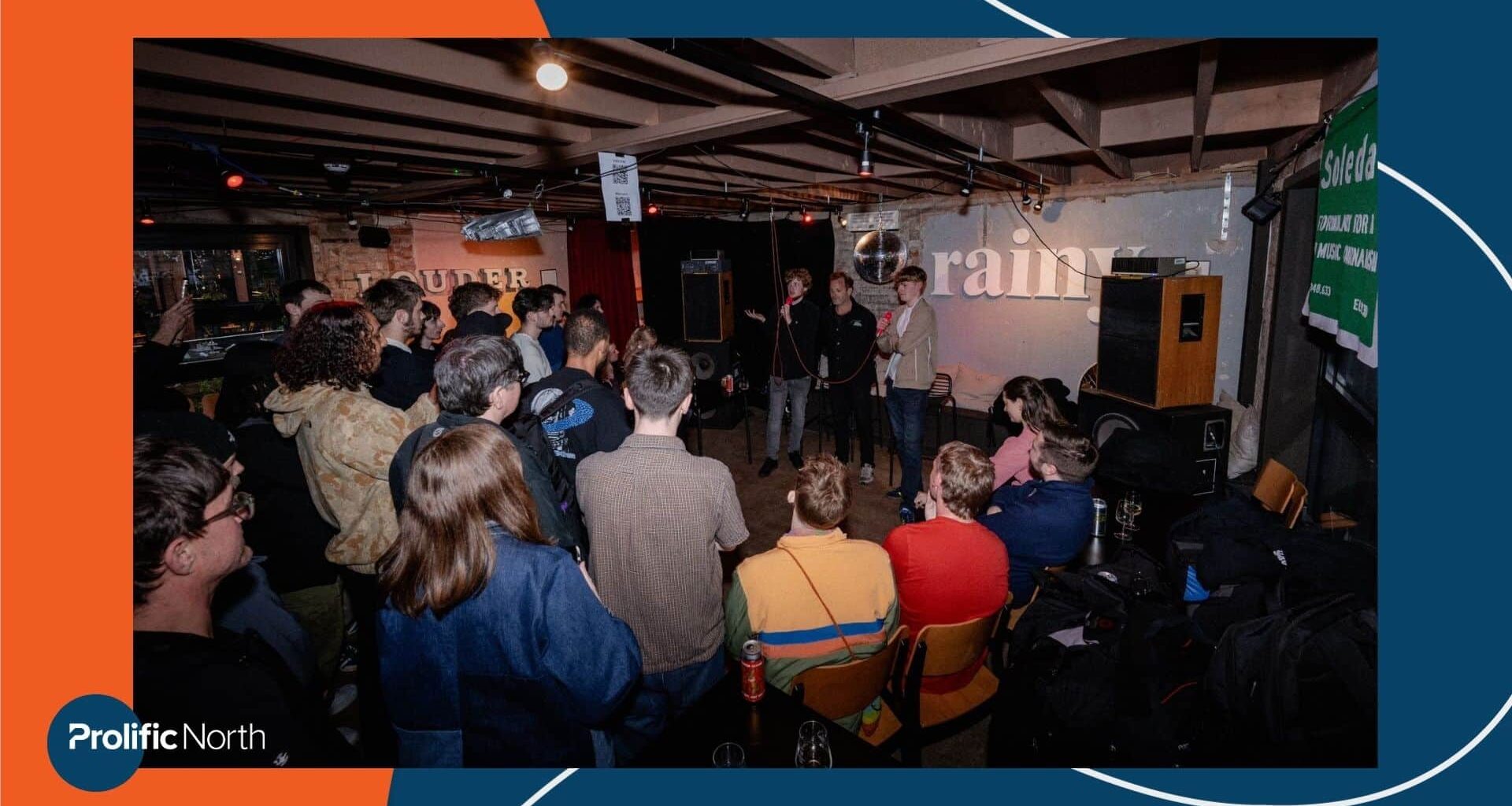
That’s the gap music media platform Soledad is still hoping to fill. Last April, Oli Wilson, founder of Beyond the Music and son of the late Factory Records boss Tony Wilson, journalist and poet James Young, plus social entrepreneur Charlie Stanley, launched the platform with a mission to pay writers, showcase new artists, and connect Manchester’s diverse music scene.
Ten months on, Soledad’s editor James Young says the platform has achieved some of its initial goals, paying new journalists to write gig reviews and interviews while acting as a “stepping stone” to help them build up their portfolios of bylines.
For emerging artists, the platform is slowly becoming a “training ground” due to the scarcity of interview opportunities elsewhere.
“There’s this weird situation at the minute in music journalism, because the music press is essentially dead,” James Young tells Prolific North.
“Top artists get all of the press and radio play, but if you’re an emerging artist, you’ve got BBC Introducing, a couple of smaller community radio stations. Aside from that, there’s no middle ground, which is what we’re trying to fill, as well as bringing people together more.
“Manchester has an amazing music scene, but it feels very fragmented. Different genres are doing different things, and it’s nice to be able to bring it all in one space.
“Even the big bands coming out of Manchester are not being written about by the local press, which is insane,” he explains. “Even The Mill. I think they do a really good job of politics, but I think their cultural stuff is lacking, especially in music.”
“People forget that journalism is a huge part of that ecosystem”
From the rise of Westside Cowboy, Dove Ellis, or emerging rappers, there’s “so much that just hasn’t been reported on” in Manchester. So what’s missing to support new artists and emerging music writers, and could the creative community do more?
“There’s a £1 levy that’s going to grassroots venues, which is great, but that’s just the start when you think about how much money the big promoters are making that could be supporting smaller artists.
“People forget that journalism is a huge part of that ecosystem as well. I don’t think that’s respected as much. You’ve got your radio pluggers, marketers, the labels, but without journalists writing about what you do, the PR is redundant, because you’ve got no outlets to do it in.
“In the North West, there were maybe five or six different commercial radio stations. Now I don’t think there is a single one left in Manchester. I think that creates a huge problem. You either are a really small artist playing pubs or you’re doing arenas. That middle ground seems to have just gone.”
Initially launching with a crowdfunding campaign last year to raise £5,000 to support the new platform, he admits they were “quite a way off” that target. But the platform has “shifted” since its launch: Soledad has built a 300-strong WhatsApp group community, rolled out its first podcast episode featuring artists and creatives, and steadily published reviews and interviews on Substack.
“As a journalist, I thought Substack was going to be our bread and butter with the features, the interviews, the exclusives, and they’ve actually performed better on Instagram. We’ve done a few really good features that I’m really proud of — unheard stories in Manchester that just haven’t been covered anywhere else, including an interview with a rapper who had a brain haemorrhage and learnt to speak again.”
For its writers, the priority is simple: having “a bit of money in the pot to pay people”.
“I’m honest with our writers. I tell them I can pay X amount, this is how much money we have in the bank account. Transparency is super important, because a lot of media organisations have students write for free, yet are making a lot of money and exploiting them.”
That honesty extends to what’s happening behind the scenes too, as he admits the team are, for now at least, not making any profit.
“My job is to help journalists use this as a stepping stone. If one of our writers gets a byline in The Guardian or makes a career out of it, that’s my job done. Likewise, seeing some of the artists we’ve interviewed grow over time, and telling people about them, that trust is really important.”
Conversations about funding are still ongoing and he says the team is “always open to external funding” via sponsorship or investment, but it has to be “right.”
Alongside supporting writers and artists, Soledad has focused on building its community to help keep Manchester’s music scene connected. The WhatsApp group, which appears to be a real hive of activity, is set to be developed into a series of different channels, offering members “exclusive access” to content.
Looking ahead as they focus on growing the platform in Manchester, he says the “blueprint” is there to replicate the same model in other music cities.
“I think it’s going to be interesting to see how it grows. If we can make it work in Manchester, which is a big if, then I think you could do the same in any other big music city in the world. It just needs the right group of people to run it, then the community almost takes care of itself.”