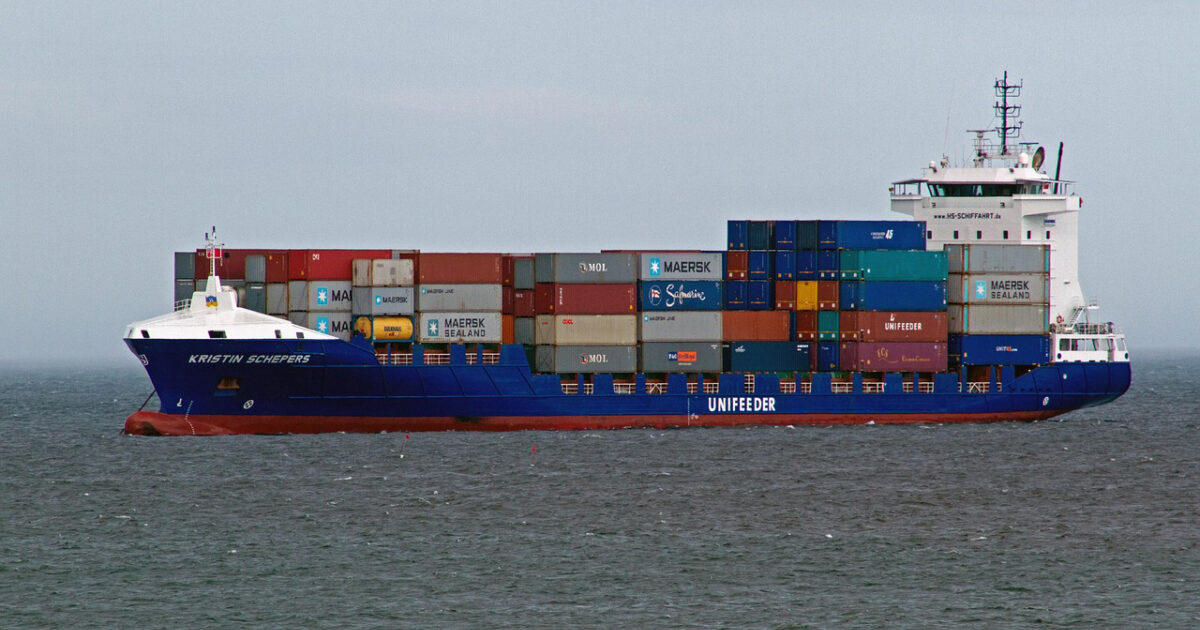
Total bunker costs for ships operating in the EU increased this month following the introduction of new EU-ETS rules. Image source: Pixabay
Total bunker costs for ships operating in the European Union (EU) increased this month following the introduction of new EU Emissions Trading System (EU-ETS) rules, Ship&Bunker wrote on 1 January – the day the legislation took effect.
According to Ship&Bunker data, at the end of 2025, owners were paying around €220 (US$257)/tonne in EU-ETS compliance costs for very low sulphur oil (VLSFO) burned on intra-EU voyages.
On 1 January, that cost increased by around 45% to US$319/tonne.
For context, the average price of VLSFO in the Europe, the Middle East and Africa (EMEA) region at the end of 2025 was US$464.50/tonne.
As part of a “phasing in” period for the new EU-ETS rules, owners had to pay for 40% of the applicable compliance costs for emissions produced in 2024, increasing to 70% in 2025, the report said.
From 1 January, owners have had to pay 100% of the compliance cost.
Other factors also needed to be considered when calculating the compliance cost, Ship&Bunker
wrote.
For example, the per-voyage compliance cost was halved if only one EU port was involved.
Emissions generated during a calendar year are ‘paid for’ by purchasing and surrendering EU allowances (EUAs), which must be done by the following September – ie calendar year 2025 submissions are paid in September 2026.
The fact that cost reduction rules apply to the year the emissions are produced, not the year they are paid, is a cause of confusion, according to the report.
For example, in September 2026, owners will calculate the compliance cost for emissions produced in 2025, paying 70% of that cost.
Following the introduction of the new rules, in September 2027 owners will have to pay 100% of the cost of the emissions produced in 2026.
In addition, this year also saw changes to the “emissions factor” used to calculate how many EUAs/tonne of bunker fuel burned would need to be surrendered.
After starting 2025 a little over €70 (US$82), the cost of an EUA had fallen to €60 (US$70) at the end of the first quarter of the year and had been rising since, Ship&Bunker wrote.
According to Ship&Bunker data, a single EUA cost around €85.02 (US$99) at the end of 2025.
Launched in 2005, the EU ETS was the world’s first carbon market and among the largest ones globally.
The system requires companies to pay for their greenhouse gas (GHG) emissions by monitoring and reporting their emissions on a yearly basis and surrendering enough allowances to fully account for their annual emissions. If these requirements are not met, heavy fines are imposed.
It covers emissions from electricity and heat generation, industrial manufacturing and the aviation sector which, taken together, account for approximately 40% of total GHG emissions in the EU. It started covering emissions from maritime transport in 2024.
The system operates in all EU countries and in Iceland, Liechtenstein and Norway. Since 2020, has also been linked to the Swiss ETS.