As with 2025, early 2026 sees AUKUS Pillar One, Australia’s plan to acquire a nuclear-powered submarine capability, back in the headlines. This time the focus is claims by a former Royal Navy admiral and former director of nuclear policy in the British Ministry of Defence about the parlous state of Britain’s nuclear submarine industrial base.
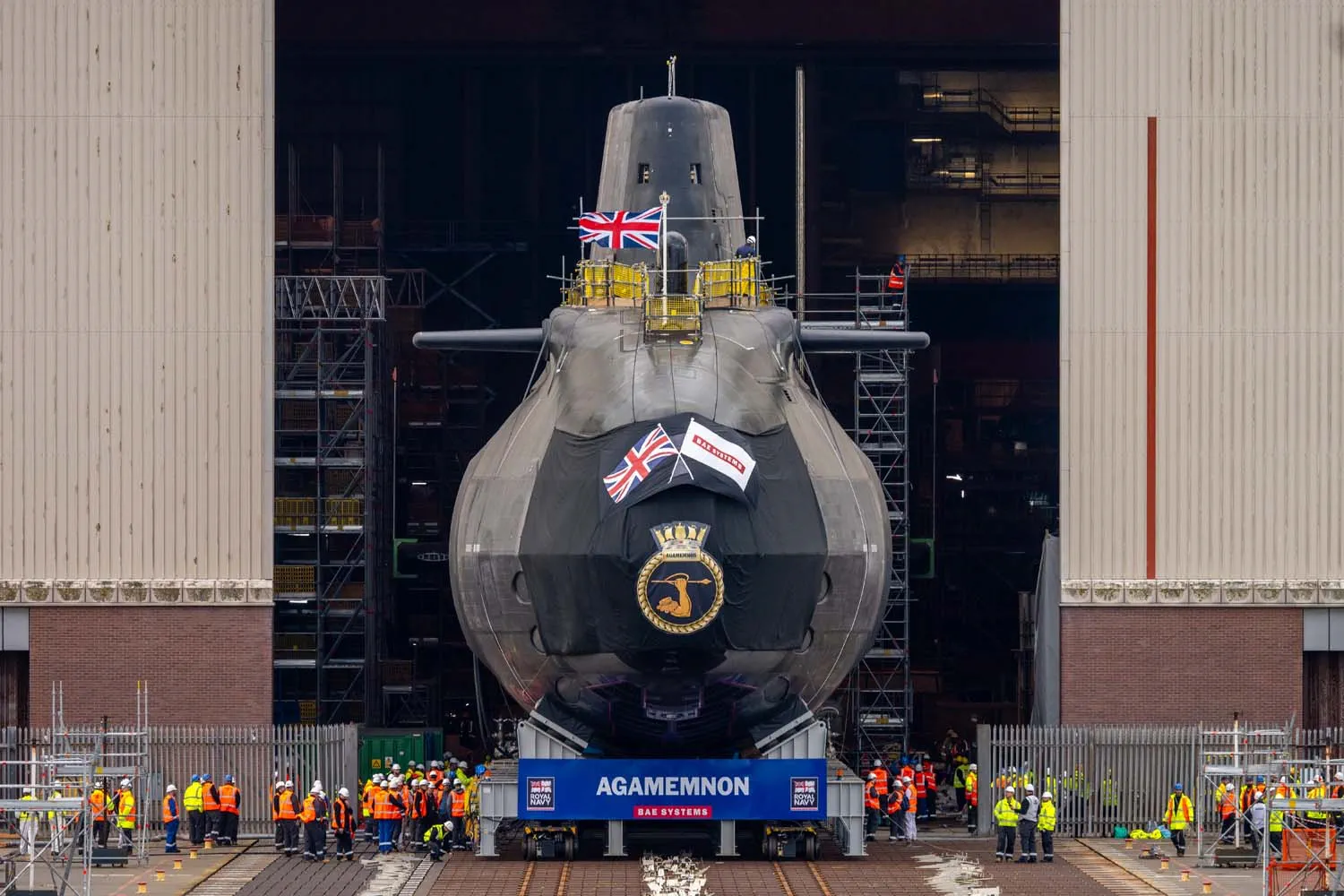
And he’s right. From the availability of Britain’s nuclear-powered attack boats and nuclear-armed ballistic missile submarines, the more than a decade it took to build the recently commissioned HMS Agamemnon, and concerns about nuclear core production, the challenges are real.
But they do not spell failure for Australia’s nuclear-powered submarine ambition under AUKUS, nor for the co-design and co-building of an AUKUS-class submarine. AUKUS helps address some of these challenges for Britain, which needs AUKUS to succeed. Despite the headlines, AUKUS is not on the rocks.
So what are Britain’s challenges? In short, they are serious and largely the product of decades of underinvestment, limited focus and a shortage of experienced personnel. Britain operates nuclear-powered attack submarines and nuclear-armed ballistic missile submarines, and the strain across this force should not be underestimated.
There were credible reports in 2025 that maintenance delays and availability issues had left Britain with no attack submarines at sea at times during the year. For an island nation dependent on maritime trade, and whose status as a nuclear power rests solely on its ballistic missile submarines, this is a significant problem.
These pressures are compounded by the need to replace the ageing ballistic missile submarine fleet with a new class due to enter service in the 2030s. While the British government insists this program is on schedule, it depends on the successful production of a new nuclear reactor at the Rolls-Royce facility that Australia is now investing in for the SSN-AUKUS submarine class. That reactor core production program has been rated red in the last three British infrastructure assessments, meaning immediate action is required to avoid significant delay.
This matters directly for AUKUS because Britain has been explicit that replacing its ballistic missile submarines is its top priority. It has no alternative means of deploying nuclear weapons.
For Australia, the lesson from Britain’s experience is straightforward. Complex defence capability requires sustained investment. Attempts to do it on the cheap inevitably fail.
So how does this affect AUKUS? First, these issues are not new. They were understood when the optimal pathway was announced in March 2023. Some critics argue Britain is not a key AUKUS partner and should remain focused on Russia in the Euro-Atlantic rather than the Indo-Pacific. That view misunderstands why Britain is invested in AUKUS.
As an island nation, Britain shares Australia’s dependence on the undersea domain for its security, particularly as Russian submarine activity near British waters increases. Claims that underwater drones can replace submarines do not withstand scrutiny. This is why countries around the world are increasing investing in submarine capability.
Britain is therefore an invested partner. AUKUS will not resolve all its submarine challenges, but it helps in two important ways. Shared design and construction of SSN-AUKUS submarines with Australia reduces costs and strengthens the supply chain. Australian investment in the British industrial base, particularly at the Rolls-Royce reactor facility, directly targets constraints in reactor core production.
Calls to abandon phase three and rely solely on US-built submarines overlook both the strain on the US industrial base and one of AUKUS’s core purposes. Expanding nuclear submarine construction capacity among allies matters. Naval wars are wars of attrition, and the ability to build remains decisive.
Since the announcement of AUKUS, Australia’s debate has too often assumed the sky is falling, or that the submarine is already sinking. In 2025 the focus was whether a returning President Donald Trump would support AUKUS, a question he settled directly in October.
The optimal pathway is exactly that. It is a multi-decade program operating in an uncertain strategic environment with three partners, and it will not always run to plan. There may be delays to phase three because of the British submarine industrial base, and it is important to be clear-eyed about how long Britain has taken to build submarines and the challenges it faces. It also remains essential that Britain builds the SSN-AUKUS-class submarine before Australia. If delays occur, Australia will need to adapt, including by considering the option of acquiring five rather than three Virginia-class submarines from the United States.
But amid the focus on what is not perfect, Australia consistently overlooks what has already been achieved. Australians are now undertaking nuclear-powered submarine maintenance at home. More than 170 Royal Australian Navy officers and sailors have trained in the US, with around 70 serving aboard Virginia-class submarines. Trilateral and bilateral treaties are in place, and the initiative has endured changes of government in all three countries.
AUKUS has performed remarkably well since its announcement. That does not mean there will not be problems, changes or delays. There will be.
We should approach these issues with a clear head and confidence in our ability to work through them. For Britain, the choice is simple. If it wants to remain a nuclear power in a deteriorating strategic environment, it must fix its submarine enterprise. AUKUS helps it do that.
This is a slightly edited version of an article that was first published in The Sydney Morning Herald.