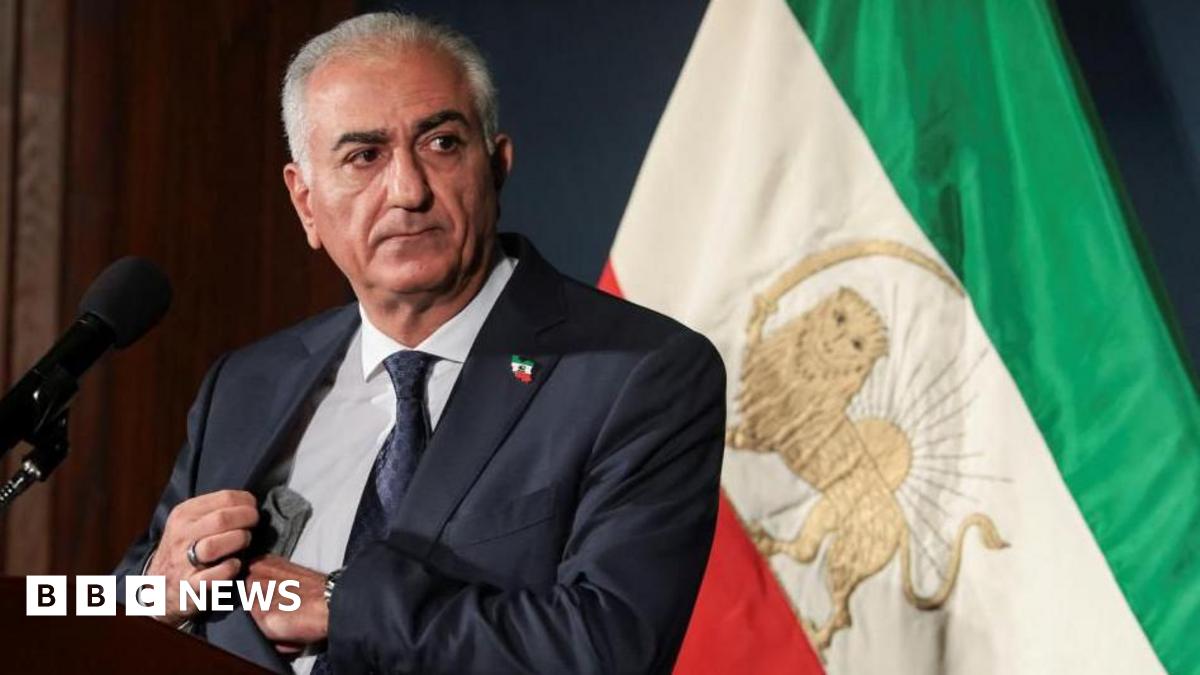
Pahlavi has emerged as a prominent figure in Iran’s fragmented opposition and has previously urged Iranians to escalate their protests.
But protesters have been met with deadly force by authorities, masked by a near total shutdown of the internet and communication services.
US President Donald Trump has warned Iran’s government against killing protesters, telling demonstrators earlier this week that “help is on its way”.
In an interview with CBS News, the BBC’s US media partner, Trump said the US would take “very strong action” against Iran if it executed protesters.
He later said he had been told “the killing has stopped” – but did not rule out military action against the country.
Iran’s parliament speaker had warned that if the US attacked, both Israel and US military and shipping centres in the region would become legitimate targets.
The US and UK have reduced the number of personnel at the Al-Udeid air base in Qatar, with one American official saying it was a “precautionary measure”.
Speaking on Friday at a news conference in Washington, Pahlavi vowed to return to Iran and laid out a plan for creating a new constitution in the country.
He claimed that sections of Iran’s security apparatus had refused to take part in the crackdown and that the Iranian authorities had brought in fighters from foreign militias to quell the protests.
Asked about future leadership in Iran, Pahlavi said: “It’s for the Iranian people to decide.”
He also said he believes he can lead and has the Iranian people’s support: “I am trying to help them liberate themselves,” he said.