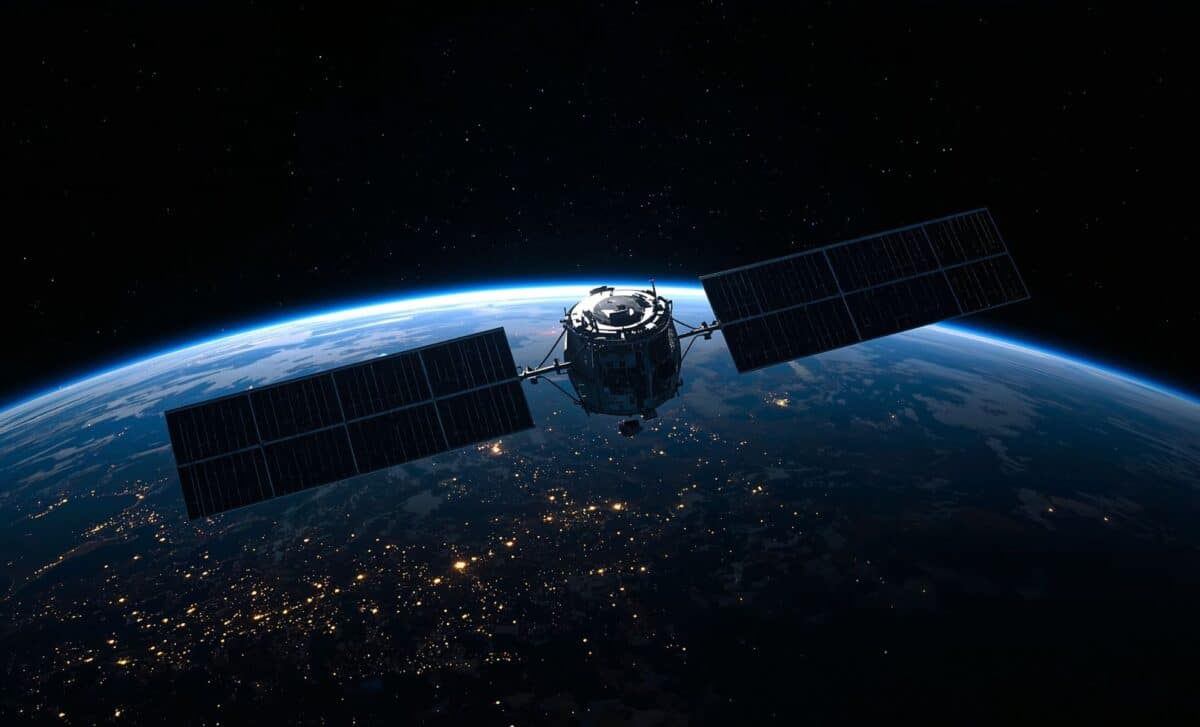
After more than ten years in orbit, the European Space Agency’s (ESA) Sentinel-2A satellite has achieved something unexpected. Originally built to observe Earth in daylight, this aging satellite has now successfully imaged scenes on the planet during night-time passes.
In a carefully planned experiment, ESA engineers activated Sentinel-2A’s optical imager as it flew over dark, night-shrouded parts of Earth. The results were both surprising and promising, even though the instrument was designed for daylight use only.
Sentinel-2A Goes Beyond Expectations
ESA’s orbital eye was launched in 2015 as the first of a series of satellites within the Copernicus program, Europe’s flagship Earth observation initiative. Equipped with a 13-band multispectral imager and a wide 290 km swath, the satellite has delivered consistent, high-resolution images for over a decade, supporting services like land and forest monitoring, agriculture, and coastal management.
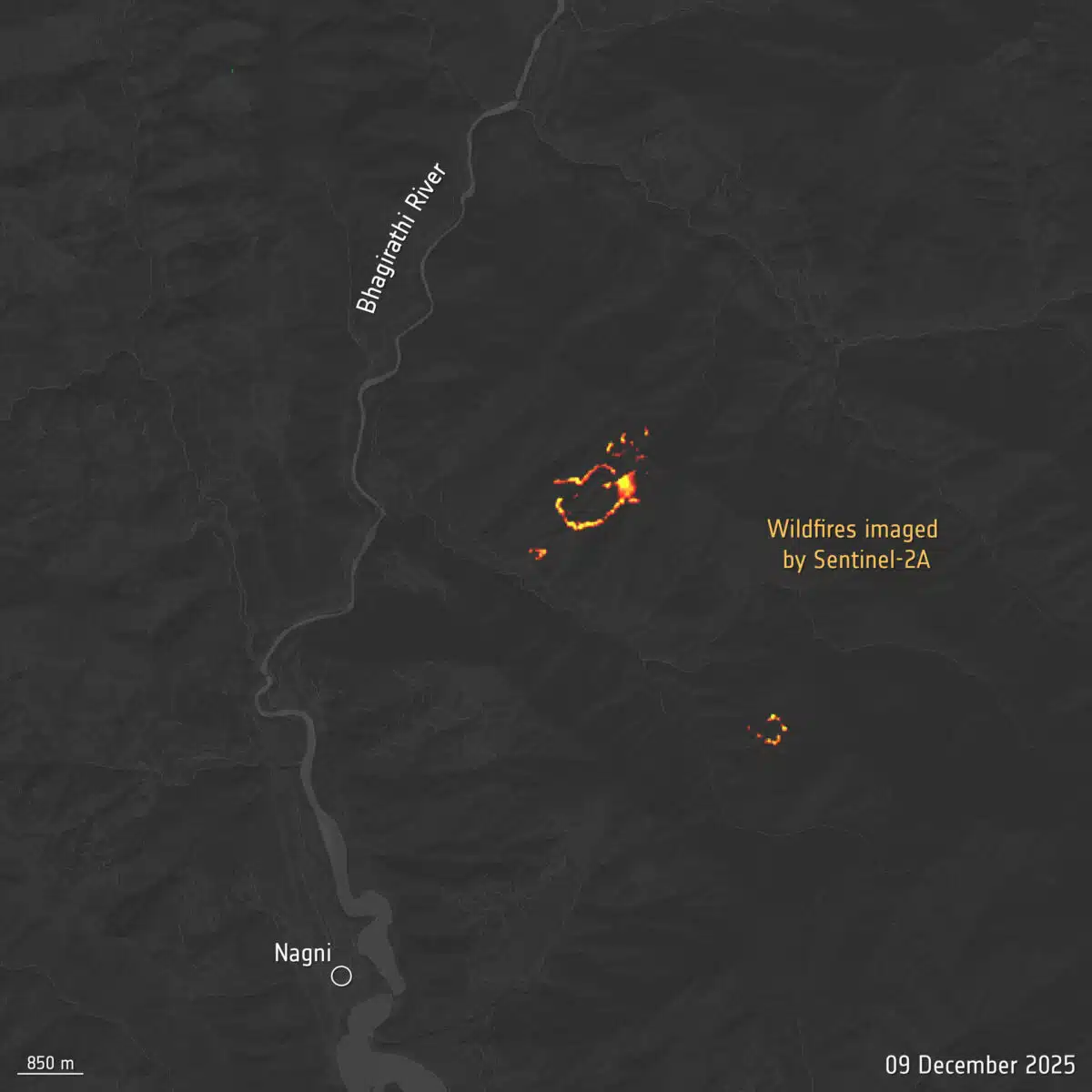 Wildfire in India captured at night. Credit: ESA
As reported by the ESA’s statement, it was never designed to collect data at night. Optical satellites like Sentinel-2 rely on sunlight reflected off the Earth’s surface to capture images. During the satellite’s orbit over the night side of the planet, its sensors are usually turned off.
But in this recent trial, ESA flipped the script. By activating the satellite during these dark passes, engineers hoped to test the limits of its capabilities, and they succeeded.
Unexpected Clarity in the Dark
The trial produced a range of images that exceeded expectations. Fishing boats off South Korea, gas flares in Iraq and Qatar, and a wildfire in India were all captured with a level of clarity that impressed mission scientists.
“We are extremely pleased with these results,” said Simon Proud, Sentinel-2 Next-Generation Mission Scientist. He explained that “not only has Sentinel-2A been able to capture images of gas flares from oil production in the Middle East, which are of course pretty bright, but also more subtle characteristics such as a wildfire in India and fishing boats off the coast of South Korea – all during the night-time.”
According to him, the trial is helping to define the technical requirements for future missions that will intentionally image Earth at night. This includes observing urban lighting, industrial activity, and maritime operations that only occur after sunset.
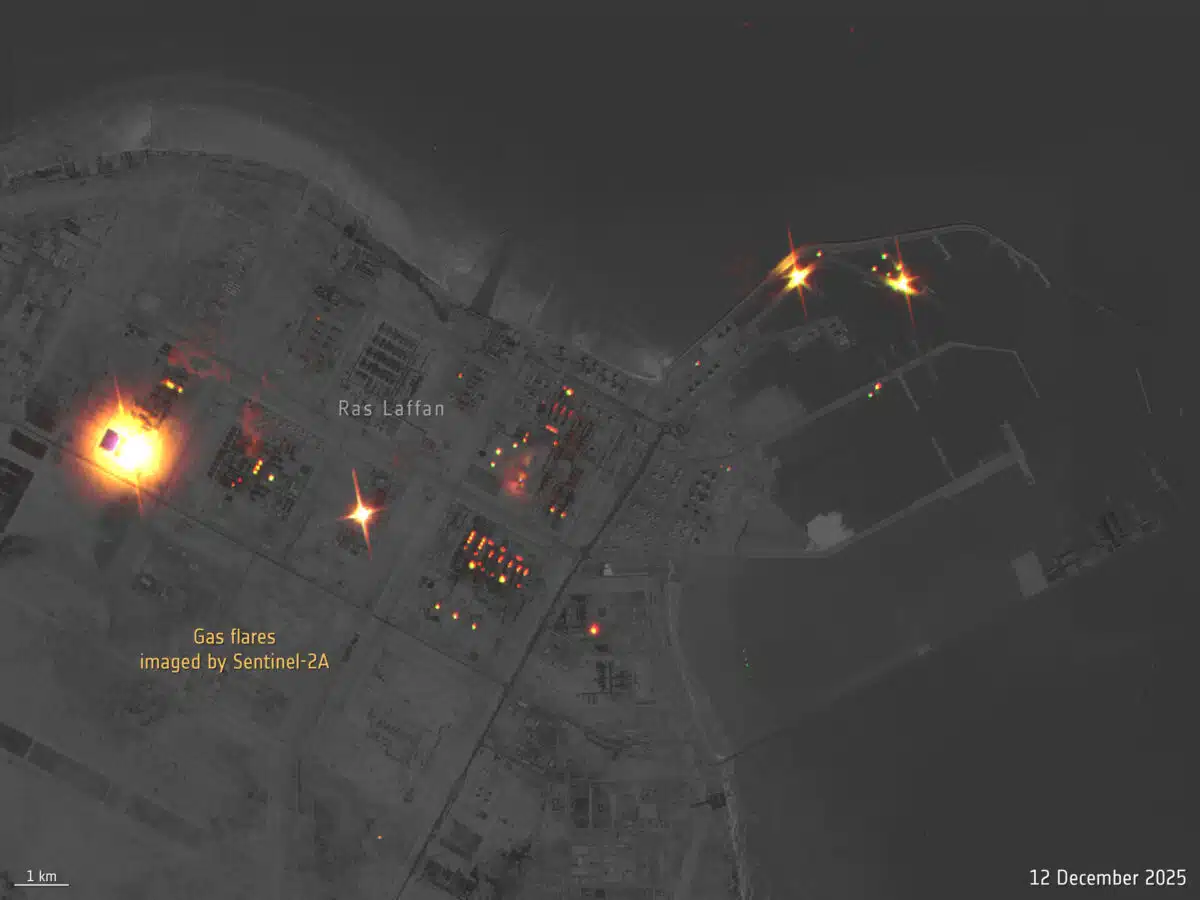 Gas flares in Ras Laffan, Qatar, captured at night by Sentinel-2A on December 12, 2025, during a low-light imaging trial. Credit: ESA
Sentinel-2 Next-Generation Mission Takes Shape
The satellite mission currently includes three satellites in orbit: Sentinel-2A, Sentinel-2B (launched in 2017), and Sentinel-2C (launched in 2024). A fourth, Sentinel-2D, is planned. These satellites typically operate 180 degrees apart for optimal coverage. As it approaches the end of its operational life, it’s being used for experimental testing that supports future systems.
“This experiment was carefully prepared by the mission teams, and it has naturally put strain on the satellite,” said Ferran Gascon, Sentinel-2 Mission Manager.