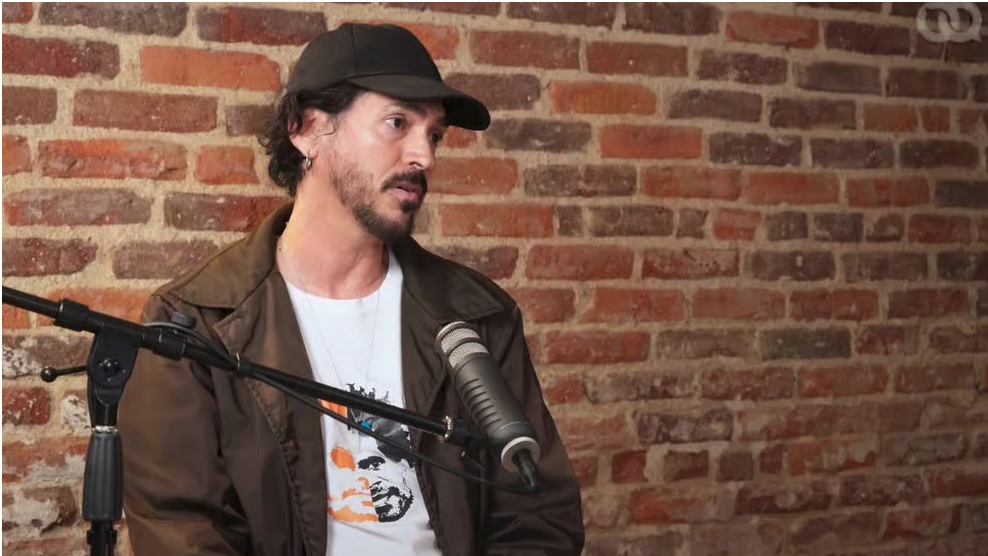
 Nonardo Perea
Nonardo Perea is an artist, writer, and audiovisual creator who has made his life experience and queer identity the core of his work—deeply self-referential and dissident. This is his way of thinking about Cuba.
By Julio Antonio Fernandez Estrada (El Toque)
How long have you been outside Cuba? What has your migratory experience been like and how has it affected your work as an artist?
Nonardo Perea: In Cuba I worked for 20 years in ceramics before dedicating myself to independent journalism at Havana Times. My departure to Spain in 2019 was forced by State Security after my participation in the 00 Havana Biennial, organized by the San Isidro Movement, to which I belonged and still belong. Before traveling to a course in Prague, I underwent several interrogations; they call them “interviews,” but they are interrogations.
You’ve done activism in Cuba as well as art. What has your experience of activism been like from here? Do you think it changes anything?
Since I arrived in Spain I’ve been doing activism, even more than in Cuba, where I spent little time in the San Isidro Movement and where my work focused more on the body and sexuality than on politics.
Since emigrating, I have built my work as a personal act of revenge against Cuba’s dictatorial system. In my audiovisual work, I denounce what happened to me in Cuba. I’m telling you, my work here has been difficult, because I’ve done it alone and it has also been marked by the loneliness of exile, which is terrible, although over time I’ve begun to overcome it.
Do you have family in Cuba?
My mother. It’s terrible that my mother is there, and the situation in Cuba now is terrible. My mother is an older person, she’s alone. I’m an only child. It’s hard.
And obviously you haven’t been able to return to Cuba.
I can’t go back. I am an asylum seeker here in Spain. I also don’t want to return. As I said, in Cuba I had a very hard time since childhood because of my homosexuality. Being homosexual is already a problem in Cuba, although I am privileged because I am not Black; if I were Black it would be worse.
As an artist I’ve also been somewhat made invisible—because I’m gay, because I didn’t go to an art school.
Publishing in Cuba is difficult; my first book at the Extramuros publishing house took ten years to see the light of day. I had to win awards like the Franz Kafka in Prague in order to be recognized. Here in Spain I haven’t published because I don’t have the mental peace for it; my priority is earning money for rent, since art doesn’t allow me to make a living.
Migrating is not a party in any context. For example, I left Cuba at 46. To leave Cuba at 46 means having lived your entire life there, and leaving your whole story there, leaving your pain there too. Have you felt that you are free here or not?
I also left at 46. They throw you into the jungle and it’s “figure it out however you can.” I remember I suffered panic attacks in the metro and I still have insomnia. And exile shattered my life: I left my mother alone and lost an eight-year relationship. Although I do feel free as a non-binary gay person. I do miss a certain familiarity, for example, from the solar (tenement) where I lived.
I’m glad that you feel somewhat freer here, but it also saddens me that you’re not entirely free. For me it has truly been a pleasure to meet you. I didn’t have the pleasure of knowing about you in person, I had only heard your name, and now what I need is to see your work.
Recently, I released two films on my Instagram: one about my arrival in Spain (with Yanelis Núñez) and another about exile.
Before I go, I’d like to recall that in Cuba Luis Manuel Otero Alcantara and Maykel Osorbo, two artists I know, are in prison. There are also many other political prisoners, women and men, whom I wish were free, and I want the dictatorship to fall.
First published in Spanish by El Toque and translated and posted in English by Havana Times.
Read more from Cuba here on Havana Times.