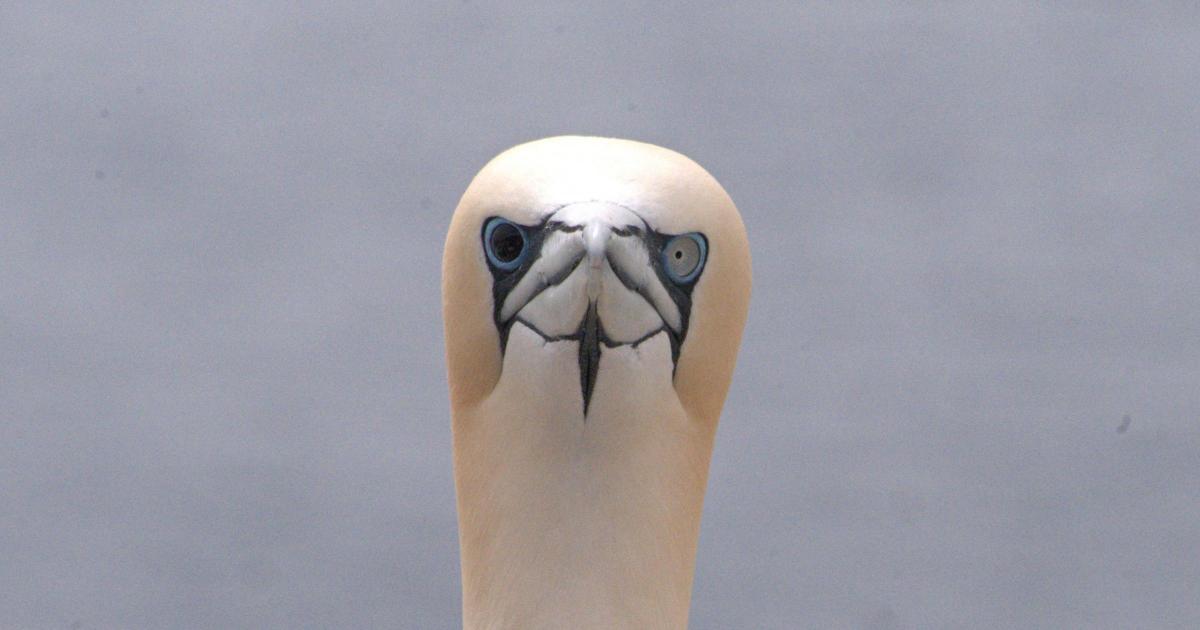
A petition created by wildlife photographer, Rachel Bigsby, calling for its end is now the most signed petition in nearly two decades. It is also currently one of the most signed petition in the Scottish Parliament’s history, only beaten by petitions to update the cancer strategy in Scotland (268,738 in 2007), return control of the fishing industry to Scotland (16,000 in 2004), stop the repeal of clause 28 (120,000 in 2000) and support significant reductions in class sizes (78,790 in 2004).
Protests against the hunt have also been staged in recent weeks. On Saturday, January 10, a group of over sixty campaigners gathered outside the Scottish Parliament in support of the petition, in a protest organised by Protect the Wild. This followed a previous march in Inverness on New Year’s Eve.
The petition hearing will take place on January 21.
The petition, PE2202: Stop the Guga Hunt, calls on the Scottish Parliament to urge the Scottish Government to amend Section 16 of the Wildlife and Countryside Act 1981 to remove the power to grant licences for taking gannets on Sula Sgeir. It describes the practice as ‘abhorrent’.
Gannets are a protected wild bird, but the Guga hunt is able to take place because NatureScot can issue a specific licence under Section 16 of the Wildlife and Countryside Act 1981 (as amended), allowing the taking/killing of gannets on Sula Sgeir under defined conditions. In 2025, NatureScot granted a licence covering up to 500 birds.
Read more:
Wildlife photographer Rachel Bigsby, who launched the petition, said: “The public response to this petition has shown that people are deeply uncomfortable with this contradiction. We can acknowledge the role the Guga hunt once played without continuing it indefinitely. These birds have sustained island communities for centuries. Now, at a time when they are under unprecedented pressure, they need our protection. I believe we owe them that much.”
“I set up this petition,” she said, “because I have spent more than a decade documenting northern gannets across Scotland and Shetland, and I have seen both the beauty of their lives and the fragility of their future. They are long-lived birds that form lifelong partnerships and raise just one chick a year with extraordinary devotion.
“Since 2022, highly pathogenic avian influenza has devastated gannet colonies, with up to 60 per cent of some populations lost in a single season. The effects are still painfully visible; broken pair bonds, failed nests, and colonies struggling to stabilise.”
End the Guga Hunt march in Inverness, 31/12/2025 (Image: Marcus Emmerson)
Protect the Wild founder Rob Pownall said: “The Guga hunt is indefensible in a country that claims to value nature and animal welfare. This is not ‘heritage’ that Scotland should be licensing in 2026. We are calling for Section 16 to be amended so there is no longer any power to grant licences for the taking of gannets on Sula Sgeir, and for the Guga hunt to end once and for all.”
NatureScot Director, Robbie Kernahan said: “We understand there are very strong feelings about the guga hunt, and that some people will disagree with it taking place. The cultural significance of the hunt is recognised in law under the Wildlife and Countryside Act. This is why a licence exists for the activity. To be clear, our role is to implement legislation in a balanced and reasonable way. We must assess any application against the licensing tests set out under the legislation, and crucially whether the guga hunt can take place with the long-term Sula Sgeir gannet population remaining stable.
“2025 was the first year we received a licence application from the Men of Ness since 2021. We carefully assessed the application and significantly reduced the number of birds that could be taken from 2,000 to 500 in 2025. This figure was based on scientific evidence which showed the Sula Sgeir gannet population would remain viable in the long-term with that limit. This was based on the most recent survey data collected from Sula Sgeir in 2024, post-bird flu. A total of 485 birds were taken at the 2025 hunt.
End the Guga Hunt march in Inverness, 31/12/2025 (Image: Marcus Emmerson)
NatureScot has stressed that it is a condition of the licence that birds should be killed “humanely”. What this meant last year, according to an FOI obtained by the campaigners, was that the birds were taken from their nests “with a rod and swiftly killed with a single blow to the head, in full compliance with the quota and requirements set by NatureScot”.
Writing in The Herald this week, the poet Donald S Murray, defended the hunt, and the practice of eating guga, which he said historically had been important since “fishing was always a dangerous activity” off Lewis. He said: “People should never lose the right to draw upon the benefits of their own surroundings.”