
EXCLUSIVE: Police and prosecutors continued criminalising sexually exploited children under prostitution laws, including girls who could not legally consent to sex, years after official guidance said they should consider them victims
09:13, 17 Jan 2026Updated 09:25, 17 Jan 2026

Data obtained by MyLondon shows the worst offenders for criminalising sexually exploited children(Image: Getty Images/Flourish)
A girl as young as 12 was hauled before a London court five years after police were told to treat sexually exploited kids as victims rather than criminals. Despite official guidance issued in 2000 to protect children, records obtained by MyLondon through FOI laws show police forces, including the Met Police, continued prosecuting girls who could not legally consent to sex for another decade.
Reacting to MyLondon’s investigation, End Violence Against Women Coalition (EVAW) director Andrea Simon is calling on the Government to go beyond pardoning convicted children by deleting their records too. Simon, who will formally begin her role of London’s Independent Victims’ Commissioner in March, said it was “scandalous” that so many children were prosecuted.
Data shows that in 2005, an unnamed girl aged between 12 and 14 was convicted of ‘persistently loitering or soliciting for the purposes of prostitution’, a summary offence under the Street Offences Act 1959. The archaic law was only amended by the Serious Crime Act 2015, decriminalising under 18s who are paid for sex by recognising them as victims of grooming and abuse.

End Violence Against Women director Andrea Simon will takeover as London’s Victims’ Commissioner(Image: EVAW)
When the girl was convicted in 2005, specific offences of paying for the sexual services of a child and causing or inciting child exploitation had already been in force for two years (under the 2003 Sexual Offences Act). It had also been five years since the Department of Health guidance, directed at police and social services, said children should primarily be treated as abuse victims.
Were you criminalised while being sexually exploited in London in the 1990s and 2000s? If you would like to share your experience, please email callum.cuddeford@reachplc.com.
Hover over the police force areas to see the number of convictions
Though the guidance, published in May 2000 and signed by current Minister for Women and Equalities Jacqui Smith, called for change, it also said criminal action could be taken as a last resort as “it would be wrong to say that a boy or girl under 18 never freely chooses to continue to solicit, loiter or importune in a public place for the purposes of prostitution”, leaving the door open for discretionary prosecutions.
When asked, the Crown Prosecution Service (CPS) did not say which Crown Prosecutor signed off the decision to charge the young girl, explaining the CPS no longer holds records of the cases in line with its information retention policy. The Met Police also stressed that FOI results may reflect higher demand in London due to its much larger population.
Hover over the police force areas to see the number of convictions
Data received by MyLondon from the Ministry of Justice (MoJ) shows hundreds of sexually exploited children a year, across England and Wales, were criminalised throughout the 1990s, at a time when charities like Barnardo’s and the Children’s Society were blowing the whistle on the scandal of ‘child prostitution’ – a term which has since gone out of use in law and by professionals.
Thanks to those campaigns and the new guidance, there was a sharp fall in the number of prosecutions. But the data shows children continued to be criminalised. In London, between 2000 and 2005, there were five prosecutions by the UK’s largest police force – four involving 15 to 17-year-olds girls and one involving a girl aged 12 to 14. The last prosecution in the 2000s was in Wiltshire in 2008.
MyLondon analysis of publicly available conviction data for 2010 to 2016 also shows there was a successful prosecution of a girl aged 15 to 17 in Essex in 2010, and an unsuccessful prosecution in 2011, also in Essex, at the time when Prime Minister Sir Keir Starmer was Director of Public Prosecutions.

Prime Minister Keir Starmer was Director of Public Prosecutions from 2008 to 2013(Image: Suzanne Plunkett – WPA Pool/Getty Images)
MyLondon filed an FOI with the MoJ on September 6 last year, but the Government department took three months to respond, exceeding the 20 working day limit without any explanation. In that time, on November 4, Safeguarding and Violence Against Women and Girls Minister Jess Phillips announced criminalised victims will be automatically pardoned once the Crime and Policing Bill (currently with the House of Lords) is given Royal Assent.
In last year’s announcement, the Home Office acknowledged “the true criminals — the adults who exploited them — escaped prosecution, while the victims were left with the stain of permanent criminal records”. Phillips said she would “not allow failures of the past to define the futures of those who were let down by the system in so many ways”.
Opponents to decriminalisation previously argued it would give pimps free reign to use children if there was no law to stop soliciting by u18s. One longstanding opponent to decriminalisation was the Home Office, which told The Guardian in 2009 it did not want to risk sending out a message “that somehow it is acceptable for a child or young person to loiter or solicit for the purposes of prostitution”.
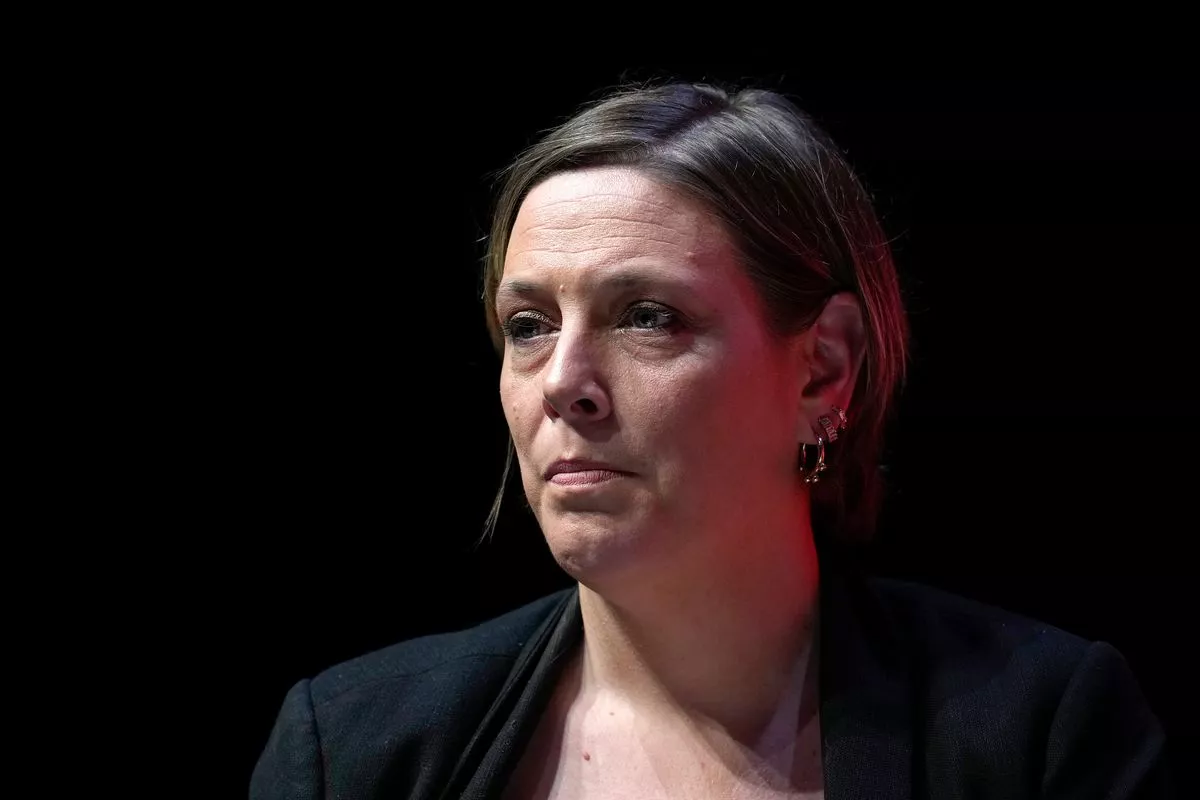
Safeguarding Minister Jess Philips announced a pardon for criminalised children(Image: Christopher Furlong/Getty Images)
As well as demonstrating persistent criminalisation of vulnerable children, the data also gives some indication of child sexual exploitation hotspots across England and Wales. Despite being significantly smaller than the Met, West Midlands Police carried out the most prosecutions against girls between 1990 and 1999 (314), followed by the Met (132), Greater Manchester (129), West Yorkshire (88), and Nottinghamshire (84).
Focussing on the youngest abuse victims, between 1990 and 2005, MyLondon found 13 occasions where a girl aged between 12 and 14-years-old was prosecuted, with four prosecutions each recorded in West Midlands and by the Met Police. There were also successful prosecutions of girls in this age bracket in Greater Manchester, Merseyside, and Nottinghamshire.
Data released by the MoJ only gives ages in a range, and those ages were only recorded at the time of sentence, meaning we do not know exactly how old each child was when they were arrested. The figures were also released on principal offence basis, meaning those who were convicted and sentenced for a more serious offence at the same time would not appear in the data.
Hover over the police force areas to see the number of convictions
Andrea Simon, Director of the End Violence Against Women Coalition (EVAW), told MyLondon: “We welcome the long overdue reckoning with the scandalous wrong that saw so many children prosecuted instead of safeguarded as victims of child sexual exploitation.
“While consent by children as young as 12 and 14 was impossible, in practice exploited children continued to be arrested, prolonging the injustices these girls faced.
“Disregarding and issuing pardons for these scandalous convictions is a first step, but the government should go further by deleting the records of all who have convictions for soliciting and loitering; ending the stigma and barriers to work and opportunity that many exploited women continue to experience.”
‘Children should not be criminalised’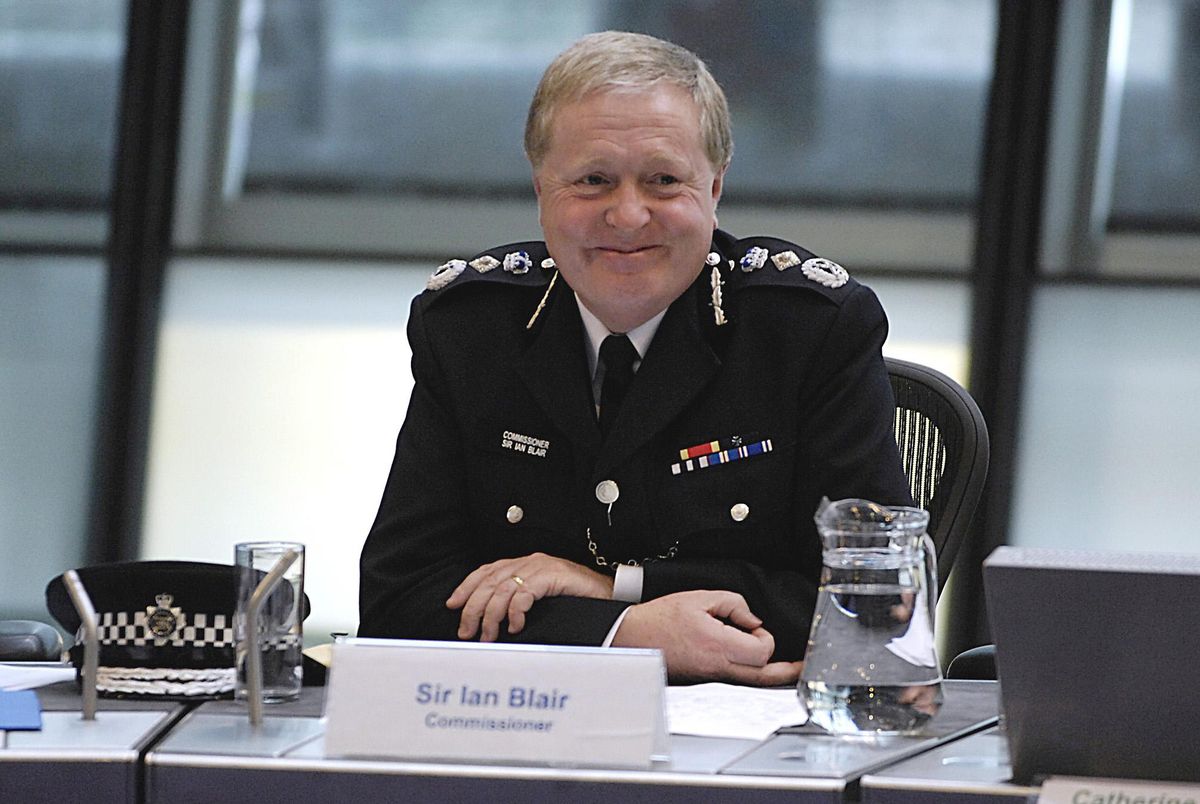
Sir Ian Blair was the Met Police Commissioner in 2005(Image: Tim Ireland/PA Wire)
A spokesperson for the Met said: “Children involved in sexual exploitation are victims of crime. They should always be treated as victims and safeguarded, not criminalised. This is absolutely the approach we take to tackling sexual exploitation of children today and we recognise the profound effect this will have had on anyone involved in historic instances where this was not the case.
“The Met Police is dedicated to supporting victims of child sexual exploitation and will continue to work hard to prosecute the people who exploit them.
“In the last year, there has been a threefold increase in solved cases of child sexual exploitation, with 134 additional suspects being charged. The force has also cracked down on the roots of exploitation, including county lines operations, where more than 1600 arrests have been made in the last year alone.”
A CPS spokesperson said: “Our current guidance is clear that children who are exploited into prostitution should be treated as victims of abuse, and that individuals who coerce, exploit and abuse children through prostitution should be prosecuted.
“The CPS fully supports the conclusions from Baroness Casey’s audit into group-based child sexual exploitation and abuse and is working closely with other government departments as they implement its recommendations to disregard and pardon ‘child prostitution’ convictions.
“Tackling child sexual exploitation remains a priority for the CPS, and we will always prosecute individuals who sexually exploit children whenever our legal test is met. In recent years, we have strengthened our approach through the creation of a specialist Organised Child Sexual Abuse Unit, enhanced training for prosecutors, improved engagement with victims, and closer collaboration with the police.”
Got a story to tell about child grooming? Please email callum.cuddeford@reachplc.com
Sign up to our London Court & Crime newsletter for the latest major court updates and breaking news delivered straight to your inbox. Sign up HERE