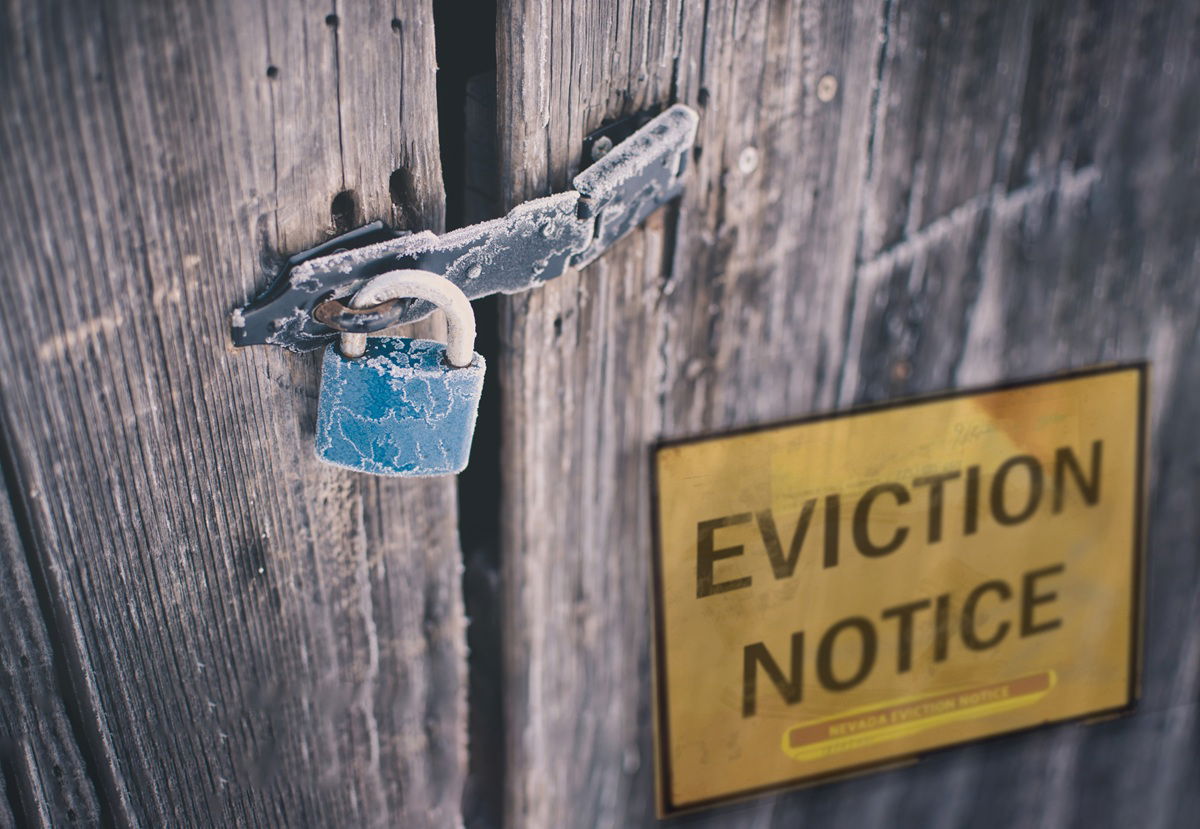
Spain has extended protections for vulnerable households facing eviction.
Credit : No-Mad, Shutterstock
For many families across Spain, the word desahucio still carries a heavy weight. Even years after the pandemic, thousands of households remain one missed payment away from losing their home. Now, the government has confirmed that key protections against evictions will remain in place for another year, offering temporary relief to those in the most fragile situations.
The decision was approved recently by the Council of Ministers, which agreed to extend several social protection measures first introduced during Covid. Among them is the suspension of evictions and forced removals for vulnerable households with no alternative housing – a measure that was due to expire at the end of this year.
The extension will run until 2027, although it still needs to pass through Parliament to become fully ratified.
Most Read on Euro Weekly News
Who is covered by the eviction extension
At the heart of the measure is a principle that has remained unchanged since 2020: no vulnerable household should be evicted if it has nowhere else to go.
The extension applies mainly to tenants covered by the 1994 Urban Leases Act (LAU) who are officially recognised as vulnerable and lack access to alternative accommodation. For families who were approaching the previous deadline with growing anxiety, the new timeline provides some much-needed breathing space.
The decree also includes certain people who live in a property without a formal rental contract, but only under very specific conditions. This protection applies when the occupants are victims of gender-based violence, have a recognised dependency, care for dependants or minors, and are deemed financially vulnerable.
In these cases, the rule only applies if the property belongs to a large landlord, defined in Spanish law as an individual or company owning more than ten residential properties. Smaller private owners are not affected by this part of the extension.
The government has made it clear that the aim is to protect people in extreme situations, not to suspend evictions across the board.
Basic supplies also protected until 2026
The decree does more than address housing alone. It also extends protections related to basic household supplies, which have become an increasing concern as living costs rise.
Until 31 December 2026, vulnerable households will continue to be protected from cuts to electricity, gas and water. The government has also confirmed that the current electricity social bonus discounts will remain unchanged during this period.
That means discounts of 42.5 per cent for vulnerable consumers and 57.5 per cent for severely vulnerable households will continue to apply. These reductions have been essential for many families struggling to cover energy costs, particularly during periods of extreme heat or cold.
In practical terms, the decree ensures that households already under pressure are not left without essential services while their situation is being assessed.
How to ask for an eviction delay
The extension does not stop eviction proceedings automatically. Instead, it lays out a clear procedure for requesting a delay, and that process begins with the tenant.
The tenant must submit a formal request asking for the eviction to be postponed. Once that request is filed, the court handling the case steps in and asks local social services to assess whether the household meets the vulnerability criteria.
At the same time, the regional authority is required to look for an alternative housing solution. If suitable accommodation cannot be found, the eviction remains suspended under the terms of the decree.
The law also recognises that delaying an eviction can have financial consequences for property owners. In cases where no alternative housing is provided, landlords are entitled to compensation, equivalent to the rent they stop receiving during the suspension period.
Temporary relief in a wider housing crisis
For households facing eviction, the extension offers time and stability, but it does not resolve the underlying problems. Spain continues to face a serious shortage of affordable housing, particularly in urban areas, and many families remain vulnerable even with these protections in place.
The government has repeatedly described these measures as exceptional and temporary, designed to prevent people from being left without a home while longer-term housing solutions are developed.
As the decree moves to Parliament for approval, social organisations are urging affected households to stay informed, seek advice from social services, and act early if they believe they may qualify for protection.
For now, the message from the government is clear: families already in difficulty will not be forced out without a safety net – at least not yet. But for many, the question remains what happens once that safety net is finally removed.
Stay tuned with Euro Weekly News for the latest news from Spain