Taking paracetamol during pregnancy has no significant link to autism, ADHD or learning disabilities in children, a “gold standard” review has found.
Last September President Trump advised women against taking the painkiller during pregnancy, claiming a link with learning disorders. At the time scientists dismissed the comments and said there was little credible evidence.
In response to public concern scientists from City St George’s, University of London, analysed research into any possible link, often comparing the outcomes of siblings born to the same mother, where one pregnancy involved taking paracetamol and one did not. This allowed them to see the impact of paracetamol where a child’s genes and environment were similar.
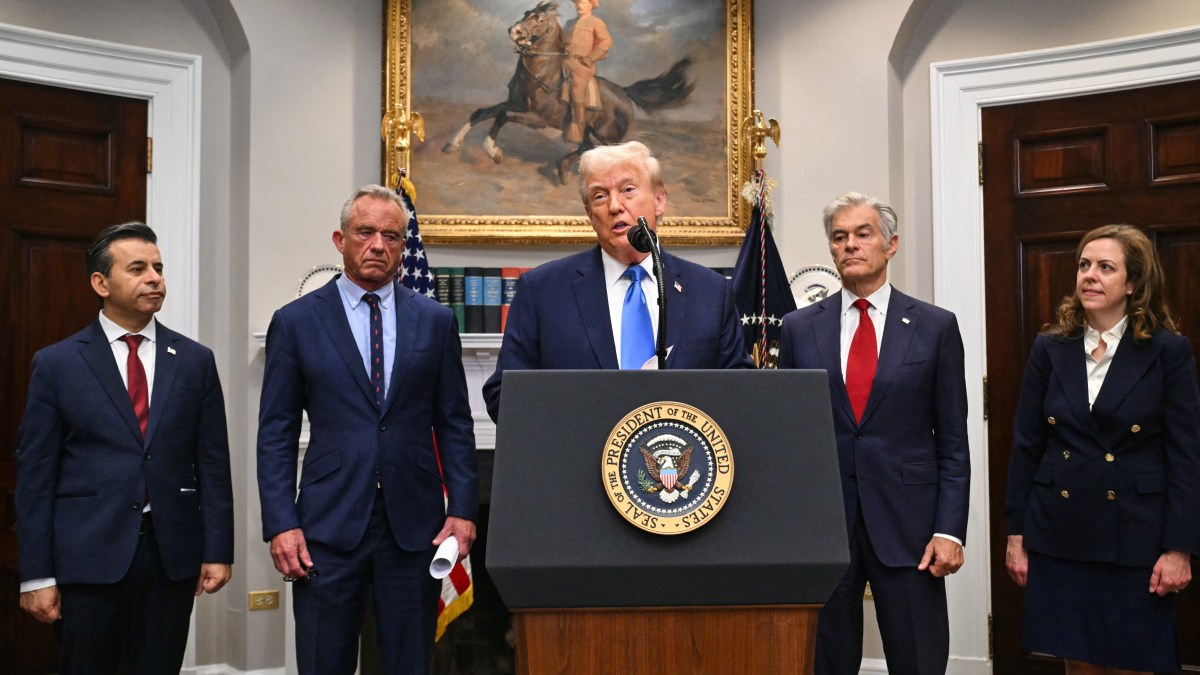
Trump said there had been a “meteoric” rise in autism diagnoses, which he said was one of the “most alarming public health developments in history”.
The president said: “With Tylenol — don’t take it. Don’t take it!”, adding: “You shouldn’t take it during the entire pregnancy.” He continued: “In a small number of cases, if you can’t tough it out, if you can’t do it, that’s what you’re going to have to do. You’ll take a Tylenol. But it’ll be very sparingly.”

Clippings of medical articles shown during Trump’s address at the White House
SAUL LOEB/AFP/GETTY IMAGES
Professor Asma Khalil at City St George’s, an author of the study, said: “[In] all the studies, [there was] no significant link between paracetamol use in pregnancy and intellectual disability, and the same applies if you look at the sibling comparison studies, or the studies that have low risk of bias, or the studies that followed up the children for more than five years.”
“We found no clinically important increase in the risk of autism, ADHD or intellectual disability of the children where mothers took paracetamol during pregnancy. This is the important message there to the millions of pregnant individuals, the fact that actually paracetamol is safe to use in pregnancy.”
The paper, published in The Lancet Obstetrics, Gynaecology & Women’s Health journal, analysed data from 43 studies. In their statistical analysis, the authors included data from 17 studies, including outcomes from 262,852 children who had been assessed for autism, 335,255 for ADHD and 406,681 for intellectual disability.
Khalil said that there were a small number of existing studies that had shown a link between the painkiller and autism, but that these had small sample sizes and “confounding” factors that could affect the results. For this reason, that research was not included in the review. She added that the studies used self-reported data from the pregnant women, and that future research should use pharmaceutical dispensing data instead.
• Tom Whippple: What’s the truth about paracetamol and autism? It can be confounding
Dr Monique Botha, a professor in developmental psychology from Durham University, said: “This is a strong and reliable study that addresses a question many people are understandably worried about given recent prominent politicisation of the topic.”
She added: “When this higher-quality evidence is examined, the findings are clear: there is no evidence that using paracetamol as recommended during pregnancy increases the risk of autism, ADHD, or intellectual disability. The authors use rigorous methods. They pre-registered the review process (inclusion and exclusion criteria, analysis plan etc), assess study quality carefully using established protocols, and avoid misleading claims throughout. This is a welcome and robust addition to the literature.”