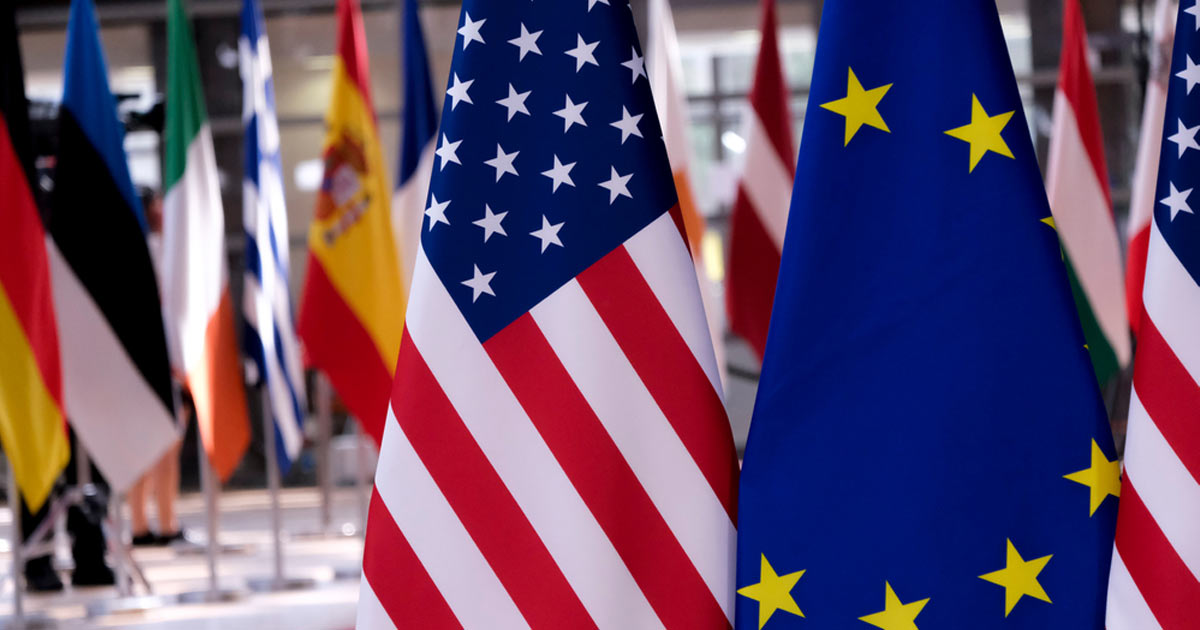
The European Union’s (EU) High Representative for Foreign Affairs and Security Policy, Kaja Kallas, is reported to have quipped recently that now may be a “good moment” to start drinking. The remark was made in jest, but its dark humour is indicative of the mood that grips Europe. European self-perception as a “zone of peace” has been shaken by the war on its borders; the beast within now challenges its identity as a “liberal” power. If being roundly and publicly berated by the United States (US) via Vice-President J.D. Vance’s speech at the Munich Security Conference last year was not enough, President Trump’s proclaimed designs on Greenland demonstrate just how fragile the Transatlantic partnership has become. The US is central to the financing and functioning of the North Atlantic Treaty Organization (NATO); even a small risk (let alone explicit threats) that the US could transform from a trusted friend to a potential aggressor is an obvious source of angst for Europe. This angst, however, can be converted into an agenda for reform and renewal. This article suggests four steps to enable this.
The US is central to the financing and functioning of the North Atlantic Treaty Organization (NATO); even a small risk (let alone explicit threats) that the US could transform from a trusted friend to a potential aggressor is an obvious source of angst for Europe.
First, the death of old certainties understandably represents a moment of grief and reckoning for Europe. However, for the great majority of countries and peoples—many of which form a part of the Global South—precariousness has been a defining feature of geopolitical and geoeconomic life. Now is the time for Europe to retire its old superiority complex and embrace the opportunity to learn from its former colonies, some of which have (over decades and centuries) developed the art of surviving–even thriving–in a world of whimsical, sometimes Nero-esque, great powers.
Second, a uniquely Indian approach to navigating the rough seas of international power politics has been multi-alignment. Albeit this strategy has attracted criticism as fence-sitting in Western debates, its far-sightedness and usefulness are patently evident today. It is precisely this strategy that won India a unique position of being courted by both the US and Russia in the Biden years, despite the war in Ukraine. It is also this strategy that enables India to gracefully balance its friendly relations with the EU and Russia, begin a thaw in its relationship with China, and (despite recent political difficulties) keep up its negotiations with the US on key issues, including the FTA. India can credibly maintain this balancing act, in a sustained manner—in contrast to other countries, which would benefit from taking such an approach too, but are unable/unwilling to do so—because of a non-dualism that is deeply ingrained in the country’s strategic culture. Referred to as Advaitvaad in Indian philosophy, its political ramifications are an aversion to “othering” and a willingness to have dialogue with all (without giving up on one’s own red lines). Alliances are possible, but not in the us-versus-them way that the West tends to conceptualise them. A vital first step for European countries, given the precarious state of NATO and the transatlantic partnership, will be to take a leaf or two out of such “alternative” world-views, and consider their applicability to their own strategic choices (including the nature of alliances and coalitions).
Alliances are possible, but not in the us-versus-them way that the West tends to conceptualise them.
Third, it is high time for European countries to engage in some self-reflection and address the demons within their own polities. For instance, there are vocal and growing minorities in European societies that find resonance with the Trump administration’s stance on immigration and immigrants. Assuming that “normative power” Europe does not want to follow in the steps of the US and remain open to qualified and legal migrants, these issues need to be systematically and seriously addressed. Polarised positioning—the kind that we saw during Chancellor Merkel’s “wir schaffen das” moment, when even meek suggestions that zero border checks were risky would result in angry retorts of “do you want them to drown in the sea”—will worsen xenophobia, increase backlashes, and lead Europe further away from the liberal values that it claims to uphold. Europe needs to get off its moral high-horse, without losing its morals; it needs to be pragmatic, without losing its ideals.
To ensure that history does not repeat itself in even more perverse ways, a re-militarising Europe will need to strengthen the functioning of its democracy at all levels.
Finally, European countries are increasing their commitments to defence in a variety of ways. Some of these reforms are long overdue and should be welcomed. But Europe should also not forget its deeply troubled past of militarisation, and the devastating consequences caused by the two world wars. To ensure that history does not repeat itself in even more perverse ways, a re-militarising Europe will need to strengthen the functioning of its democracy at all levels. This will require institutional safeguards, and just as importantly, societal restraint, reinforcing the necessity of having the tough conversations highlighted in the previous point.
Amrita Narlikar, Distinguished Fellow, Observer Research Foundation and Honorary Fellow, Darwin College, University of Cambridge.
The views expressed above belong to the author(s). ORF research and analyses now available on Telegram! Click here to access our curated content — blogs, longforms and interviews.