Greater Manchester is full of towns and villages with quirky names certain to confuse or cause a snigger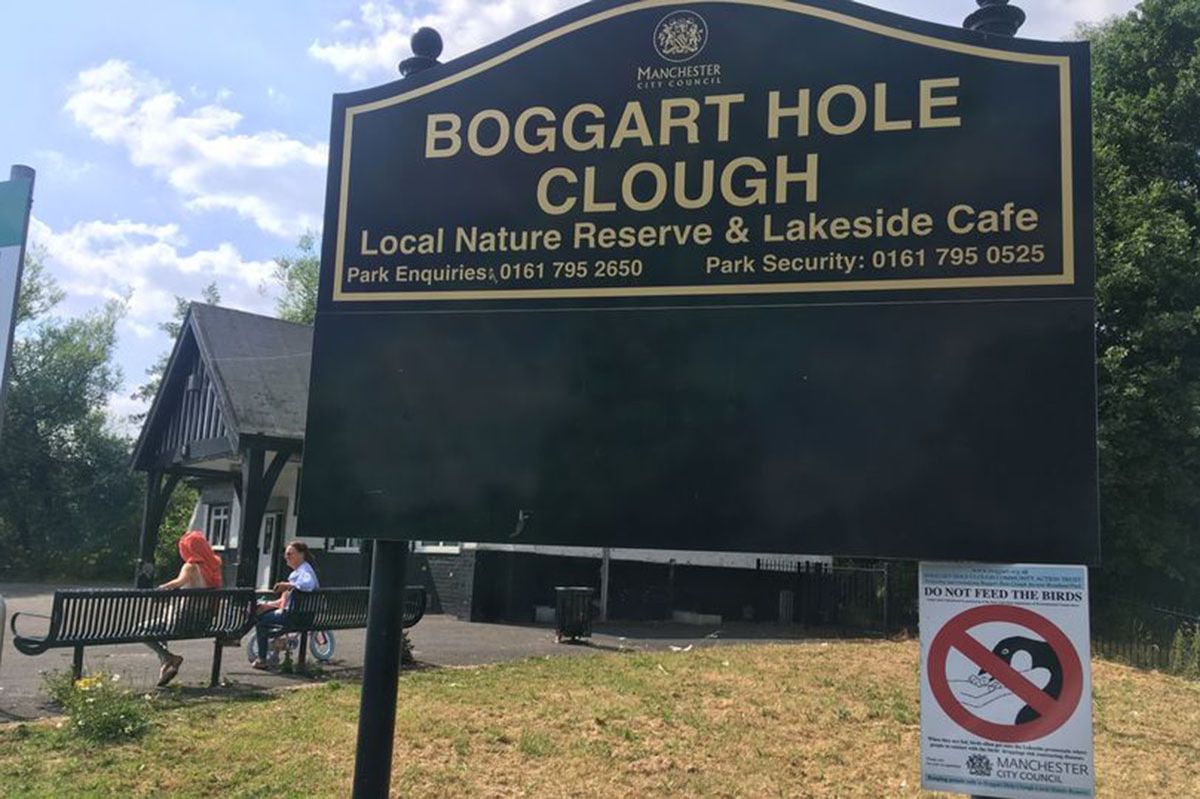
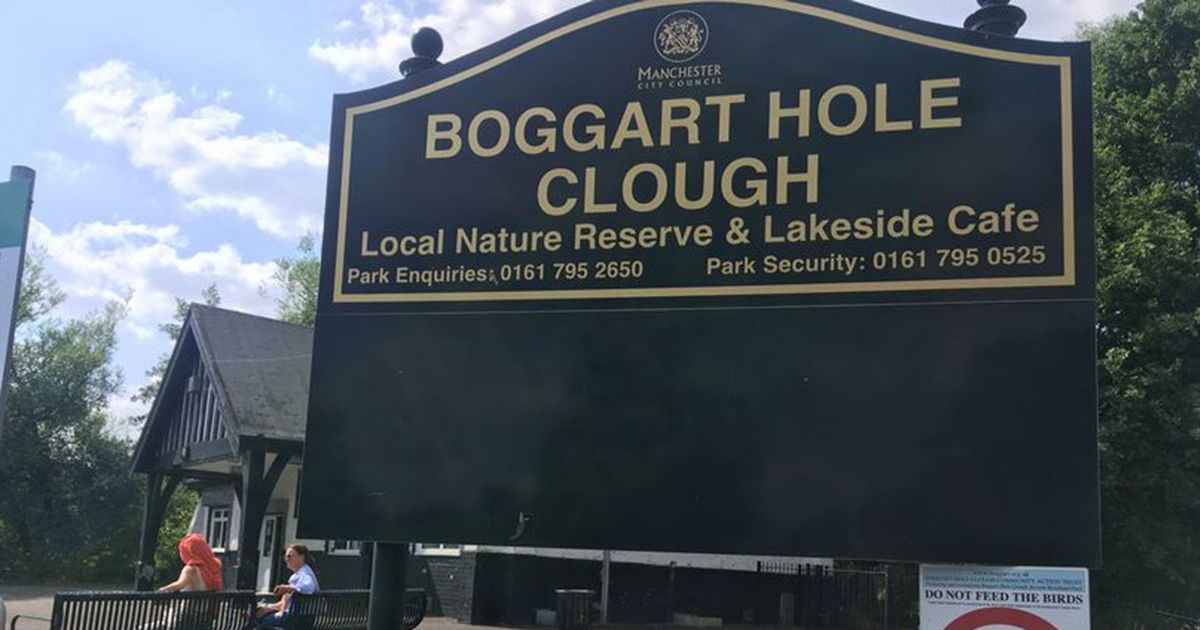
The strangely named Boggart Hole Clough in north Manchester(Image: MEN)
Ever pondered the origins behind the name of your neighbourhood? Greater Manchester boasts towns and villages with peculiar names spanning from the amusingly crude to the tongue-twisting.
Ramsbottom or Chorlton-cum-Hardy have been sources of amusement for ages, whilst visitors frequently fumble over Blackley or Besses o’th’ Barn.
Recently, the subject of Greater Manchester’s place names has raised its head again on social news platform Reddit, when a user posted in the r/Manchester subreddit: “Which of the areas in Manchester do you think has the silliest name?”
In the post, which has since been deleted, Reddit users offered up their own ‘silly’ place names in Greater Manchester that baffle or cause a snigger.
But what’s the story behind these names, and what’s their true meaning?
Altrincham
The town’s name derives from the Old English term Aldringeham, signifying the settlement of Aldhere’s folk.
Aldhere’s identity remains unclear, though the town’s spelling was evidently subject to variation for quite some time. Both Altrincham and Altringham were in use until the 1800s.
Besses o’th’ Barn
The origins of this modest Whitefield suburb have long intrigued Metrolink travellers.
Various unverified tales have circulated through the years, yet the name’s true source remains somewhat enigmatic. One hypothesis even connects it to Dick Turpin and ‘Black Bess’ – though charming, this appears doubtful.
The most credible explanation links it to a neighbourhood pub. It’s believed a tavern once stood there, resembling an ancient barn, operated by a landlady called Bess.
The customary local invitation for a beverage would be: “Let’s go see Bessie at th’ barn.”
Subsequently, as dwellings sprang up nearby, the name evolved to encompass the entire village, not merely the establishment. The name’s spelling has evolved over time.
It was previously written as “Bess o’ th’ Barn.”
Blackley
This north Manchester suburb first appeared as a hamlet in the Domesday Book, with its name derived from the Anglo-Saxon term ‘Blaecleah’, which translates to ‘dark wood’ or ‘dark clearing’.
During medieval times, the surrounding woodland proved particularly popular for hunting deer and wolves. Despite its spelling as ‘Black-ley’, the correct pronunciation is actually ‘Blake-ley’.
Boggart Hole Clough
The 200-acre woodland on Charlestown Road in Blackley was bought in the 1890s by Manchester City Council. Intended as a place for hard-working Mancunians to go on the weekends for leisure and picnics, the clough had sports grounds and was even a public meeting place.
However, it’s the supposed creature that gives its name to Boggart Hole Clough – a stretch of woodland that is a popular beauty spot in north Manchester. It’s also the shape-shifting monster in Harry Potter that manifests as a person’s biggest fear- and requires laughter to be fought off.
Historian Simon Young, in his book The Boggart, an in-depth study of this mysterious supernatural being from the North, refers to Boggart Hole Clough as a ‘mecca’ for beliefs about Boggarts. It is the last place in the old county of Lancashire where Boggart folklore has survived.
Simon said: “A Boggart hole refers to the lair of the boggart- a place that people believed that the boggart dwelled. There were lots of boggart holes in the North West.
“Boggart holes were usually places that went down in the landscape. Sometimes they were ravines, caves going down or potholes.
“Boggart Hole Clough will have got its name in the 19th century. It’s on the very old parish boundary between Middleton and Manchester.
“Typically, there is a connection between people having supernatural experiences at parish boundaries. People believed that parish boundaries were dangerous supernatural places. This is the perfect place to come across a monster or bogey.”
Broadbottom
The Tameside village’s rather amusing name reportedly has roots in the ancient Anglo-Saxon period – translating to broad hollow.
Chorlton-cum-Hardy
The name translates literally to ‘Chorlton with Hardy’, reflecting how the two districts merged together during the 18th century. Following the railway’s construction in 1880, property developers created this name to differentiate it from Chorlton-upon-Medlock.
Chorlton is believed to signify Ceolfrith’s or peasants’ farm – derived from ‘ceorl’, meaning peasant, and ‘tun’, meaning settlement. Hardy could stem from ‘hearda’, referring to island or dry ground.
Alternatively, it might mean ‘by the woods’, given the ancient Arden Wood forest that stretched across both banks of the nearby River Mersey.
Dukinfield
The name originates from the Old English terms duce and feld, translating to ‘raven of the field’.
Additionally, Colonel Robert Duckenfield resided at Dukinfield Hall and gained recognition as a distinguished commander in the New Model Army throughout the Civil War. The Haulgh – Visitors to Bolton are frequently baffled by how to say this area’s name.
Pronounced ‘The Hoff’ – similar to Baywatch icon David Hasselhoff’s nickname – The Haulgh takes its name from the Old English term ‘halh’, referring to a stretch of flat riverside land formed by sediment deposits.
Failsworth
Historically part of Lancashire, the name of this town in Oldham originates from the Old English words fegels and worth, signifying an “enclosure with a special kind of fence.” First recorded in 1212 as Fayleswrthe, the area evolved from a rural agricultural hamlet into a thriving industrial hub during the 19th century.
Horwich
Bolton truly excels when it comes to peculiar place names.
First recorded combining ‘har’ and ‘wice’ in 1221, Horwich translates to ‘the grey wych-elm(s)’ in Old English, as documented in the Dictionary of British Place Names.
When saying Horwich, the ‘w’ is silent. It sounds like ‘Horritch’, rather than ‘Hor-witch’.
Hulme
This inner-city district takes its name from Old Norse and Old Danish terms referring to small islands or ground encircled by waterways, marshland or wetlands. Drop the ‘l’ when saying Hulme.
It’s pronounced closer to ‘Hewm’. This also applies to Levenshulme and Cheadle Hulme.
Irlams O’ Th’ Height
Yet another puzzler for residents and visitors alike, the story behind this Salford village lies at the heart of a pub.
Despite sharing part of its name, this compact village bears no connection to Irlam proper, which stems from “The hamlet on the river Irwell”, as noted by Salford Local History Societies.
Salford City Council records indicate the area has been inhabited for centuries. Irlams o’ th’ Heights apparently gets its name from a local dynasty – the Irlams, naturally – who operated The Pack Horse Inn throughout the 17th and 18th centuries.
Known as ‘Irlam’s’ and situated on elevated ground, it became recognised as Irlam’s On The Height. As the settlement grew through the decades, it adopted the name of the neighbourhood pub.
And, despite minor alterations to how it’s written, the name has remained for over four centuries.
Nob End
Okay, this one is just too good to leave out. The 21-acre site near Bolton was once a dumping ground for sulphuric acid and washing soda during the 19th century, but is now home to rare orchids and beautiful wildflowers.
Now a local nature reserve, it has no doubt been the cause of much mirth when discovered on a map. According to The Wildlife Trusts, the comical name actually derives from the rounded premonitory on which the reserve stands by the River Croal.
Oldham Mumps
This tram stop’s name is another that prompts curious looks from Metrolink passengers.
As many residents will know, it derives from the Oldham Mumps railway station, which stood just south of today’s Metrolink stop.
The railway station launched in 1847, taking its name from its position in the Mumps district of the town, a designation many believe stems from “mumper” – a 17th century expression for a beggar.
Pomona
History buffs and classical scholars amongst you might recognise Pomona as the Roman goddess of fruit. But why does her name attach itself to this marshy, scrubland area south of Manchester city centre?
It was formerly the site of Pomona Gardens, once an extensive Victorian entertainment venue.
Established in 1845, it featured a shooting gallery, billiard room and flying swings, archery ground, bowling green and a hedge maze. In 1875, an enormous 20,000-capacity structure, named Royal Pomona Palace, was constructed on the site, Britain’s largest concert hall at that time.
According to Chetham’s Library, Pomona Gardens reached its peak as a venue for political gatherings and entertainment, welcoming over 100,000 visitors during its inaugural year. Yet a devastating explosion at a neighbouring factory in the late 1880s caused significant damage to the palace, leading to the gardens’ demise.
Ramsbottom
The name Ramsbottom first appeared in records in 1324, combining the Old English words ‘ramm’ and ‘bothm’, which translates to broad river valley. When merged to form Ramsbottom, the Dictionary of British Place Names explains it means ‘valley of the ram, or where wild garlic grows’.
Strangeways
Whilst its name has become linked with the infamous prison, this area north of Manchester city centre was initially the domain of the De Strangeways family, along with Strangeways Hall, Park and Gardens.
The earliest record dates to 1322 as Strangwas, derived from the Anglo-Saxon Strang and gewæsc, signifying “[a place by] a stream with a strong current”.
Though difficult to picture now, it was once a sought-after, countryside district inhabited by some of the city’s more affluent residents.
Strangeways Hall was torn down during the mid-1800s, and the prison – now formally called HMP Manchester – was subsequently constructed on the site of the former park and gardens.
Whalley Range
Among Manchester’s earliest suburbs, Whalley Range was developed by banker and entrepreneur Samuel Brooks. The district is believed to have taken its name from the Lancashire town of Whalley, Samuel’s birthplace.
Worsley
This leafy suburb of Salford, is another name that can be a bit tricky to pronounce correctly – it’s ‘Wurs-ley’. The place was first recorded as Werkesleia in 1196 and later as Wyrkitheley in 1246, leading to some uncertainty over the exact meaning of Worsley.
According to the Dictionary of British Place Names, it could signify ‘woodland clearing of a woman named Weorcgyth or a man named Weorchaeth’.