Dr Neil Shastri-Hurst MP is the Conservative MP for Solihull West and Shirley. He previously served as a British Army Medical Officer and barrister, and sits on the House of Commons Justice Committee.
There is a temptation, when legislating on contentious moral questions, to reach instinctively for prohibition. It has a reassuring clarity to it. Ban the thing, draw a line, declare the matter settled. Yet British law, at its best, has always been more cautious than that. It has preferred precision to symbolism, enforceability to gesture, and proportionality to absolutism. It is precisely those virtues that are absent from the growing calls for a blanket ban on trail hunting.
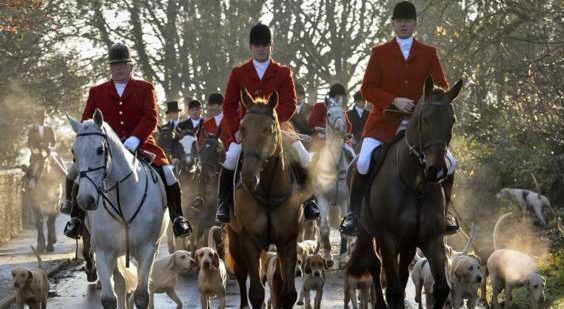
Trail hunting is not, as is sometimes suggested, a loophole cynically invented to evade the Hunting Act 2004. It is a lawful activity that Parliament deliberately chose not to prohibit. The 2004 Act criminalised the hunting of wild mammals with dogs, subject to limited exemptions. It did not ban the use of hounds to follow an artificial scent. That distinction was not accidental. It reflected a clear legislative judgment: that the moral and legal objection lay in the deliberate pursuit and killing of a wild animal, not in the controlled exercise of dogs following a pre-laid trail.
Those now calling for a ban are, in effect, arguing that Parliament got it wrong, or that the distinction it drew is no longer tenable. That is a serious claim, and one that requires more than assertion. In criminal law, the principle of legality demands that conduct should only be prohibited where the harm is clearly identified and the offence clearly defined. Trail hunting fails that test. A dog following a scent is not, of itself, harmful. Nor is riding across open countryside. To criminalise the combination of the two, irrespective of intent or outcome, is to create an offence defined more by suspicion than by conduct.
Supporters of a ban frequently argue that trail hunting is used as a cover for illegal fox hunting. That may sometimes, albeit rarely, be true. But the law already provides a remedy for that behaviour. Hunting a wild mammal with dogs is a criminal offence, punishable by an unlimited fine. The fact that prosecutions are difficult does not justify abolishing the legal distinction altogether. If it did, we would criminalise vast swathes of legitimate activity simply because some people abuse the rules. We do not ban driving because some motorists speed; we enforce the law against speeding.
The statistics often cited in this debate illustrate the point. Animal welfare groups report thousands of alleged hunting-related incidents each year. Yet successful prosecutions under the Hunting Act remain relatively rare, typically numbering in the low dozens annually. That gap does not prove the law is defective; it proves that criminal standards of proof are high, as they should be. To respond by banning trail hunting altogether would be to abandon the evidential rigour that underpins the rule of law, replacing it with a presumption of guilt by association.
There is also the question of proportionality. Trail hunting involves an estimated 150 to 200 registered packs across the UK and tens of thousands of participants, many of whom are riders, grooms, farriers, and land managers with no involvement whatsoever in illegal hunting. For many rural communities, hunt meets are social as much as sporting occasions, supporting local economies already under severe strain. To criminalise that entire ecosystem on the basis that some hunts may break the law is a response wildly out of proportion to the harm alleged.
British courts have long recognised that criminal sanctions must be a last resort, particularly where less intrusive means are available. If the concern is that some hunts do not lay trails continuously, then the answer is to tighten the regulatory framework, not to abolish the activity. Parliament could require advance trail laying, clearer records, independent monitoring or stricter liability where wild mammals are deliberately pursued. These would be targeted, legally coherent responses. A blanket ban is not.
The experience of Scotland should also give pause. There, trail hunting has effectively been prohibited under recent legislation. Far from simplifying matters, the result has been increased uncertainty and dispute over what conduct is lawful. Enforcement has proved no easier; if anything, it has become more contentious, with police officers required to make rapid judgments in complex countryside settings. English and Welsh lawmakers should be wary of importing those difficulties wholesale.
At stake here is not merely the future of a rural sport, but a broader question about how we make law. The Hunting Act was one of the most divisive pieces of legislation in modern times precisely because it blurred the line between moral disapproval and criminal culpability. Two decades on, there is a chance to show that we have learned something from that experience. Good law targets harmful conduct, not lawful activities that some people dislike. It punishes proven wrongdoing, not suspected intent.
Those who oppose trail hunting are right to insist that the Hunting Act should be enforced robustly. But that objective is undermined, not advanced, by a ban that collapses carefully drawn legal distinctions and invites arbitrary enforcement. The rule of law depends on clarity, restraint, and fairness. A ban on trail hunting offers none of those things.
In the end, the question Parliament must answer is a simple one. Are we prepared to criminalise thousands of law-abiding citizens, not because of what they do, but because of what others might do under the same banner? If the answer is yes, then the problem is no longer trail hunting. It is our understanding of justice itself.