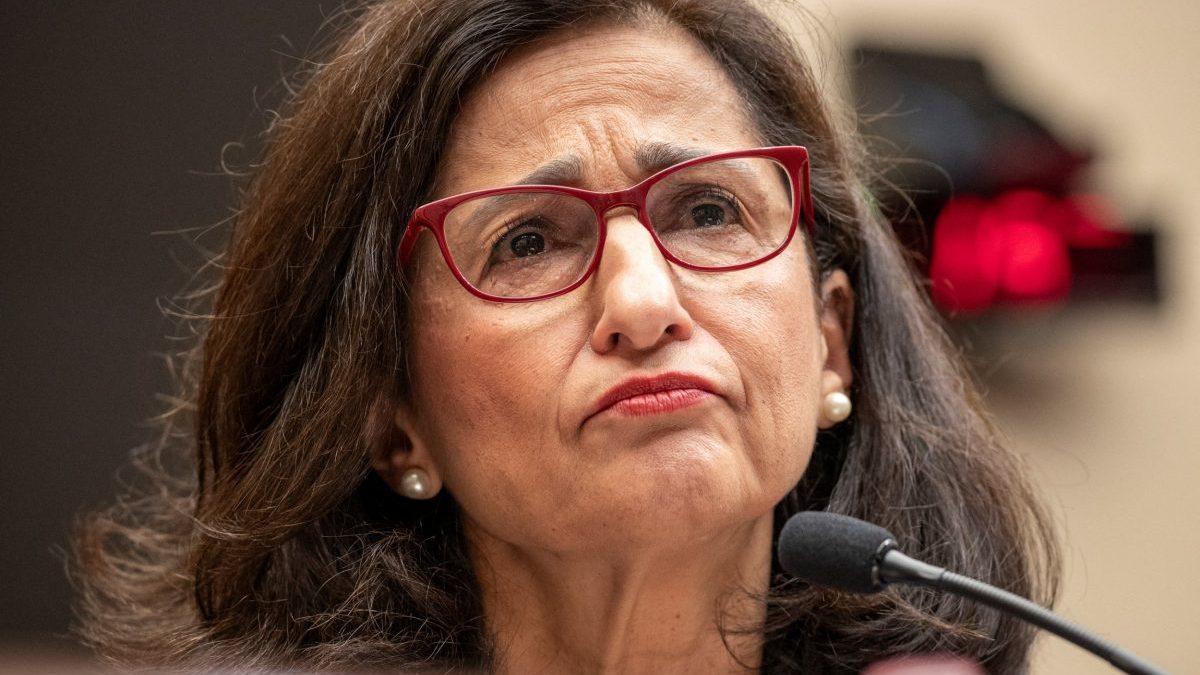
Minouche Shafik, the PM’s chief economic adviser, has been pushing for closer ties with Europe
At the start of this month, Sir Keir Starmer delivered a clear statement of intent by using his first interview of 2026 to say he wanted “closer alignment” with the EU’s single market.
While a “reset” of relations with the bloc has long been Labour policy, the movement back towards Europe appears to have acquired greater urgency for the Prime Minister in recent months.
There are a number of explanations for that – the Government is desperate to squeeze out more economic growth, and closer relations with Brussels is consistently popular with Labour MPs and members.
But there may be another reason that Starmer is pushing for stronger links – the Prime Minister’s new economics adviser, Baroness Shafik.
Shafik, 63, a high-flying economist and former university leader was appointed Starmer’s chief economic adviser in September.
She has since advised the Prime Minister that a closer trading relationship with Europe is one of the surest routes to higher growth for the UK.
UK-US citizen is an economic high-flyer
Shafik was born in 1962 in Alexandria, Egypt, but her family moved to America when she was four years old after the government of president Gamal Abdel Nasser nationalised their property.
Growing up in the American south, she completed high school and an undergraduate degree in the US, but then moved to the UK to gain a master’s in economics from the London School of Economics and later a doctorate in the same subject from the University of Oxford.
Her transnational university education set the pattern for her professional life, with Shafik building a glittering career on both sides of the Atlantic (she has British and American citizenship).
After Oxford, she had her first stint in a globally significant financial institutions by joining the World Bank, rising to be its youngest-ever vice president at the age of 36.
Between 2008 and 2011 she was the top civil servant in the UK’s Department for International Development (DfID), overseeing the huge ramp up in aid spending which started under New Labour but which has since been put into reverse, with DfID scrapped in 2020.
While a review of Shafik’s economic commentary suggests she leans to the centre left, those who have worked with her present a picture of a policy-focused and non-partisan individual.
Sir Andrew Mitchell MP, who was the Conservatives’ International Development secretary from 2010 to 2012, describes her in glowing terms.
“She brilliantly led and managed that department of highly motivated and extremely clever officials,” he told The i Paper.
“She is an extraordinarily gifted public servant and frankly this Labour Government is very lucky indeed to have secured her services.”
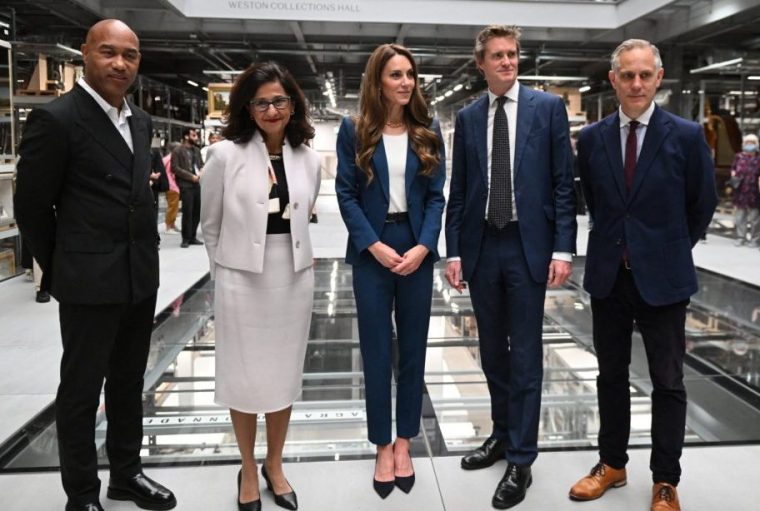 Shafik with Princess Kate and senior officials of the Victoria and Albert Museum (Photo: Eddie Mulholland/AFP)
After DfID, Shafik served as the IMF’s deputy managing director from 2011 to 2014, and then joined the Bank of England as its deputy governor on markets and banking, where she was a member of the Bank’s rate-setting monetary policy committee.
She then made a leap into university administration by becoming the LSE’s president and vice chancellor from 2017 to 2023. Along the way she picked up a damehood in 2015 and a peerage in 2020, taking up her seat in the House of Lords as a crossbencher.
She is also chair of the V&A Museums’ board of trustees, and has taken a leave of absence from the board of the Gates Foundation – the hugely wealthy philanthropic organisation set up by Bill Gates – while she works in No 10.
Advice from Shafik crucial to PM’s survival
With an under pressure Starmer promising that 2026 will be the year when Britain will “turn the corner” and voters will notice improvements in their living standards and public services, the advice he gets from Shafik will be crucial to not just government policy, but the Prime Minister’s very political survival.
Shafik’s appointment was widely interpreted as an attempt by the Prime Minister to increase his authority over the Treasury after a string of slip-ups, including over cuts to winter fuel payments and welfare reform.
She was given a key role helping to prepare November’s Budget, serving as joint chair of the Budget board, along with the Treasury minister, Torsten Bell.
The two technocrats had worked together in the past and are understood to share a concern about intergenerational fairness and a belief that there has been an excessive transfer of resources from the young to the old.
Shafik previously chaired an inquiry by the Resolution Foundation – the think-tank where Bell used to be chief executive – which proposed the introduction of a new more proportional tax on property, for the state pension triple lock to be abolished along with the two-child benefit cap, and for a tax on electric cars.
Some of those policies found their way into the Budget, which scrapped the benefit cap and introduced a pay-per-mile tax for electric vehicles.
In the run-up to the Budget, Shafik is also understood to have made the case for rejoining the EU’s customs union to deliver a boost to British exporters. Since Brexit, firms have had to meet costly rules of origin to qualify for tariff-free trade with the EU which being in a customs union would sweep away.
Shafik’s reservations about the economic impact of leaving the EU date back to when she was a deputy governor of the Bank of England. In the autumn of 2016, she said: “There is no doubt in my mind that the UK is experiencing a sizeable economic shock in the wake of the referendum.”
Claims of political naivety
But while some of Shafik’s ideas were implemented in the Budget, rejoining the customs union along with a radical shake up of council tax and stamp duty were blocked by political figures within Downing Street.
It is here where claims of political naivety on Shafik’s part surface, with a source telling The Observer: “There have been some areas where Minouche’s ideas have run up against political reality.”
It was as a university leader where Shafik’s stellar career suffered its greatest blow to date. After LSE, she returned to the US to take over as president of Columbia University, the Ivy League university in New York City.
Her tenure coincided with the eruption of campus student protests over Gaza, where Shafik received a barrage of criticism from both the left and right.
Pro-Palestine activists condemned her for authorising the police to clear protesters occupying the campus, while Republican politicians accused her of not doing enough to protect Jewish students from antisemitism. She resigned only a year after taking the position.
In an email to students and faculty, she said that she had overseen a “period of turmoil where it has been difficult to overcome divergent views across our community”, which had “taken a considerable toll on my family”.
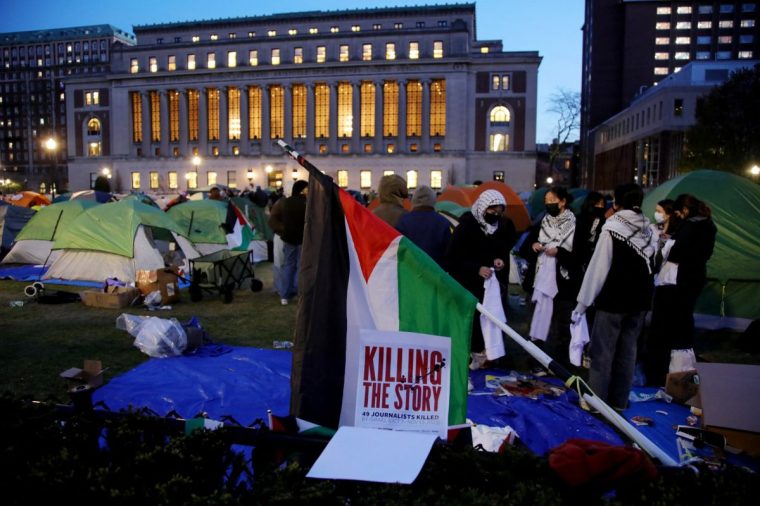 Pro-Palestinian protesters at an encampment at Columbia University in April 2024 (Photo: Leonardo Munoz/AFP)
‘Welcome change of tone on Europe’
A Tory politician who was in the Treasury when Shafik was on the long list to be governor of the Bank of England in 2019 claimed that the “disaster” of her tenure at Columbia exposed one of her weaknesses. “She is not that savvy,” they said.
But crashing out of Columbia did not leave Shafik jobless – she went straight into delivering a review of international development for the then foreign secretary, David Lammy. A year later, in September 2025, she was announced as Starmer’s new economics adviser.
Pro-EU Labour MPs have since detected an increased appetite within Downing Street to get closer to Europe, which they welcome.
A Labour MP told The i Paper: “There has been a welcome and consistent change of tone on UK-EU relations from No 10.
“The fear of Farage on this issue appears to have gone and there is now recognition that a stronger relationship with the EU is good for growth and good politics.
“The challenge is pace of delivery. The EU has competing priorities, so both sides have to redouble their efforts to find areas of mutual benefit and set a date for a 2026 summit as soon as possible.”
Your next read

While Starmer has publicly ruled out rejoining the customs union – arguing it would undo the post-Brexit trade deals which the UK has struck with countries such as India and the US – it is a subject which refuses to go away.
In December, the Health Secretary, Wes Streeting – seen as a potential future Labour leader – gave the idea new legs by talking up the “enormous economic benefits that came with being in the single market and the customs union”.
As Starmer’s EU policy evolves, Shafik will be no doubt remain a key player helping to shape just how close the UK ends up getting to Europe.
Downing Street was contacted for comment.