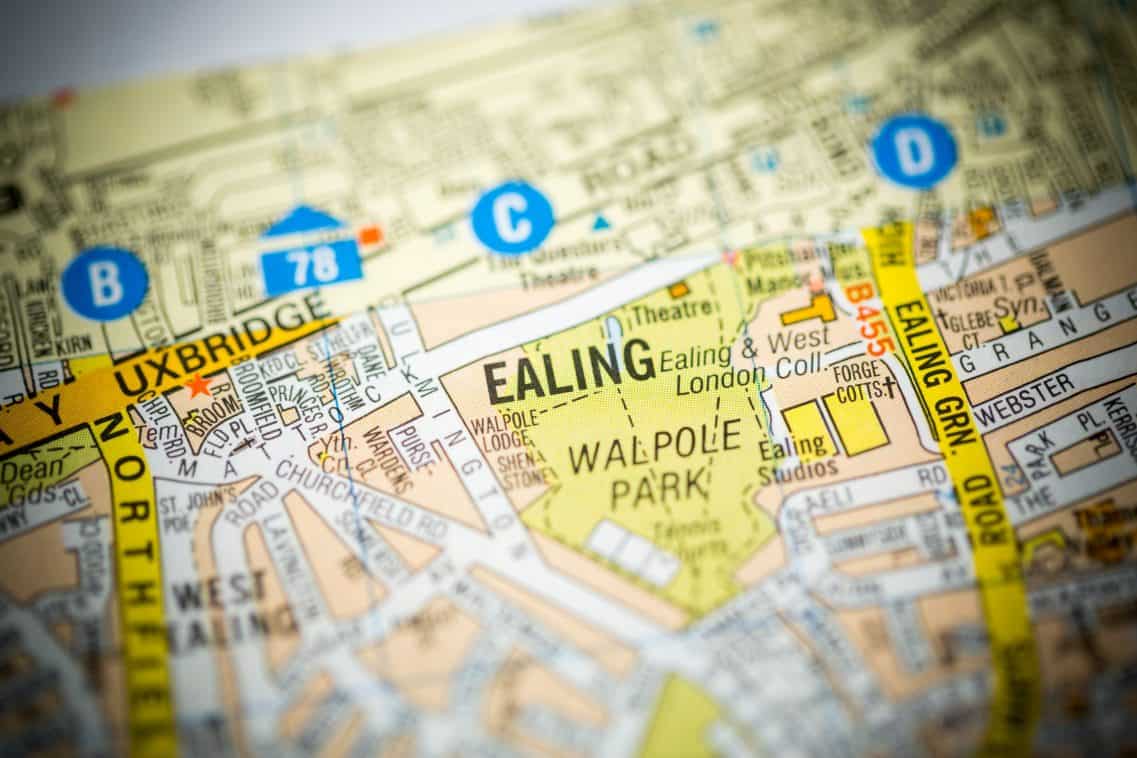
Drivers in Ealing are spending an average of 18 minutes in traffic delays on a typical 10-mile journey, placing the borough among the more congested parts of London, according to new analysis of government data.
The study, by The Bike Insurer, ranked Ealing 22nd out of 129 local authorities in England for time wasted to traffic. Within London, Ealing ranks 17th for congestion. On average, motorists in Ealing experience delays of 17 minutes and 51 seconds over 10 miles, equivalent to 1 minute and 47 seconds per mile.
Compared with neighbouring boroughs, Ealing records higher delays than Hounslow, where drivers lose an average of 15 minutes and 14 seconds on a 10-mile trip, and Brent, at 16 minutes and 25 seconds. Hillingdon, to the west, records substantially lower delays at eight minutes and 48 seconds. Closer to central London, Hammersmith and Fulham ranks higher than Ealing, with average delays of 26 minutes and two seconds.
Across the capital, London boroughs dominate the top of the national congestion rankings. The City of London recorded the longest delays in England, with drivers spending an average of 44 minutes and 22 seconds in traffic over 10 miles. Other central boroughs including Camden, Westminster, Islington and Southwark also rank highly, reflecting the intensity of traffic in inner London.
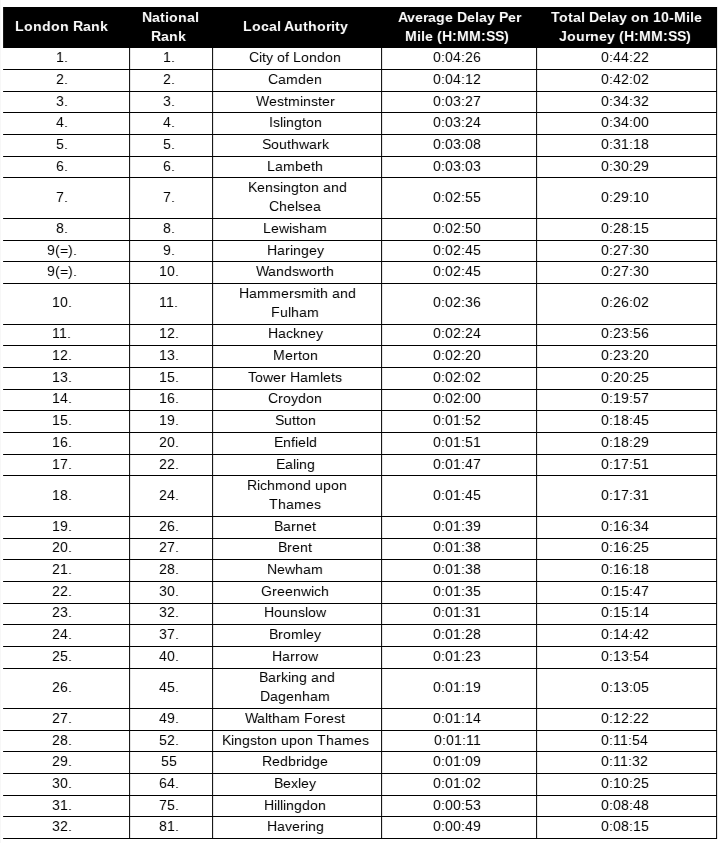 London traffic delay rankings
Outside London, congestion levels are far lower. Rutland was identified as the least congested local authority in England, with drivers delayed by just under two minutes on a comparable journey.
The Bike Insurer analysed 2024 data from the Department for Transport covering 129 local authorities, including 33 London boroughs.
A spokesperson for The Bike Insurer told EALING.NEWS: “The data highlights a clear gap between London boroughs and the rest of the country when it comes to time lost in traffic. In the City of London, drivers can expect to spend more than 44 minutes delayed on a 10-mile journey, while even in outer boroughs such as Ealing, motorists still lose almost 18 minutes to congestion over the same distance. This contrasts sharply with areas like Rutland, where delays amount to under two minutes on a comparable trip.
“These differences help explain why alternative transport options, particularly cycling, are becoming increasingly popular across London boroughs. In busy areas like Ealing and inner London, a cyclist can often complete journeys faster than a car during peak hours, when average traffic speeds can fall below 10 mph.
“As congestion and fuel costs continue to rise, more London commuters are reconsidering the daily car journey. For many, the shift isn’t just about saving time, but also about reducing stress, cutting costs, and making more environmentally friendly travel choices.”