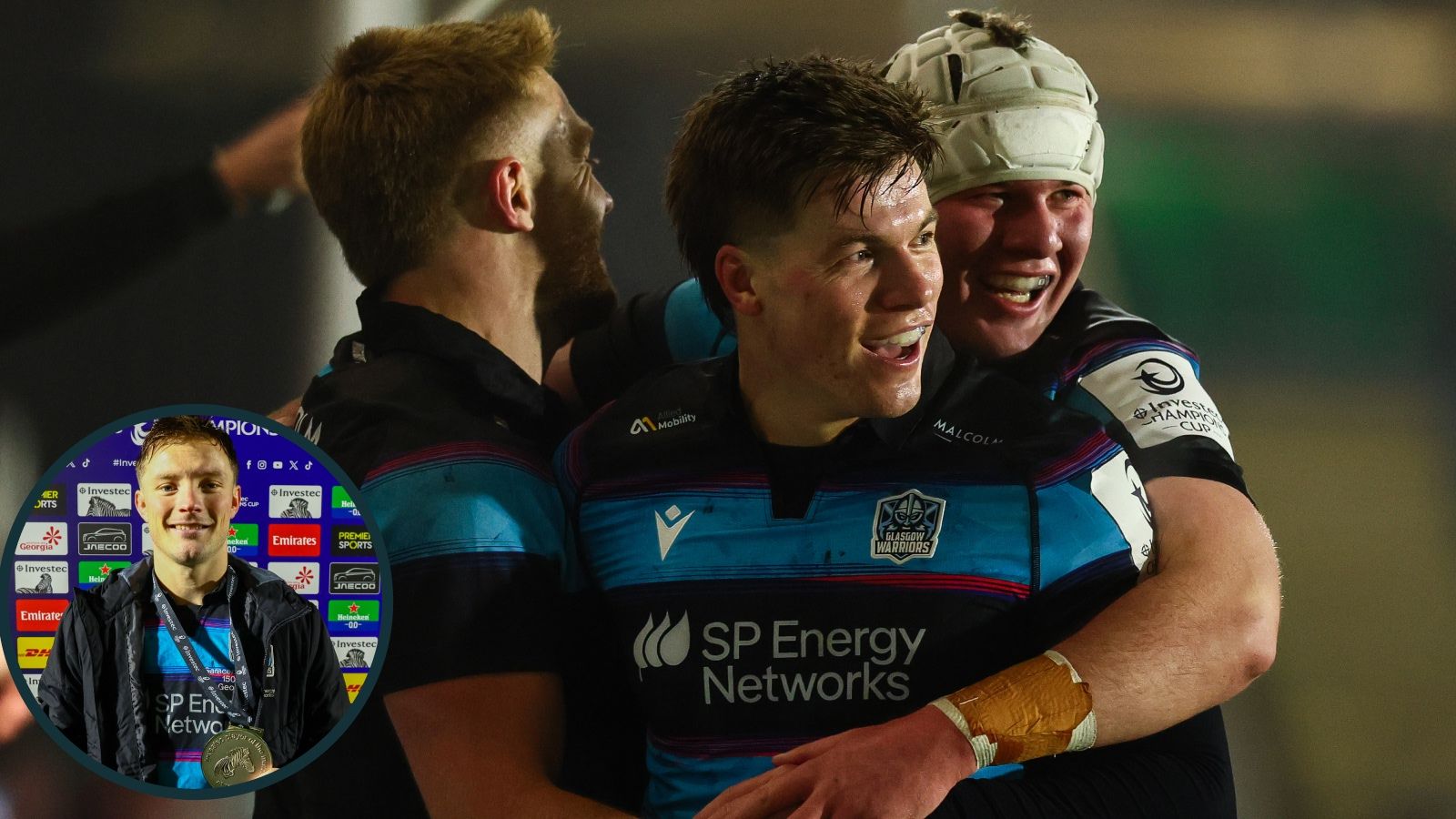
Following Glasgow Warriors’ 28-3 victory over Saracens in round four of the Investec Champions Cup at Scotstoun, here are our five key takeaways.
The Top Line
Glasgow Warriors beat Saracens for the first time in seven attempts in the Investec Champions Cup, and they didn’t just beat them, they absolutely demolished them with a performance of such physical intensity and tactical precision that the visitors were lucky to escape Scotstoun with a scoreline that flattered them considerably.
The final margin nowhere near reflected how comprehensively the Warriors dominated every single facet of this match from the opening whistle to the final seconds when the sold-out home crowd celebrated a bonus-point victory that secured home advantage through the knockout stages. This was Glasgow at their absolute best, playing with the kind of controlled defensive aggression and opportunistic finishing that marks out genuine contenders in this competition.
Their pack monstered Saracens in the tight exchanges while their backs ran riot whenever they got quick ball from the breakdown, the combination proving utterly lethal as Ollie Smith opened the scoring on nine minutes before Kyle Steyn and George Horne struck twice in three minutes just before the half-hour mark to put the match beyond doubt. Seb Stephen added a fourth in the dying seconds to confirm the bonus point and leave Saracens chasing shadows.
Saracens managed just three points from a solitary Fergus Burke penalty, their attacking impotence exposing a side that never got to grips with Glasgow’s ferocity at the contact area and couldn’t cope with the relentless pace the Warriors played at. Nineteen penalties conceded told the story of a team that lost discipline, lost composure, and ultimately lost any realistic chance of troubling a Glasgow side that announced themselves as serious Investec Champions Cup contenders with a statement victory that will resonate across European rugby.
Built on Defence
Glasgow’s attacking brilliance might grab the headlines and delivered the tries but this victory was constructed on defensive foundations that Saracens simply couldn’t penetrate; one hundred and ninety-nine tackles completed at eighty-six percent accuracy across eighty minutes of relentless physicality that turned the visitors into passive passengers who spent the afternoon getting smashed backwards every time they tried to build any momentum through the middle channels.
Jack Dempsey and Rory Darge were exceptional at the breakdown, absolutely melting every ruck and turning over ball with the kind of predatory instinct that comes from reading the game two phases ahead of everyone else, the pair combining for six turnovers that killed Saracens’ attacking ambitions stone dead and gave Glasgow the platform to launch counterattacks from positions where most sides would still be defending. Nine turnovers in total tells the story of a Glasgow side that dominated the contact area so comprehensively that Saracens resorted to nineteen penalties’ worth of cynical infringements because they simply couldn’t compete legally.
The set-piece was equally dominant, Glasgow’s scrum winning penalties and their lineout functioning with the kind of precision that created attacking opportunities whilst Saracens struggled to generate any clean ball, meaning everything the visitors tried to do was off second-phase chaos rather than structured possession, and when you’re playing catch-up against a side defending this ferociously, you’re already beaten.
Only Rotimi Segun offered any attacking threat for Saracens with his pace and footwork troubling Glasgow’s edges, while Ben Earl threw himself into the battle with twenty-two carries, fifteen tackles and one turnover in a one-man effort to drag his side back into contention, but even his monumental workrate couldn’t compensate for the collective failure around him. This was a complete performance built on defensive intensity and breakdown dominance that exposed Saracens as pretenders rather than contenders, Glasgow roaring like the Lions they supplied to the Australia tour, whilst Saracens mewed like kittens who’d wandered into the wrong neighbourhood and got absolutely bullied for their troubles.
Heartbeat Horne
George Horne marked his one hundred and fiftieth appearance for Glasgow Warriors with a performance that reminded everyone exactly why he’s the heartbeat of this side, orchestrating everything the Warriors did well from his position at scrum-half with lightning-quick service that gave Dan Lancaster and the wider channels the kind of front-foot ball that creates havoc in defences, those trademark whip-fast passes out of the ruck allowing Glasgow to play at a tempo Saracens simply couldn’t live with across the eighty minutes.
He scored one of the tries of the season in the first half, spotting a support line that nobody else saw before accelerating through a gap that shouldn’t have existed and finishing with the kind of composure that comes from playing one hundred and fifty matches at this level and knowing exactly when to back yourself, a piece of individual brilliance that came at exactly the moment his team needed it most and sparked Glasgow into the kind of irresistible attacking flow that carried them to the bonus-point victory.
Want more from Planet Rugby? Add us as a preferred source on Google to your favourites list for world-class coverage you can trust.
The Scotland selectors have options at nine, with James Dobie and Ben White holding the shirt but performances like this make it impossible to ignore Horne’s claims for a jersey in the Six Nations, particularly his ability to control tempo and inject pace when it matters most, which is exactly what Gregor Townsend needs from his scrum-half if Scotland are going to compete at championship level. This was a huge statement from the scrum half that Horne remains absolutely central to everything Glasgow are building towards in this competition.
Discipline Disaster
Juan Martin Gonzalez’s yellow card on twenty-six minutes cost Saracens fourteen points and any realistic chance of salvaging something from this trip to Scotland, though there was considerable debate about whether referee Luc Ramos had actually pinged the wrong man, given Ben Earl appeared equally culpable in the breakdown infringement that prompted the sanction. Regardless of who went to the bin, the damage was done because Glasgow attacked those ten minutes with relentless pace and precision that exposed every weakness in Saracens’ defensive structure.
Kyle Steyn crossed on twenty-eight minutes after Glasgow monstered the breakdown and created quick ball that the visitors simply couldn’t defend against with thirteen men, then George Horne added his milestone try on thirty minutes with another piece of brilliance that came directly from Glasgow’s dominance at the contact area, the Warriors winning turnovers and penalties at will whilst Saracens collapsed into the kind of niggly, indisciplined mess that alienates referees and crowds alike.
The visitors gave away penalty after penalty through cynical breakdown work, backchat, and the sort of off-the-ball nonsense that achieved nothing except winding up Ramos and turning a sold-out Scotstoun even more hostile, their lack of control manifesting in a litany of errors and transgressions that suggested a side completely rattled by Glasgow’s intensity and unsure how to respond beyond resorting to the dark arts that officials have wised up to years ago.
Saracens were their own worst enemy here, gifting Glasgow momentum through sheer stupidity.
Pool Implications
Glasgow finished Pool One with twenty points from four matches, which guarantees them a home Round of Sixteen tie against the Vodacom Bulls at Scotstoun and potentially home advantage into the quarter-finals if they progress, an enormous advantage for a side that has made their home ground an absolute fortress all season in a competition where margins are so tight and the quality of opposition so brutally unforgiving that playing at home rather than away can be the difference between reaching a semi-final and going out in the last sixteen.
The Warriors did it by beating the calibre of opposition that proves they belong at this level, having taken down Toulouse and now Saracens, and while the Bulls will pose a serious physical challenge given their Springbok-laden pack and altitude-honed fitness, Glasgow will fancy their chances of progressing when they’ve got a fervent home crowd behind them and the kind of momentum that comes from sweeping through the pool stage unbeaten.
Saracens, meanwhile, left Scotland empty-handed and now face a trip to the Recreation Ground to take on Bath, one of the form sides in European rugby and a team that topped Pool Two with devastating attacking prowess, which means their route to silverware just got significantly harder.
And to be blunt, whilst they’re still through to the knockouts, the manner of this defeat will raise serious questions about whether they have the consistency required to go deep in this competition when they’ve shown such wildly different levels of performance from one week to the next.