Are we ready for war? Welcome to The i Paper’s opinion series in which our writers tackle a grim question that, until recently, few had thought to consider.
• Ray Mears: This is the golden rule of preparing for war
• Britain is closer to nuclear war than you think. This is how it will unfold
• This generation of Britons couldn’t handle the death toll of a modern war
It cost the British government £1.5bn to keep businesses in the supply chain of Jaguar Land Rover afloat after a cyber attack took down its production lines for weeks. The impact was so severe that British GDP itself took a tangible hit.
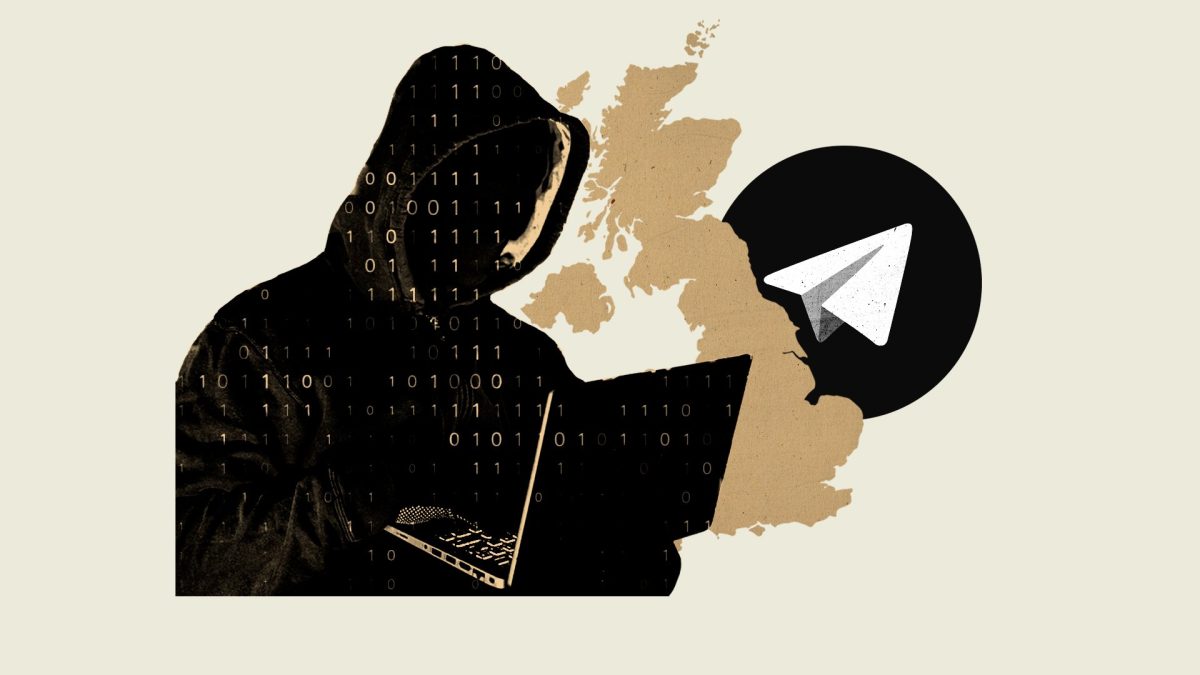
The attack was claimed by a criminal group. But nobody I know in world of security and defence believes anything other than it was Russia. It’s the same with the fire that took out Heathrow in March 2025, the hacking attacks in October 2023 that made the British Library catalogue unusable, and numerous other suspicious events.
Professionals call it “hybrid warfare”. Blaise Metreweli, the head of MI6, has described it as a “space between peace and war”. But however you want to label it, the truth is we are not ready for it, and as a society we are wide open to the effects Russian hybrid aggression is trying to create.
It was in 2013 that the Russian general, Valery Gerasimov – now the head of the military – outlined the doctrine of “New Generation Warfare”: once it had selected a “victim state”, Russia would coerce and destabilise it through military pressure, psychological warfare and low-level social and political interference to the point where it could exert “reflexive control”.
In layman’s language, reflexive control means getting the people, leaders and mass media of a country to start thinking and acting in a way that leads to their defeat – without a shot being fired.
In its first iteration, the Gerasimov Doctrine was about preparing a state for military conquest. It was practised relentlessly against Ukraine. Today the character of Russian hybrid warfare has mutated. Instead of being a stage in the preparation for war, the hybrid methods have become the war.
The reason for that is simple: they are far more effective than the conventional military threats. When Russian bombers make regular practice runs for an attack on Britain, causing the RAF to scramble fighters to intercept them, few Brits even notice. If Russia floods the extremes of British politics with disinformation, it can shape conversations in every Wetherspoons, and at every school gate, weakening our capacity to resist.
Hybrid warfare is effective is because so few people in Western societies understand it is going on, and fewer still are prepared to call it out. At my gym recently, I heard one woman telling another that Keir Starmer was trying to block out the sun using “chemtrails” emitted by airliners, and that he’d been caught taking cocaine on a train. The chemtrail conspiracy has been around for decades, and frequently debunked, but the “cocaine on a train” rumour was a classic piece of Russian disinfo, based on a photograph of a meeting between Starmer, Emmanuel Macron and Germany’s chancellor Friedrich Merz, en route to Kyiv. What was thought to be a bag of cocaine turned out to be, in fact, a tissue.
Russia did not create the confusion in that woman’s brain. And she has every right to dislike the Prime Minister. But Russia very clearly amplified the disinformation campaign against Starmer – with numerous Russian Telegram accounts pushing the supposedly incriminating photographs. Russian money also fuels a “disinformation economy” – where people earn followers, clicks and even advertising revenue by spreading false claims and using hyper-emotive language.
But disinformation is only a tactic in hybrid warfare. The strategy is to disorganise British society to the point where mistrust, division and sheer confusion make it impossible for us to defend ourselves.
In the Noel Coward play This Happy Breed, produced on the eve of the Second World War, a working-class man tells his grandson why Britain is going to win the fight ahead. It’s because the ordinary people “know what we belong to, where we came from and where we’re going. We may not know it with our brains, but we know it with our roots.”
If you staged that play today those lines would provoke laughter and derision. We are a society deeply divided by identity politics, by massive inequalities of wealth and power, and with little sense of a national destiny.
Before Christmas, when Britain’s service and intelligence chiefs warned Britons to be prepared to defend ourselves, some of the loudest naysayers were the far right. For Tommy Robinson’s supporters “the war is already here”. It’s not Putin they see as the enemy, but Muslims, trans people and asylum seekers.
For the extreme left, meanwhile, the British government is seen as “genocide perpetrators” over Gaza, while activists work themselves up into a state of permanent mental civil war against all public institutions. Nato, the alliance that’s kept us safe for more than 70 years, is denigrated as an “aggressor”, and the Armed Forces deemed tainted or illegitimate.
And as research published by the think-tank Resilience and Reconstruction shows, the far left and far right’s narratives often converge over issues like Ukraine.
Russia didn’t invent Tommy Robinson or George Galloway, but its information warriors are hard at work in the political space such characters create, driving emotion-laden narratives and amplifying disinformation. The aim is that, while Russian hackers take down airports, libraries and production lines, we turn on each other and lose trust in the only thing that can defend us: our common British identity and our democratic state.
There’s an assumption in the high echelons of the military and security world that, if push comes to shove, the British people will rally round; they will support the state in wartime and understand that, alongside rights, being a citizen in a democracy gives you duties.
I think it’s true that a majority of us will. But society has become more atomised over the past 20 years, and digital technology gives the naysayers the means to amplify their actions and their messages.
At both extremes of politics, small groups of protesters are normalising intimidation: picketing and harassing MPs, or turning up suddenly to hound communities they don’t like. The visual signature at both ends of the spectrum is the covered face: balaclavas for the far right, keffiyehs and sunglasses for the pro-Palestine extremists. The effect is to normalise targeted intimidation.
So while the majority of Brits would support the state if Russia threatened us with conventional warfare, there would be small minority prepared to go beyond legitimate protest: to disrupt, harass and intimidate the rest of us, and get in the way of the emergency services. Though I doubt we will ever see the kind of “little green men” that preceded the Russian annexation of Ukraine, in the run up to a serious Russian attack on Nato there would certainly be “little racist men” – Brits taking their orders from Russian Telegram and, most likely, they would find Islamist and extreme left counterparts.
In response, Britain must become what one anti-fascist legal scholar in the 1930s called a “militant democracy”. In 1930s Europe that meant banning uniformed marches by fascist and communist groups, banning foreign funding, banning extremist newspapers and strengthening the law to prevent foreign manipulation of the electoral process.
Today, with Russian hybrid techniques ranging from sabotage to disinformation and political interference, it is about creating a strong culture of democratic self-defence; and strengthening both the law and the criminal justice system to counter destabilisation tactics.
Whether it’s in the case of Reform MEP Nathan Gill, jailed for taking bribes to make pro-Russian speeches, or the London “road men” jailed for torching a warehouse containing drones for Ukraine, for Russian cash, it took years to bring the perpetrators to justice, while the “sub judice” rules prevented any public discussion of the political implications. There are other high-profile cases allegedly in the same category yet to come to trial.
It means that while paid liars can flood TikTok with disinformation, the state’s hands are tied for months or years in attributing hybrid attacks and explaining to the public the dangers they face.
The solution, beyond a change in the law, is for Britons to become far more up-front in discussing the risks and contingencies in an age of hybrid warfare. In Sweden, every citizen gets a leaflet telling them what to do if war breaks out. In Finland, every household is told to keep ample supplies of food, a clockwork radio and an axe. Both countries regularly stage civil defence exercises, where people practise mobilising in the aftermath of a catastrophic attack.
I think that’s what we in the UK now need to do. It will feel strange – we’ll have to talk to each other frankly about dangers we haven’t thought about for decades. But we’ll come out stronger. If we can find and amplify what we’ve got in common – across the political, religious and cultural divides – we can make sure we do not become one of Russia’s “victim states”.
Your next read