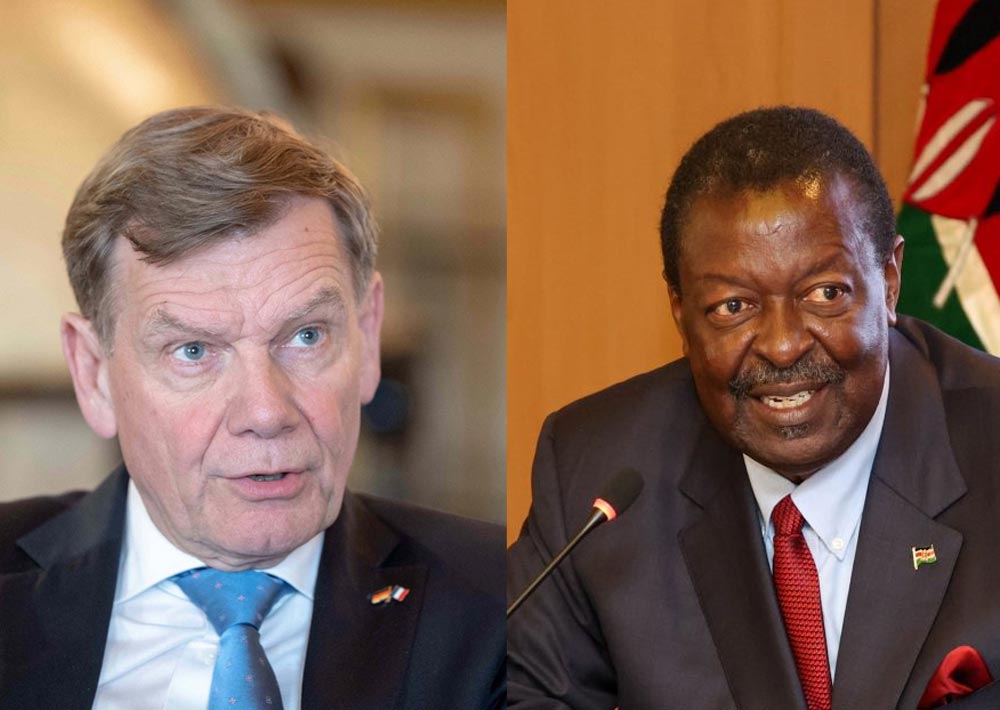
Kenya, 20 January 2026 – The two-day visit to Kenya by Germany’s Federal Minister for Foreign Affairs, Dr Johann Wadephul, scheduled to begin on Wednesday, signals a maturing and increasingly strategic partnership between Nairobi and Berlin at a time of shifting global alliances, labour market realignments and mounting regional security pressures.
Beyond the diplomatic courtesies, the visit underscores Kenya’s growing profile as a regional anchor state in East Africa and a preferred partner for Europe in trade, climate action, labour mobility and peace-building efforts in the Horn of Africa and the Great Lakes region.
Dr Wadephul’s scheduled bilateral talks with Prime Cabinet Secretary and Cabinet Secretary for Foreign and Diaspora Affairs Musalia Mudavadi, as well as his expected audience with President William Ruto, are set against a backdrop of expanding cooperation that has moved beyond traditional development aid into what both sides now describe as a strategic partnership.
At the centre of discussions will be the proposed Bilateral Labour Mobility Agreement, a framework that reflects changing demographic realities in Europe and Kenya’s own economic priorities.
Germany, grappling with an ageing population and acute labour shortages in key sectors, is increasingly looking outward for skilled and semi-skilled workers.
Kenya, on the other hand, is positioning its youthful and increasingly trained workforce as a global export, capable of filling gaps while easing domestic unemployment pressures.
For Nairobi, the labour mobility deal is not merely about job placements abroad. It is framed as a structured and regulated pathway that could deliver long-term economic dividends through remittances, skills transfer and professional exposure for Kenyan workers.
If successfully implemented, the agreement could also reduce irregular migration by creating legal, predictable routes into the European labour market.
However, analysts caution that such arrangements will require strong safeguards to protect Kenyan workers from exploitation and ensure that skills migration does not hollow out critical sectors at home. The talks with Germany are therefore being closely watched as a test case for how Kenya balances global labour demand with domestic development needs.
Climate cooperation is another pillar of the bilateral relationship that is likely to feature prominently during the visit. Kenya has placed green growth at the heart of its development strategy, leveraging its comparative advantage in renewable energy. With over 85 per cent of its electricity generated from renewable sources, Kenya has emerged as a continental leader in clean energy deployment.
Germany’s role in supporting geothermal development, climate adaptation and green technology investment positions it as a key partner in Kenya’s ambition to align economic growth with climate resilience. For Berlin, cooperation with Kenya offers an opportunity to advance global climate goals while supporting scalable green solutions in the Global South.