
You shouldn’t sleepwalk into retirement, and you shouldn’t stop working just because everyone else has either
For many people, retirement doesn’t arrive as a conscious decision so much as a moment they wake up inside. One day you are working, marking time by deadlines, meetings, routines and expectations. Then, almost without noticing the crossing, you are retired. The leaving card has been signed. The pension paperwork completed. Perhaps there was a small gathering, perhaps not.
What is rarely marked is the internal shift. The role that quietly organised the week, shaped identity and gave a reason to get up has gone. Time opens up, but without much guidance about how to inhabit it. This is how many people sleepwalk into retirement, not through lack of thought, but because the transition is treated as administrative rather than psychological.
In my decades of delivering pre-retirement programmes and working with clients in later life, I’ve seen the same patterns emerge again and again. These aren’t failures of intelligence or effort. They are the predictable consequences of stepping out of work without fully stepping into what comes next.
New FeatureIn ShortQuick Stories. Same trusted journalism.
Here are the eight mistakes I see most often.
Retiring because everyone else is
Adam, 68, retired at 66 largely because everyone else in his team did. He had no strong desire to stop working, but he also couldn’t articulate a reason to stay. Once the date was named, the rest followed automatically.
For a generation raised to expect retirement at a certain age, this default timing felt normal. Employers reinforced it. “When are you thinking of going?” was often the only question asked. Once that question is answered, momentum takes over.
The mistake here is not retiring at 66, but doing so without questioning whether that timing actually fits your own life. It ignores your relationship with work, your health, your finances and what else might be unfolding.
For some, the alternative is not a sharp stop, but a gradual shift. Working fewer days, changing role or staying engaged in work that feels meaningful rather than obligatory can provide continuity without exhaustion. James, a mechanic, took a three-month break then returned on a three-day-a-week basis, giving him time to plan his future life.
Saving up money rather than enjoying life when you’re young and healthy
Many clients tell me their biggest regret was not spending too much, but spending too little when they were healthiest and most able to enjoy it.
I hear this repeatedly from people a few years into retirement. They postponed travel or learning, telling themselves they would do it “later”, once they felt more secure. Later, when energy or health shifted, those plans quietly fell away.
This doesn’t mean you should be reckless – but money in retirement works best when aligned with values rather than fear.
The most contented retirees aren’t those with the largest pensions, but those who have thought carefully about what they are saving for. They make deliberate choices about when to spend and what genuinely adds meaning to their days.
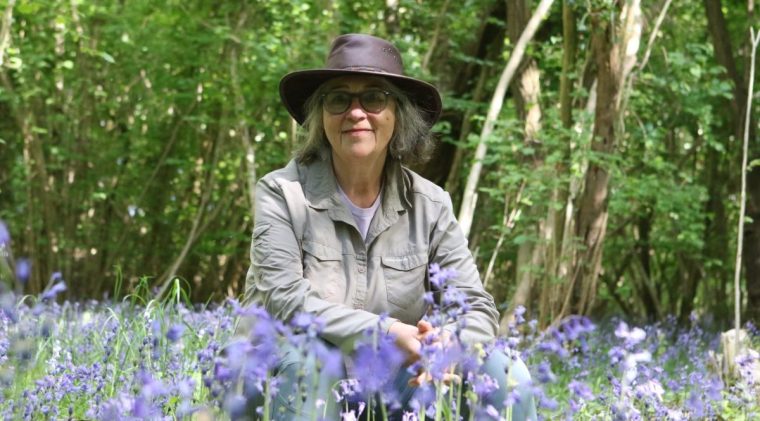 Dr Denise Taylor says boredom in retirement is rarely about having nothing to do, it’s about not finding meaning in what you are doing (Photo: James McCord)
Planning to ‘rest’ and relax
Alice, 66, had spent decades as a magazine editor and counted down the days to retirement. She imagined rest would be the solution to her exhaustion. And at first, it was. The relief was physical, emotional and deeply felt. But after six months, that relief curdled into restlessness.
What Alice hadn’t anticipated was how much of her energy came from feeling useful and engaged. Rest alone wasn’t enough to sustain her. The early weeks of retirement often feel like a long exhale. People sleep better. Shoulders drop. There is time to move more slowly.
Then, gradually, something else emerges. Days begin to feel interchangeable. Motivation thins out. Boredom appears, often accompanied by guilt for feeling dissatisfied when, on paper, life looks comfortable.
Boredom in retirement is frequently misunderstood. It’s rarely about having nothing to do. It’s about having time without meaning, and activity without authorship. So if you’re feeling bored, it’s a signal worth listening to – something is asking to be rethought.
Alice joined her local U3A branch, which provided regular walks, talks and Spanish classes, activities that gave her both structure and genuine interest.
Leaving without psychological preparation
Mark felt burned out, took sick leave and never went back. A year later, he said, almost casually: “I suppose I’m retired.” What struck me was the flatness that followed. He had escaped the pressure of work, but hadn’t crossed into anything else. The role ended abruptly, yet nothing had helped him make sense of who he was without it.
People prepare financially and practically, but leave without doing the quieter psychological work of leaving well. There is often an assumption that once work stops, clarity will arrive on its own. Instead, many people feel untethered.
One simple way to prepare: experiment before you leave. Taking a short sabbatical or reducing hours temporarily can show you how retirement might actually feel, rather than how you imagine it will.
Waiting until you’ve left to start thinking
In my earlier work delivering pre-retirement programmes, we encouraged people to start thinking about this transition at least a couple of years before their proposed retirement. Not in terms of filling diaries, but in terms of identity, values and what mattered beyond work.
Many resisted. Retirement felt too far away, or too abstract. Others assumed they would “work it out when they got there”. Some avoided the conversation entirely, worried that thinking ahead would somehow hasten the ending.
The mistake is assuming thinking will be easier once work ends. In practice, the opposite is often true. Once the structure of work disappears, people can slip into a narrower way of being. Without some prior reflection, retirement can quietly shrink rather than open life up.
Start sketching out possible paths at least two years ahead. Even rough ideas about what you might want to explore – creative projects, volunteering, learning – give you somewhere to begin when the time comes.
Falling into ‘retired husband syndrome’
Retirement brings relationships into sharper focus, particularly within couples. Men generally struggle more in the early stages, especially if their identity and closest relationships were bound up in work. Women, who are more likely to have combined paid work with wider social networks, caring roles, or part-time employment, often adjust more easily at first.
In some cultures, this pattern is well recognised. In Japan, “retired husband syndrome” describes situations where men expect their wives to organise their social lives, while she already has a full routine and friendships of her own. What looks like togetherness from one side can feel like intrusion from the other.
Timing differences add another layer. Don’t assume you’ll both be ready to finish work at the same time. One partner may be ready to retire while the other is still fully engaged in work and not emotionally or practically prepared to make the same shift.
The couples who fare best are those who talk explicitly about what retirement will change, and what it won’t. They discuss how much time they want together, how much apart, and what kind of lives they are each moving towards, rather than assuming it will naturally align.
Trying to stay busy instead of becoming conscious
Retirement swings between two extremes: the fantasy of endless leisure, or pressure to stay relentlessly active. Both miss the quieter work underneath.
Some fill their diaries with travel, volunteering, courses and new pursuits. From the outside, it looks like success. Yet even here, sleepwalking can occur when activity becomes a way of avoiding reflection.
The mistake isn’t being active. It’s using busyness to stay unconscious. Without noticing what gives you energy and what drains it, activity becomes another way of bypassing the deeper adjustment retirement requires.
People who adjust well prioritise a small number of meaningful anchors: one regular commitment, one place where they feel known, one activity that stretches them gently.
Treating retirement as an ending, rather than a transition
When retirement is treated as an ending, people can find themselves psychologically stranded. The old role has closed down, but nothing new has yet opened up. Days begin to blur into one another. A week can feel like a month of Sundays.
When retirement is understood as a transition, something different becomes possible. Transitions allow for uncertainty. They legitimise not knowing. They create space for questions to emerge slowly rather than demanding immediate answers.
In practice, this means allowing a period of uncertainty rather than rushing to fill the space. Treat the first year as exploratory, with permission to change your mind. This gives you time to discover what actually suits this stage of life, rather than forcing decisions too early.
For those approaching retirement, the invitation is not to optimise the exit, but to slow it down psychologically. To question default timing. To resist inherited expectations. To ask, before the leaving card is signed, what kind of transition you are actually stepping into.
Retirement doesn’t have to be sleepwalked. But waking up requires attention, and a willingness to treat this moment not as an ending, but as a threshold.