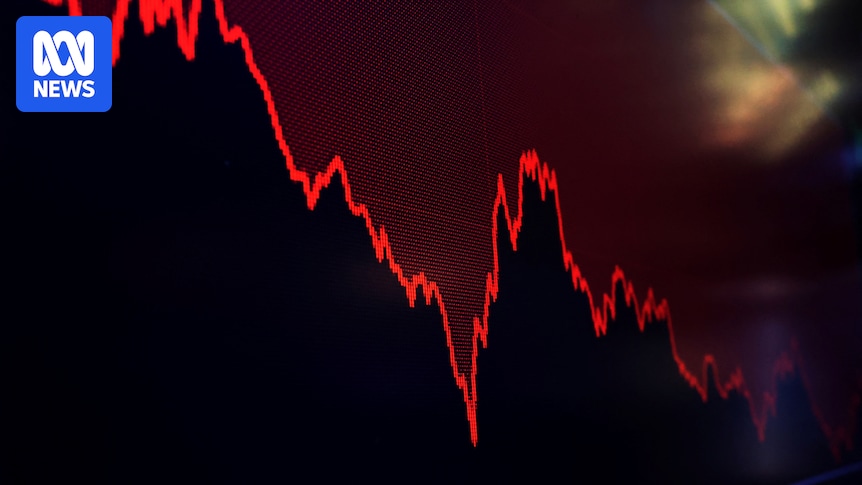
The US dollar and Wall Street fell sharply overnight partly because of the ‘sell America’ trade.
Essentially, nervous investors sold down their US assets in response to Donald Trump’s threats to start a trade war against eight European countries over their opposition to his Greenland takeover plans.
The other main reason was Japan’s bond sell-off, which led to borrowing costs hitting record highs for the Asian financial giant.
You’re probably wondering: what has this got to do with anything? I’m getting to it!
Japanese bond market sell-off
For many years, global investors have been borrowing Japanese money (at very low interest rates) to purchase stocks and assets on other markets (ie. Wall Street).
When Japanese rates climb, it usually leads to a big falls overseas. So it was also a contributing factor to the weak performance of the US dollar and share market overnight.
Now the situation is that investors who lend money to the Japanese government are demanding much higher returns.
The surge in Japan’s government bond yields coincides with Prime Minster Sanae Takaichi decision to call a snap election on Monday.
She’s running on a pro-stimulus platform, which means Japan will need to borrow a lot more money.
The price of a bond and its yield (or return) move in opposite directions.
So when prices go down (because lots of people are selling), the yield needs to rise in order to incentivise people to purchase those bonds.
Now with that background out of the way, Japan’s 10-year government bond yields have jumped almost 19 basis points in two days, their sharpest rise since 2022.
Meanwhile, its 30-year yields rose 28 basis points overnight.
That’s the equivalent of one interest rate hike in a single day — and the biggest daily jump since 2003 as investors are bracing for increased government spending.
At 3.883%, Japan’s 30-year yield has surged to its highest level ever.
“If there is a strong mandate following the election, that could open the door to more fiscal spending,” said Seema Shah, chief global strategist at Principal Asset Management.
“It pulls a lot of global bond markets into a difficult story about debt and you can see that in the rise in borrowing costs.”