
– Advertisement –
Manchester has given the world more cultural icons than most countries, never mind cities. You could pick from any walk of life: music and football to politics and social change, its influence stretches far beyond the ring road.
Yet, as Shaun Ryder recently pointed out in an interview, the city is strangely short on statues.
Speaking on Absolute Radio’s Hometime show with presenters Bush and Richie, the Happy Mondays frontman argued that Manchester should be doing far more to honour the people who helped put it on the map.
During the interview, which also featured his longtime bandmate Bez, Ryder said late musicians like Stone Roses bassist Mani, The Smiths’ Andy Rourke and Factory Records founder Tony Wilson all deserve to be immortalised in bronze.
“We haven’t got a statue for Tony Wilson yet,” Ryder told the show. “We’re not Liverpool, where there are loads of statues. Manchester doesn’t do statues like that.”
But maybe we should? So, who do you think deserves a statue in town who doesn’t have one?
Ten legendary Greater Mancunians who deserve a statue
Shelagh Delaney
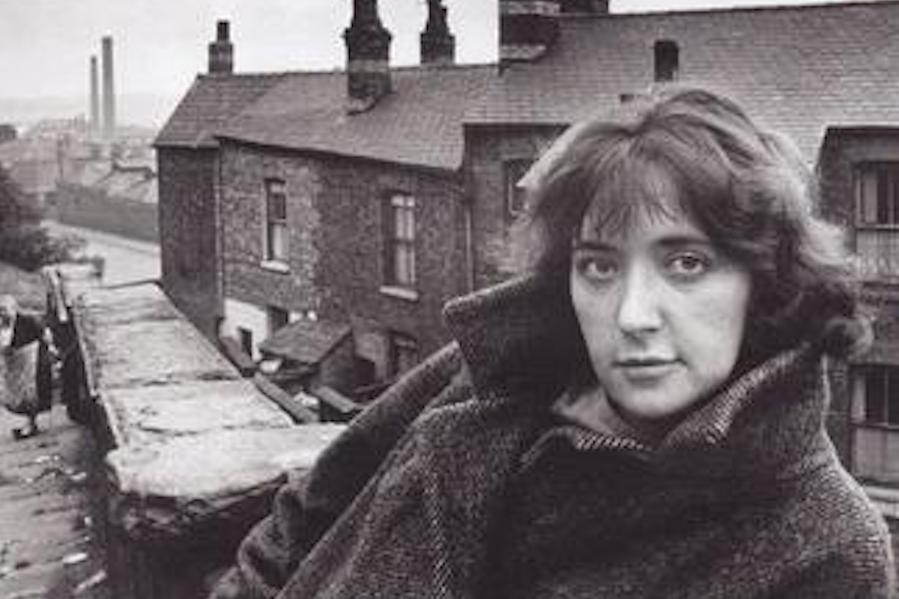 Shelagh Delaney
Born in Salford in 1939, Shelagh Delaney wrote A Taste of Honey at just 18, changing British theatre forever.
This was one of the first “kitchen sink” plays to depict working-class life with honesty and heart. Produced by Joan Littlewood’s Theatre Workshop, the play challenged social norms, explored class, gender, and race, and inspired the British New Wave in theatre and film. Delaney went on to write screenplays, radio, and television, influencing generations of writers and artists. A statue of her, pen or script in hand, would celebrate the Salford playwright who gave the city’s ordinary voices a place on the world stage.
Mani
 Mani embracing Clint Boon
Manchester lost one of its brightest musical souls when Mani, bassist for The Stone Roses and later Primal Scream, passed away in 2025.
Mani’s basslines shaped the sound of Madchester, giving bands like The Stone Roses a groove that still makes people move decades later. He was adored not just for his talent but for his generosity and infectious personality. There are so many beautiful stories out there of fans meeting him and having a nice chat. He had time for everyone. Fans from every walk of life came to celebrate his life at Manchester Cathedral, proving the rare kind of universal respect he earned. A statue of Mani, bass in hand and smile on his face, would honour a man who made Manchester’s music scene legendary, capturing the joy and soul of the city itself.
Tony Wilson
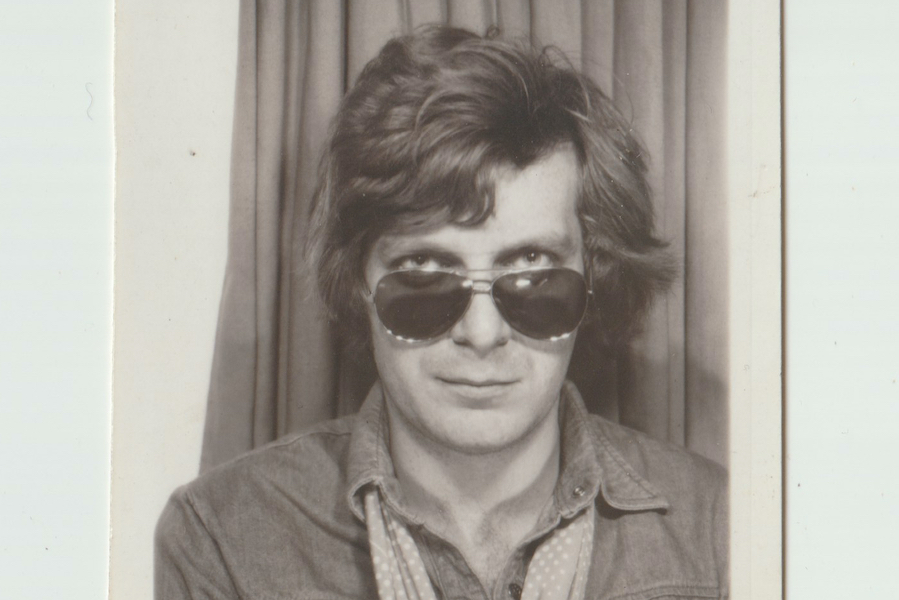 Tony Wilson
If anyone deserves to stand in bronze at the heart of the city, it’s Tony Wilson.
The Factory Records boss didn’t just document Manchester culture, he was the cultural catalyst. From Joy Division to New Order to the Hacienda, Wilson helped turn a rainy northern city into the coolest place on earth. He gave a platform to voices that might never have been heard and forged an era of music and clubbing that defined a generation.
As Shaun Ryder said: “There’s a call for Tony Wilson to be honoured like that, but it’s not happening.” Maybe it’s time it did. A statue of Wilson, coat open, cigarette in hand, surveying the city he transformed, would celebrate a man whose influence still echoes across the city.
Ian Curtis
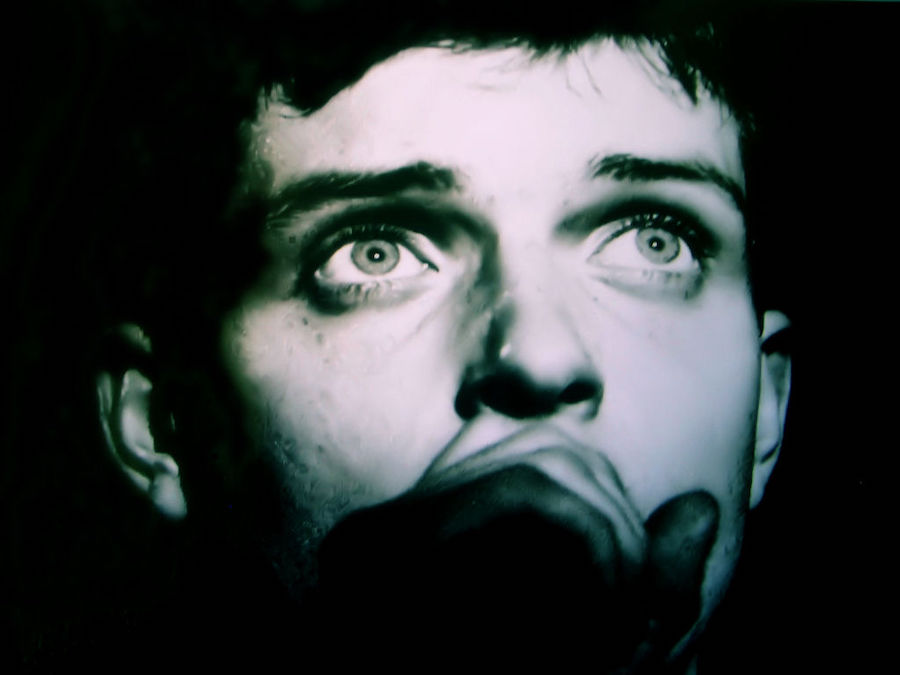 Ian Curtis
Ian Kevin Curtis was born on 15th July 1956 in Stretford, Greater Manchester, and grew up in Macclesfield, where he developed a passion for literature, poetry, and music from an early age. He won a scholarship to King’s School in Macclesfield and later worked in Manchester city centre before dedicating himself fully to music.
In 1976, after attending a Sex Pistols gig at Manchester’s Lesser Free Trade Hall, Curtis met Peter Hook and Bernard Sumner and co‑founded Joy Division in Salford – one of the most influential bands in post‑punk history. His writing and performance were riveting: lyrics filled with imagery of alienation, despair, and stark emotional depth combined with a baritone voice that felt both intimate and intense.
Joy Division’s seminal albums Unknown Pleasures and Closer reshaped alternative music, influencing generations of artists and fans around the world. Tragically, Curtis’s life was cut short when he died by suicide on 18th May 1980 at the age of 23, on the eve of the band’s first American tour and just weeks before the release of Closer.
Curtis’s legacy endures far beyond his brief career, his intelligent, starkly honest lyrics and haunting stage presence continue to captivate new listeners. A statue honouring him, perhaps in Macclesfield where he was raised or in Greater Manchester where Joy Division was born, would celebrate a unique creative force whose work helped define a musical era and still resonates across the globe.
Noel and Liam Gallagher
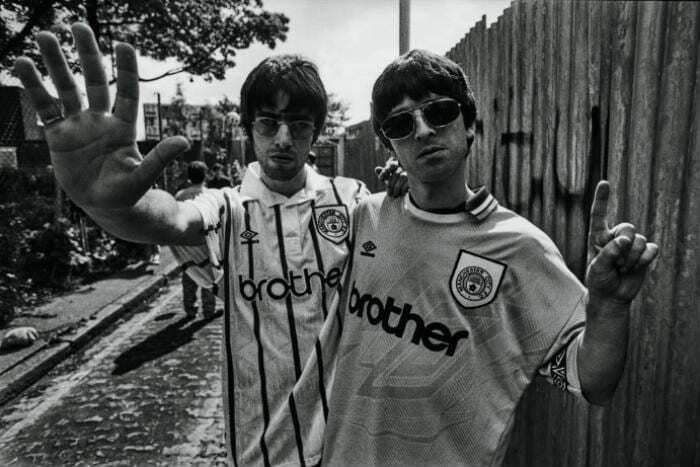 Noel and Liam Gallagher in 1994. Photo by Kevin Cummins from While We Were Getting High
You can’t talk Manchester without Oasis.
The Gallagher brothers took the swagger of the city and blasted it across the planet. Their songs became anthems, their rivalry legendary, and their attitude quintessentially Mancunian: brash, funny, and unrepentant. Imagine a statue of the pair mid-argument outside Sifters Records in Burnage, capturing both their energy and their rivalry. Tourists would flock in their thousands, and Mancunians could finally see their icons immortalised where it all began.
Marcus Rashford
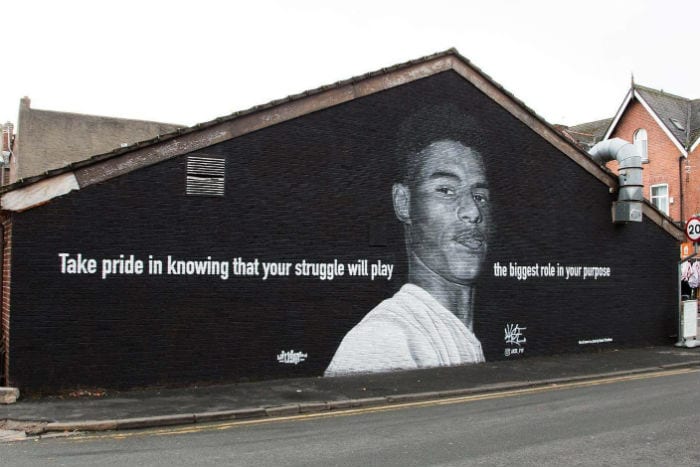 Marcus Rashford Photo: Akse P19 / Instagram
Statues shouldn’t only be about the past.
Marcus Rashford has become more than a footballer: he’s a symbol of modern Manchester compassion. From his rise at Manchester United to his tireless campaigning for free school meals, Rashford has used his platform to fight injustice and inequality. A statue of him would show that the city still produces heroes, not just legends: someone who represents the very best of Manchester values today: empathy and a strong sense of helping out the community.
Caroline Aherne
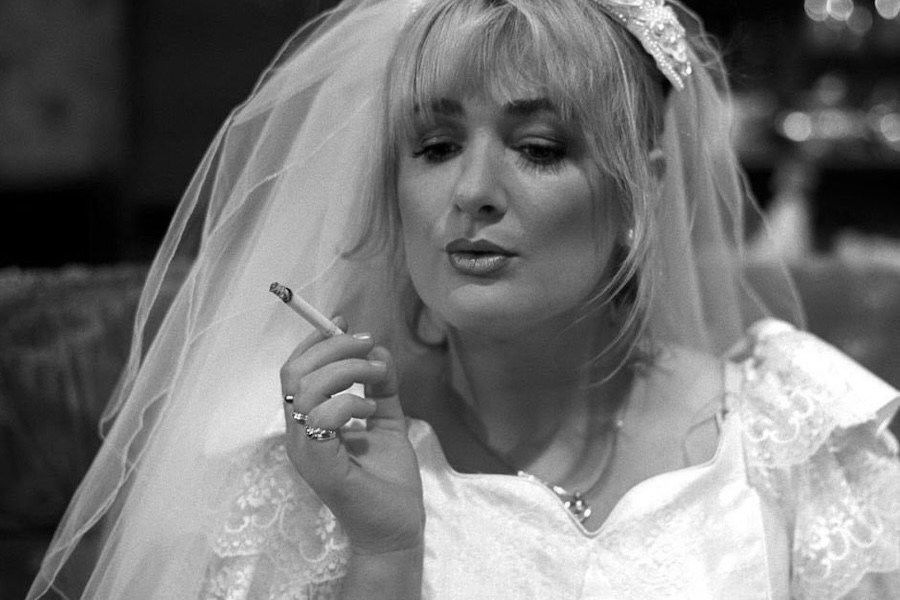 Caroline Aherne in The Royle Family BBC
Manchester has always been blessed with a plethora of ace comedians. Few people have ever captured the spirit, humour, and heart of Greater Manchester quite like Caroline Aherne. Born in Ealing but raised in Wythenshawe, she turned ordinary northern life into comedy gold with The Mrs Merton Show and, most famously, The Royle Family.
Her writing and performances were warm, wickedly funny, and deeply human, celebrating the kind of everyday characters most TV ignored. Aherne never lost her Manchester roots or her down-to-earth attitude, even at the height of her success. Since her death in 2016, her work has only grown in stature, influencing a generation of British comedy. A statue of Caroline, perhaps as Mrs Merton with a knowing smile, would be a perfect tribute to one of the city’s most beloved creative voices.
Mark E. Smith
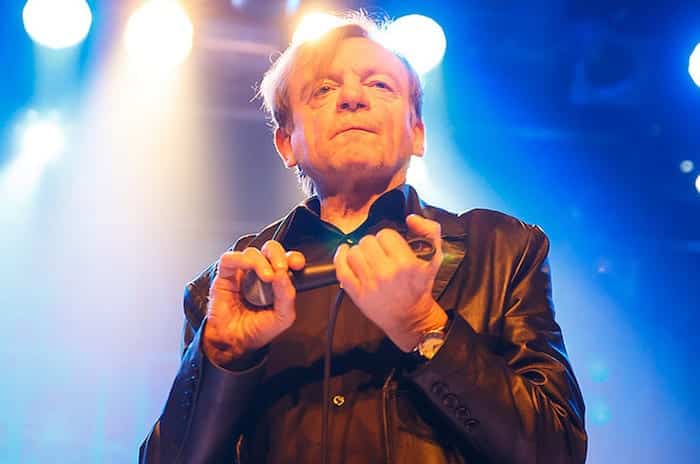 The Legendary Mark E Smith Montecruz Foto (cropped)
No one sounded more like Manchester than Mark E. Smith. Abrasive, brilliant, and totally uncompromising, he fronted The Fall for over 40 years and inspired countless bands along the way.
His music reflected the grit, intelligence, and unpredictability of northern life, and his words were often sharper than a razor’s edge. Smith refused to bow to commercial pressures or trends, and that stubbornness became part of his legend. A statue of him scowling somewhere near Prestwich or central Manchester would feel entirely appropriate, a reminder that art can be fearless, challenging, and unapologetically Mancunian.
Johnny Marr
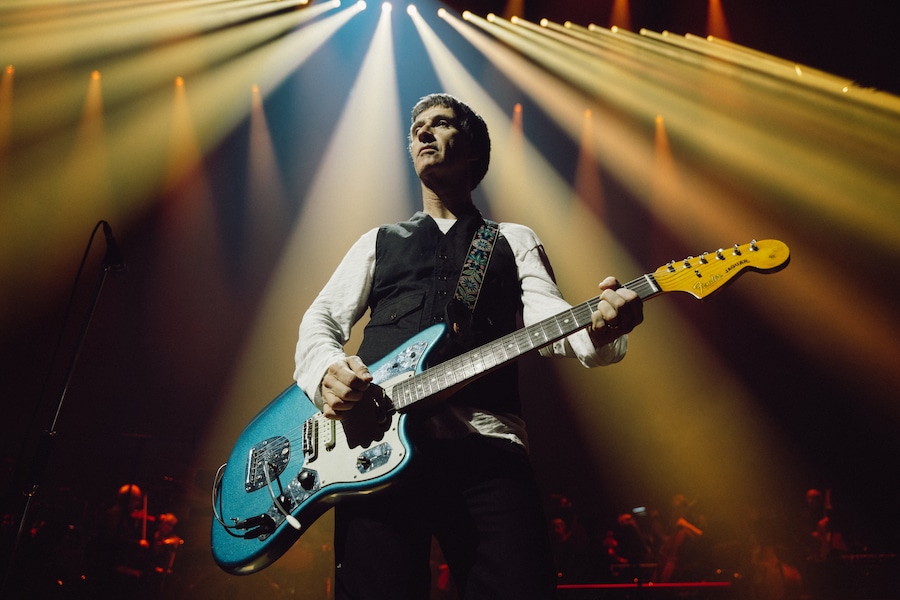 Name a more influential artist?
One of the greatest guitarists Britain has ever produced, Johnny Marr gave The Smiths their signature sound.
With jangling riffs to melodic hooks, Marr shaped alternative music for decades. His style influenced countless musicians worldwide, yet he remains a Mancunian hero who hasn’t been honoured with a public statue. Imagine him immortalised on a bronze pedestal, guitar in hand, looking out over the city that inspired him, a fitting tribute to one of Manchester’s most brilliant creative exports.
Anthony Burgess
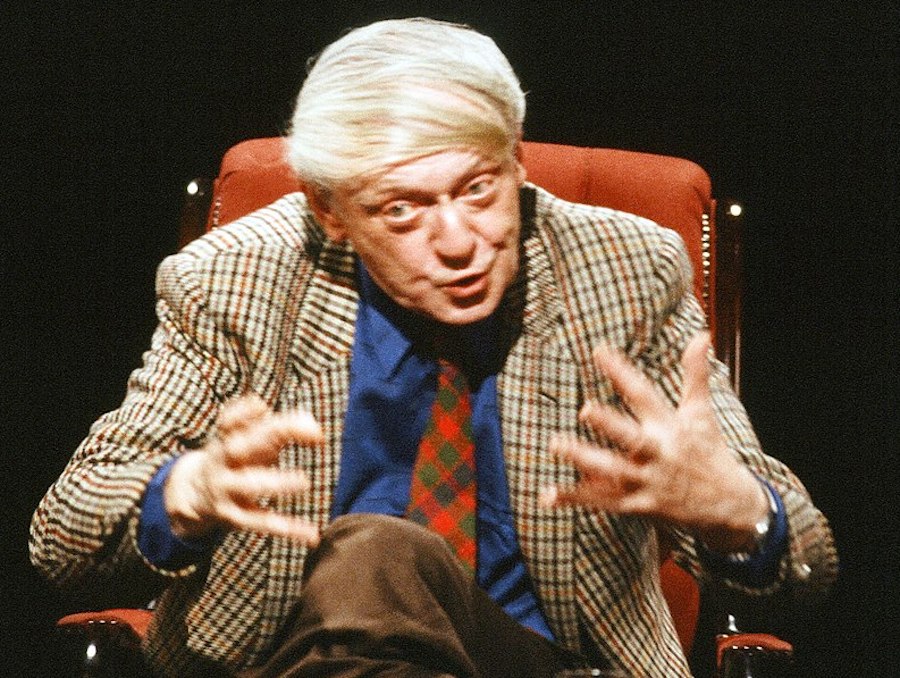 Anthony Burgess
Born in Harpurhey, Anthony Burgess became one of the most important British writers of the 20th century.
His novel A Clockwork Orange shocked, entertained, and provoked generations, cementing his place in global literary history. Burgess’s work went beyond fiction: it challenged morality, language, and society itself. A statue of Burgess, notebook in hand, standing in a quiet Manchester square, would remind passersby of the city’s rich literary heritage and its global cultural influence.
Elizabeth Gaskell
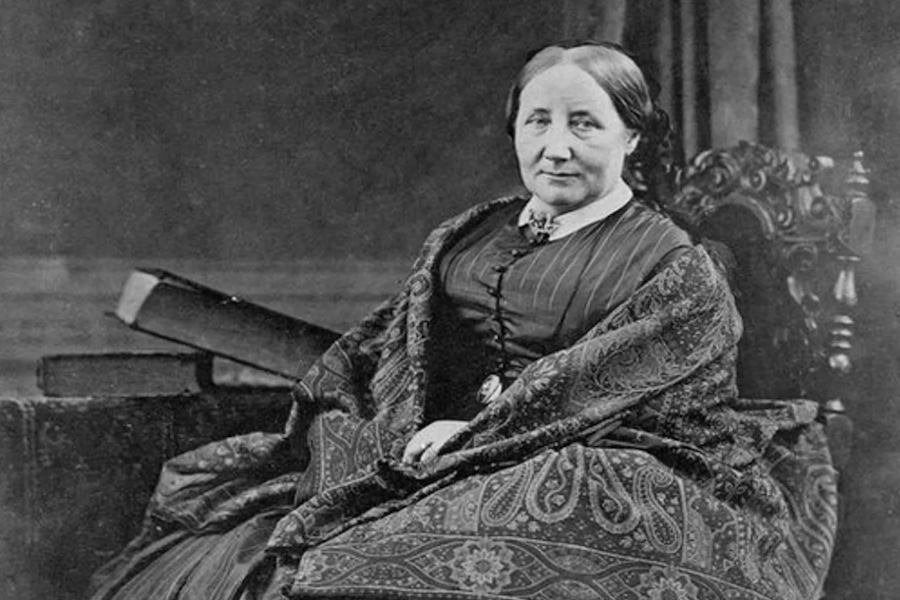 The legendary Elizabeth Gaskell
The great Victorian novelist lived in Manchester for decades and wrote North and South, Mary Barton, and other works that immortalised the city’s industrial struggles.
Gaskell’s novels helped the world understand the realities of urban poverty, class, and social reform, all while weaving deeply human stories. She brought Manchester into literature in a way no one else had, and a statue of her, perhaps with quill and notebook, would honour the woman who gave the world the stories of the city’s working people.
You can see what’s happning at the Elizabeth Gaskell House here
Is there any we’ve missed? Who else should have a statue in Manchester? Let us know [email protected]
– Advertisement –