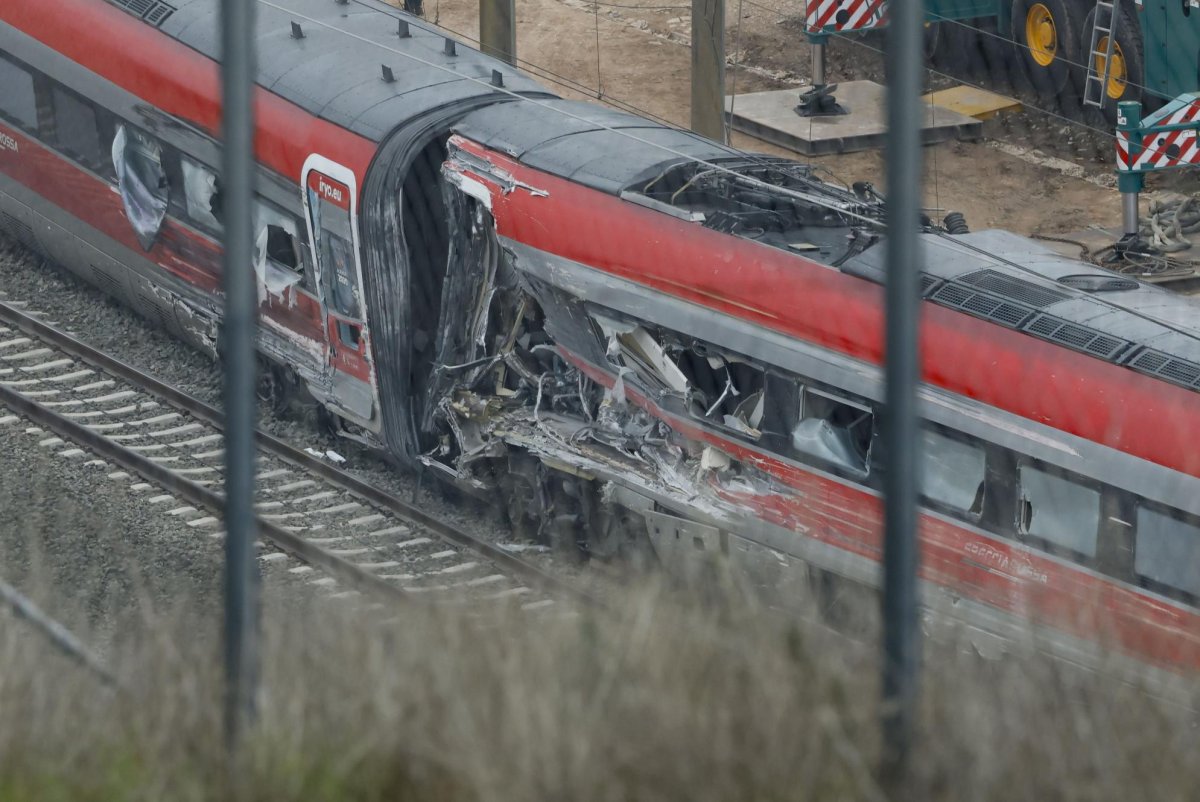
The Iryo high-speed train, that collided with an Alvia high-speed train after derailing, remains on the train tracks in Adamuz, Andalusia, Spain, on January 21, 2026. Photo by J.J. Guillen/EPA
Jan. 21 (UPI) — The death toll from Sunday’s train crash in southern Spain rose to 43 on Wednesday when another victim was found among the wreckage.
The 43 people were killed Sunday evening when a private Iryo train traveling from Malaga to Madrid with about 300 people on board derailed, with several of its cars jumping onto adjacent tracks.
A state-run Renfe train traveling in the opposite direction collided with the derailed cars, forcing it from the tracks and sending its two front cars down a 13-foot embankment.
The crash occurred near Adamuz, located 145 miles south of the capital Madrid in Cordoba province in southern Spain.
Clean-up efforts have focused on inspecting and removing the remains of those two cars, with the remains of the 43rd victim being found in the second car, the Andalusian government said in a statement.
Forty-three missing-person reports had been filed.
A total of 123 people, including 118 adults and five children, were injured in the crash. On Wednesday, the local government said all but 31 had been discharged from the hospital.
Of the reaming 31 people hospitalized, six patients, including one child, remain in intensive care units, while 25 others remain hospitalized on regular wards across multiple hospitals, it said.
More than 400 people have been deployed to the crash site as investigators continue to probe the cause of the incident.
Investigators have turned their focus to the tracks as a possible cause of the crash as rail damage has been discovered and is being examined to see if it was a factor in the incident or a consequence of it.
Angel Garcia de la Bandera, director of traffic at the state-owned railway infrastructure manager Adif, told reporters Wednesday in a press conference that the Madrid-Seville high-speed line was completed in May at a cost of $818.4 million. He said Adamuz section has been inspected four times in the last four months since Oct. 13.
“None of the four inspections detected a fault that would, at first glance, indicate a link to the accident,” he said, according to a readout from the Ministry of Transport.
Transport Minister Oscar Puente said he will be fully transparent with the public once information becomes available and will voluntarily appear before the full Congress.
He called on the public to avoid speculation as the investigation continues, stating, “talking about causes before having technical conclusions is premature and, above all, shows little respect for the victims and their families.”
“We will continue to ensure that victims and their families receive care, information and accompaniment, not only in the first hours but also in the days and weeks afterward, which are particularly difficult from a human and emotional standpoint,” he said.
President Pedro Sanchez of Spain on Wednesday spoke with Andalusian President Juanma Moreno, and they agreed to hold a state tribute to the victims on Jan. 31.
The death toll rose as Spain was confronting a second train crash on Tuesday night in northern Catalonia, which killed one person and injured 37 others.
Following days of rain, a retaining wall collapsed on the tracks, causing the passenger train to crash.
Puente on Wednesday called on the public to remain confident in Spain’s rail system, which has been a point of pride in the western European country.
“We are going through an especially painful moment, but we must not call into question public transport in our country,” he said. “It is not perfect or infallible, but it is a strong transport system.”