gad conceives experiential space in alpine landscape
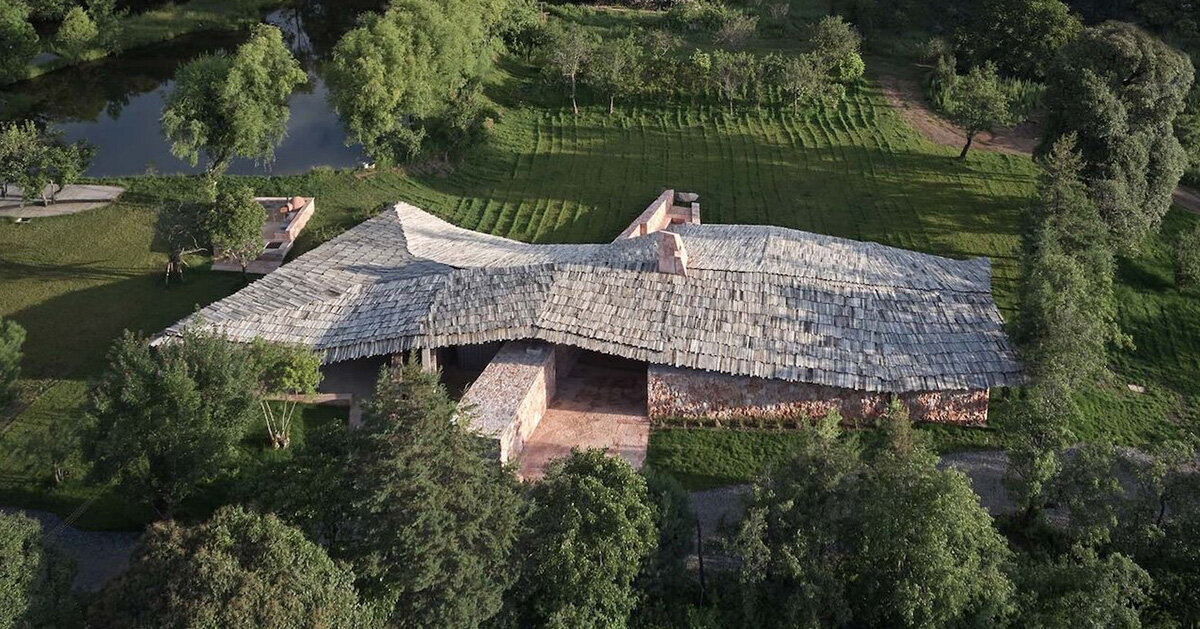
The Hylla Cloud Nature Experience Center, also known as the ‘Red House’, is a nature experience center designed by gad. It sits on a gentle slope in Yanjiao Village, Baisha Town, Lijiang, Yunnan Province, China. The hospitality project forms part of Hylla Land and offers a place for rest, gathering, and immersion in nature. The building draws inspiration from Kaare Klint’s 1933 safari chair, which adapts to uneven ground and supports the body with ease. In the same way, the architecture adjusts to the terrain and encourages relaxed use. Snow-covered mountains rise on one side, while the village and farmland extend on the other. Three sides of the site sit within a dense canopy that extends from Mount Zhishan. Lawns, water pools, and trees shape the foreground, while a natural canal runs behind the building and separates it from the main hotel across the water. Because of this setting, the architect chose to reinterpret the idea of ‘local’ architecture. Instead of repeating familiar forms, the design allows a relaxed structure to grow directly from the land.
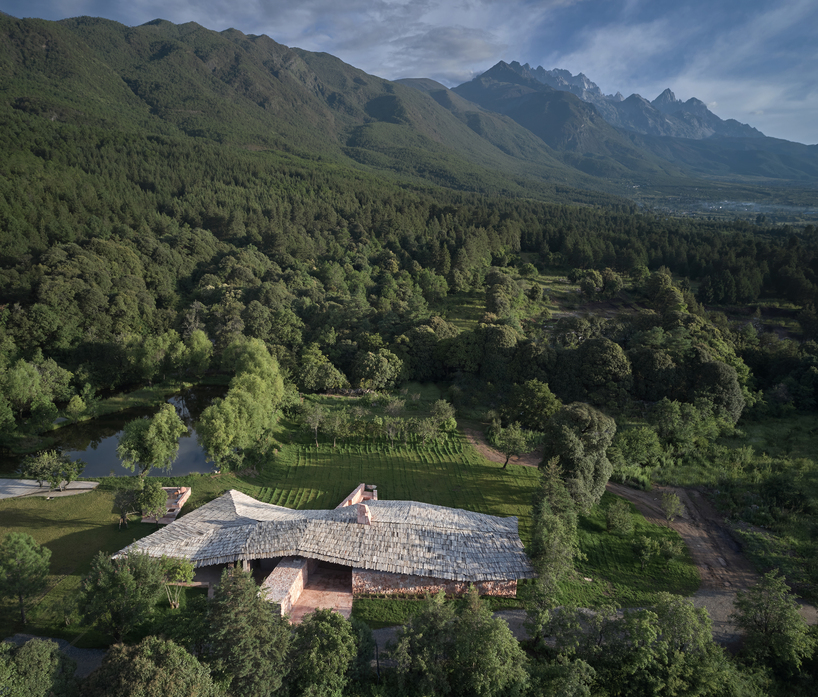
the building is unified by a free-form roof that floats above the site | image by Yang Guangkun
Hylla Center embodies spirit of free-form architecture
Yunnan carries a strong sense of calm, and its traditional buildings reflect this feeling. Local craftsmen once built without strict drawings or fixed rules. They worked with instinct and imagination and placed stones into walls freely, leaving edges unfinished. This approach valued chance and comfort over perfection. Because of this, the studio decided to design with the same relaxed attitude. Lijiang’s weather remains sunny for most of the year. Clouds create moving shade across the land. Therefore, the cloud became a symbol of freedom and ease. This idea shaped the entire project.
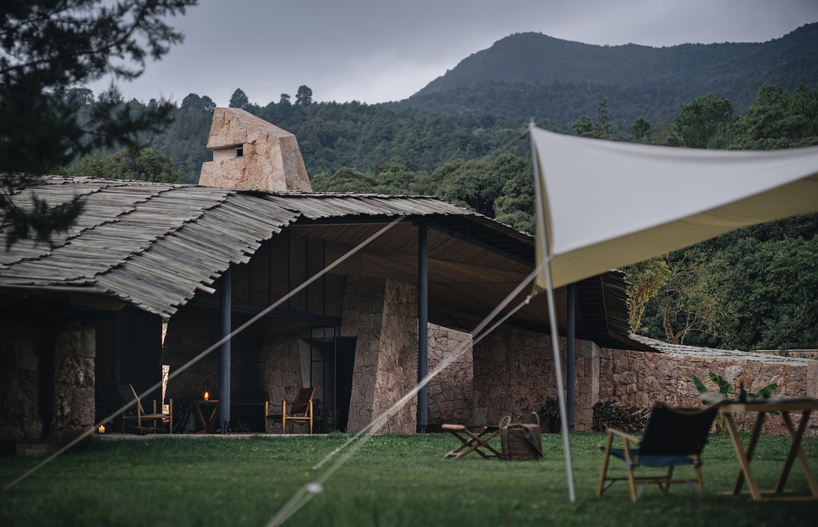
The roof floats above the site like a drifting cloud, defining the building’s shape when seen from above. At the same time, its shadow creates the main living space below. Inspired by Kaare Klint’s 1933 safari chair structure, the building’s supporting system adapts to the site’s undulating terrain. Each structural span varies in length, responding directly to changes in elevation. The result is a tent-like form that appears to rest lightly on the grass. This form also supports the client’s vision. The site already feels like a natural campsite, with grassland, water, and forest surrounding it. The tent-like architecture strengthens this outdoor character.
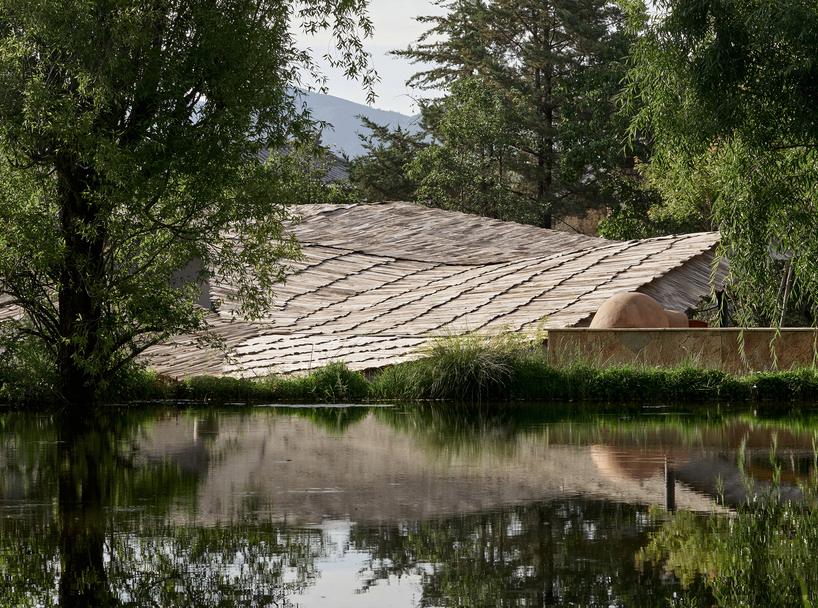
in front of the building, lawns, pools of water, and trees are arranged in a layered sequence | image by Yang Guangkun
local Chinese materials shape look of ‘controlled carelessness’
The project uses materials that come directly from the region. Floors and walls use the same local stone from Guifeng Village. The design leaves the stone exposed both inside and outside. This decision allows its color and texture to define the space. The stone has a distinctive pink tone that contrasts with the surrounding landscape. Because of this, workers began calling the building the ‘Red House’. The design team reused old wood found on site to build the roof. They left the edges uneven and kept visible marks of manual work. This choice reflects the region’s tradition of building with carelessness and freedom. However, this relaxed appearance required careful work. Masons shaped each stone by hand to preserve its natural surface. The architects compare the process to cooking. They used local ingredients to create something new.
The Red House does not dictate how people should use it. gad believe that architecture should offer possibilities rather than rules. Therefore, the boundary between building and nature remains soft. Visitors choose how they want to move, rest, or observe the surroundings. At the same time, the design respects visitors who come from elsewhere. For many of them, the snow-capped mountains create a strong sense of difference. The building frames these views carefully. It also offers multiple angles and positions for photography and quiet observation.
each stone was individually chiseled by hand to preserve its natural surface | image by Lei Tantan
user-first approach defines Cloud center’s interior layout
Inside, the Cloud Nature Experience Center is loosely divided only where necessary, separating rest and activity areas, bathing spaces, and storage. The main lounge is fully open and adaptable: it can become a café, bar, retail space, or gathering venue depending on the needs of the moment. The bathing area is enclosed with translucent glass tiles, while the shower system simulates natural rainstorms. Throughout the design and construction process, the architects deliberately avoided imitating Yunnan’s traditional architectural forms. Instead, they focused on the deeper spirit of the region that values ease, comfort, and freedom. The final building looks different from its surroundings, yet it feels deeply connected to them. By relaxing their own approach, the design team at gad found a way to create a space that invites visitors to do the same.
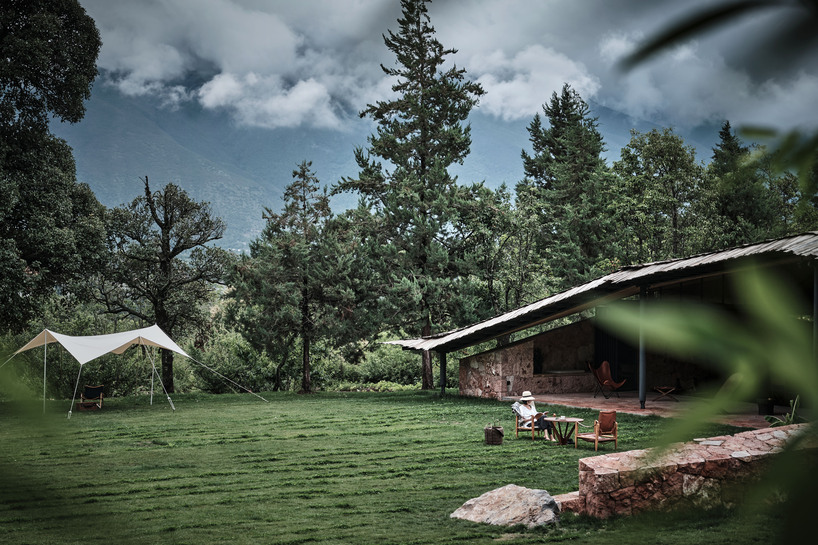
the building’s tent-like form appears to rest lightly on the grass | image by Lei Tantan