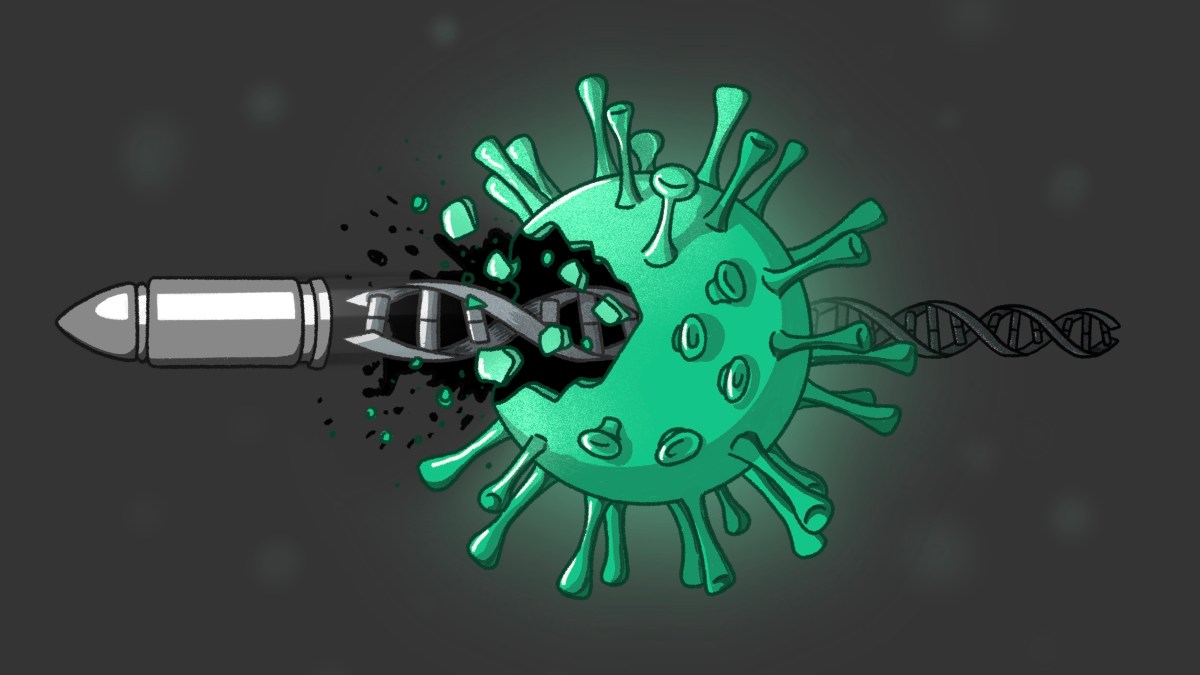
At first it was imperceptible. In the base of a petri dish, invisible to the naked eye, something never before seen in nature was stirring into life.
For the first time in history, scientists had used artificial intelligence to design the genetic code of a brand-new biological organism. In the lab at Stanford University, California, a new virus, codenamed Evo-Φ2147, was attacking a colony of E.coli bacteria in the petri dish.
Clear spots started appearing on the cloudy mass of bacteria, growing across the dish in expanding circles. It showed that slowly but surely, the new virus was killing the E.coli.
The breakthrough marks a turning point in the accelerating field of synthetic biology, allowing scientists to use AI to draw up the blueprints for entire genomes from scratch. It coincides with the development of a sophisticated new DNA construction technology that can turn those blueprints into reality — building long, complex genetic sequences with up to 100,000 times more accuracy than anything seen before.

The new AI-designed virus
SAMUEL KING, STANFORD UNIVERSITY
Scientists say these developments mark a pivotal moment in the history of life on Earth. Soon, if they are right, evolution will no longer be a matter of gradual, incremental change. Instead entirely new species — and not just viruses — could be designed, crafted and brought to life in the lab.
Life can be ‘authored’
“This is a massive, consequential moment,” said Adrian Woolfson, a British molecular biologist and tech entrepreneur. It marks a shift from “a Darwinian world into a post-Darwinian landscape” where life can be authored, rather than simply inherited, he said.
The new virus created at Stanford was just a tiny scrap of biological material — it contained a mere 11 genes arranged over 5,386 paired letters of DNA code. A human genome, by comparison, has 20,000 genes written in 3.2 billion base pairs. Most scientists do not consider a virus to even fit the definition for “life” because it cannot reproduce outside a host.
Yet the Stanford experiment, the results of which were published in September, was a crucial proof of concept. While for the past decade scientists have used gene editing tools such as Crispr to replace short segments of genetic code, the new techniques allow them to design new genomes in their entirety.
“For the last four billion years evolution has been blind — there has been no foresight, there has been no intentionality,” said Woolfson, whose forthcoming book On the Future of Species explores the new genetic technologies. “Now, instead of discovering species that have evolved in this ad hoc manner, suddenly we can make life — yes in a rudimentary way, but the process has begun.
“This is not speculation. It’s not futuristic, it is happening.”
Woolfson, 60, aims to be at the forefront of that revolution. His new company Genyro, has brought together some of the world’s best genetic designers and engineers, including Brian Hie, 31, the Stanford scientist behind the AI breakthrough.
Other recruits are Kaihang Wang, 43, and Noah Robinson, 26, from the California Institute of Technology (Caltech) outside Los Angeles, who on Wednesday, in the journal Nature, unveiled a new DNA construction tool called Sidewinder which they say can build long genetic sequences more accurately, quickly and cheaply than existing tools.
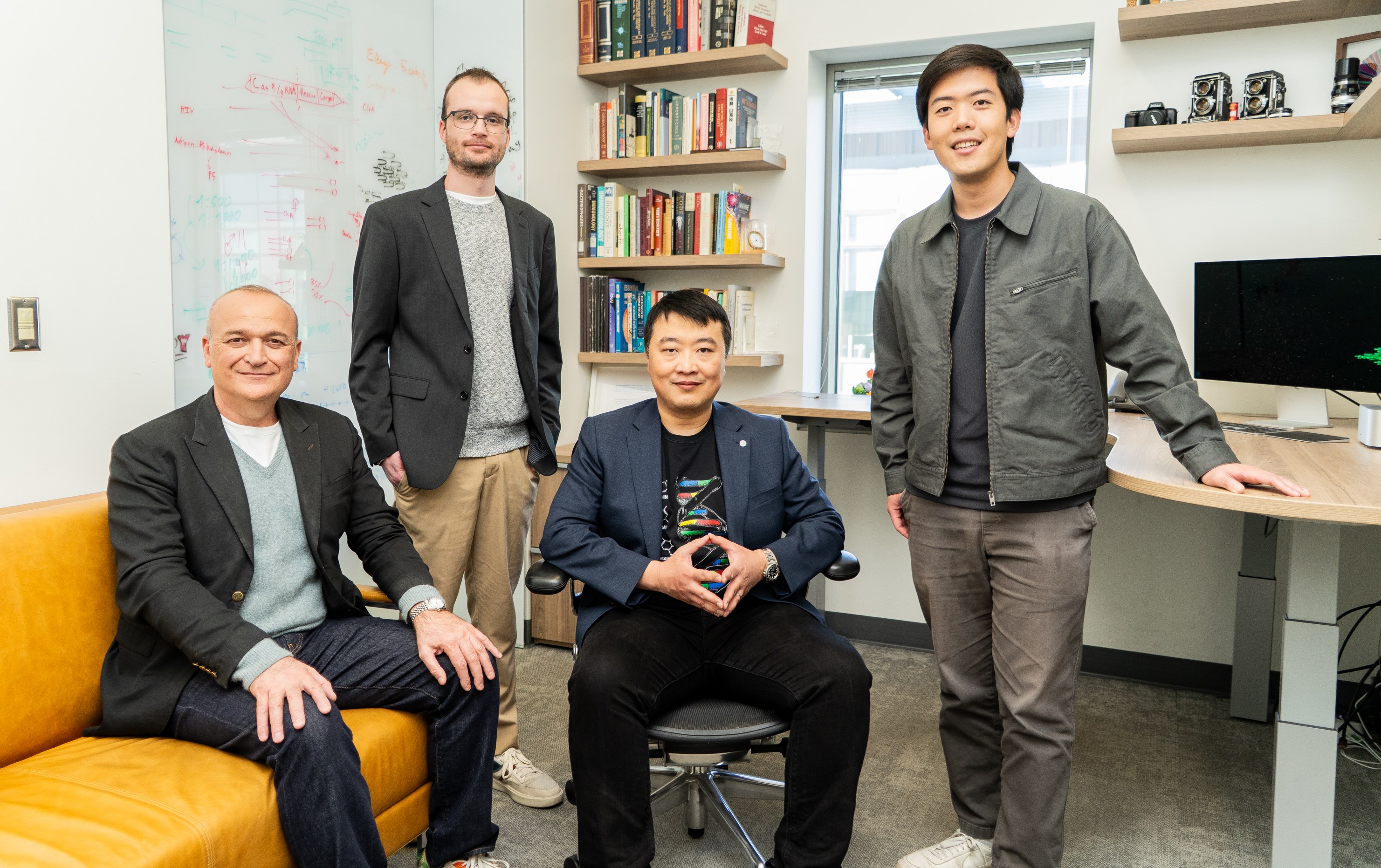
From left, Adrian Woolfson with colleagues Noah Robinson, Kaihang Wang, and Brian Hie
JUSTIN L. STEWART FOR THE SUNDAY TIMES
Wang said: “If you can control the source code of life, you can create anything and everything. The only thing limiting it is our imagination.”
Towards a synthetic human genome
Bob Langer, co-founder of the vaccine giant Moderna, who is advising Genyro, described the new technology as a “remarkable advance”. He said: “One can imagine using artificial intelligence approaches to select DNA constructs that can open new possibilities for new medicines, materials and countless other applications.”
Woolfson believes the combination of AI and the Sidewinder construction technique could be a silver bullet paving the way for new cell therapies, programmable crops designed to give higher yields in harsher conditions, stronger and lighter textiles and even — eventually — the ability to create new species and bring back extinct creatures.
The Genyro scientists are not the only team working on synthetic biology. Professor Jason Chin, the director of the new generative biology institute at the Ellison Institute of Technology in Oxford, is leading the Synthetic Human Genome Project. The task is expected to take decades and aims to recreate the entire human genome from scratch. Chin is also on the Genyro scientific advisory board.
For now, though, among the olives and jacaranda trees at the Caltech campus, Wang is thinking about vaccines because new DNA construction does not just mean making new life. It means a vast improvement in the ability to design and build proteins, antibodies and the genetic instruction manuals that are used to make medicines and vaccines.
Wang said: “During the pandemic it took 42 days from getting the Covid sequence to make the first mRNA vaccine, and that was just, wow. It was a huge achievement. But with our technique, from getting the DNA code, we could do it in 62 hours. That means constructing the DNA sequence, producing the RNA and having something that is ready to package and vaccinate.”
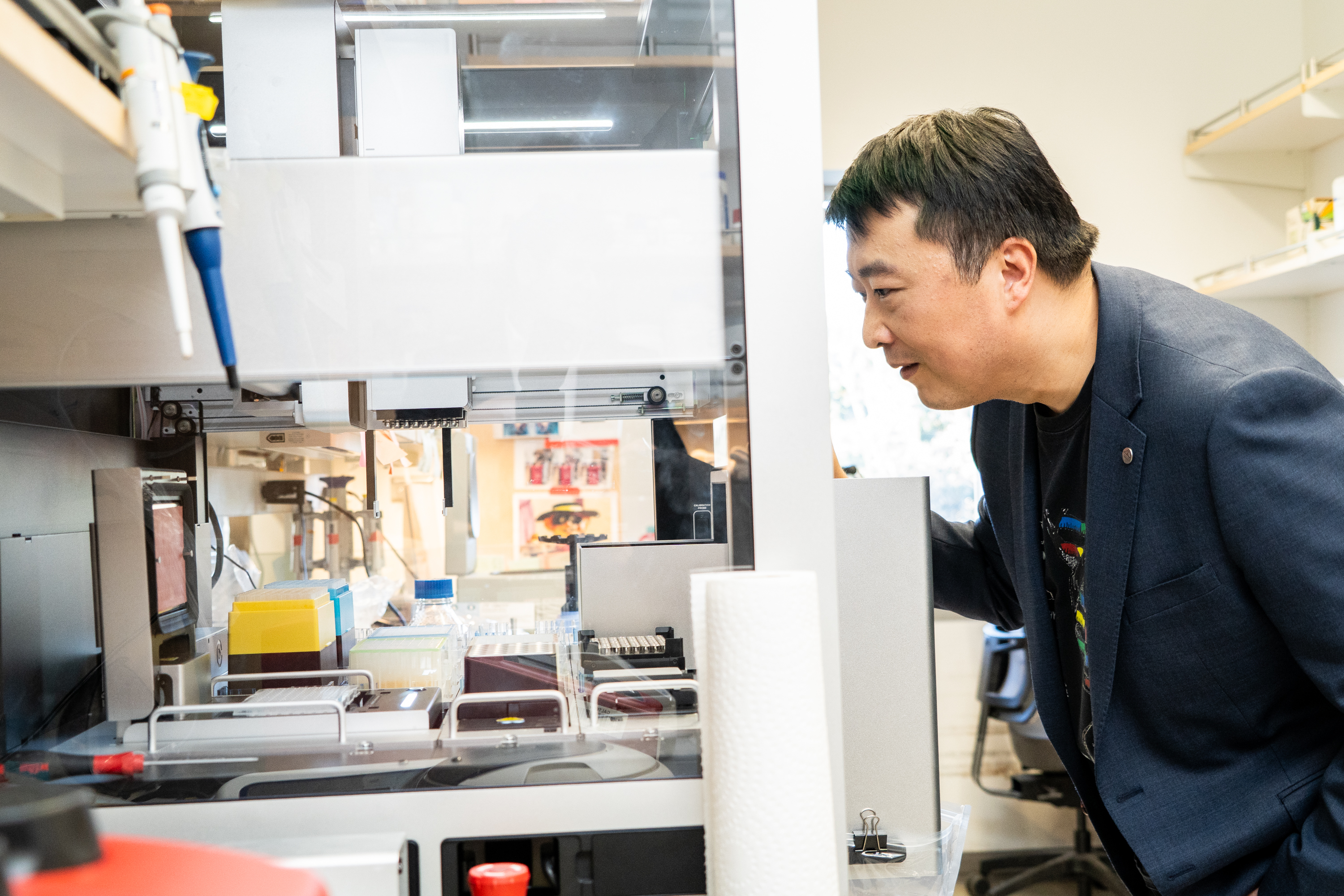
Wang demonstrates part of the process of writing genetic codes in the lab at Cal Tech
JUSTIN L. STEWART FOR THE SUNDAY TIMES
That opens up huge possibilities — and not just in the case of another pandemic. Scientists for years have been working on the prospect of personalised vaccines against cancer, in which the genetic code of a tumour is taken and an mRNA vaccine is made to instruct the body’s immune system to attack it.
“Forty-two days is quick, but for cancer it is not quick enough,” said Wang. “Someone could die in that time. But if you can do it in 62 hours, then that means you have something usable.”
The good virus
At Stanford, Brian Hie is working on making more viruses. This may sound alarming — and there are certainly security concerns — but by attacking bacterial infections, viruses offer a solution to the growing problem of antibiotic resistance.
He is targeting Pseudomonas, the opportunistic infection that often colonises the lungs of cystic fibrosis patients. When traditional antibiotics fail, these patients often end up dying not from cystic fibrosis itself, but from the bacteria that have become invincible to our antibiotics. He believes eventually a virus could be created to attack any bacterial infection.
Brian Hie
JUSTIN L. STEWART FOR THE SUNDAY TIMES
The gateway to this future is his AI program, a large language model called Evo2. Instead of training it with words to answer internet queries or polish emails, as with conventional AI tools such as Chat-GPT or Grok, Hie, a computational biologist, trained Evo2 using huge strings of genetic information. Nine trillion base pairs of DNA — the As, Cs, Ts and Gs that make up the source code of life — were put into the software.
The result is a powerful tool which can predict the functions of genomic code with far greater insight than even the best scientists.
For his first task, he used as a template an existing wild-type phage virus, which is already known to have the ability to attack E.coli. He used Evo2 to design 285 new viruses. When they were put in petri dishes with the bacteria, only 16 viruses managed to attack the E.coli, demonstrating that the process is not foolproof.
But the most aggressive new virus was 25 per cent quicker at killing the bacteria in the dish than the wild virus. A cocktail of all 16 new viruses was able to defeat three different strains of particularly resistant E.coli, while the wild virus was unable to kill any of them.
Evo2 had designed entire stretches of genetic code which attacked the bacteria in entirely new ways. Although the new viruses are essentially enhanced copies of the wild type, Hie believes that this is just the start. “If you have a completely new function that you want to engineer — for example infecting a specific bacterial host — even with no natural homologue [similar version existing in nature], I think we’re pretty close to being able to do that.”
The printing press
Once Hie’s new viruses were designed by the AI, building them was a challenge. But with just 11 genes, the task was not insurmountable.
“We could probably go up to a system with 20 to 50 genes right now,” Hie said. The sticking point, he said, is not the AI model, but building the designs it produces. “What we’re really limited by is the cost of DNA synthesis.”
That is where Wang and Robinson step in. If Hie’s Evo2 model has unlocked the design of new life, Wang and Robinson’s Sidewinder tool is the printing press, transforming the lines of code on a screen to functioning twists of DNA.
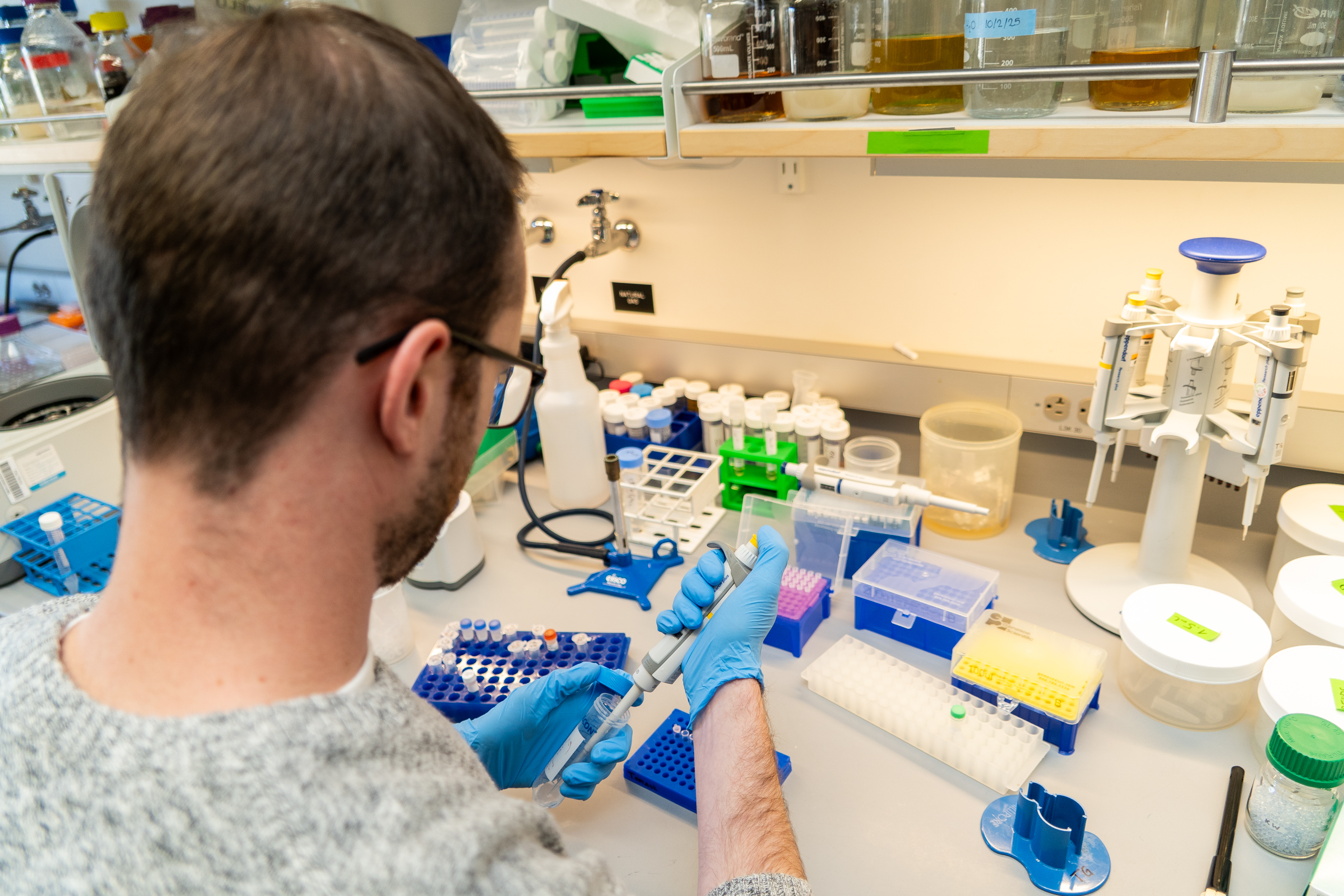
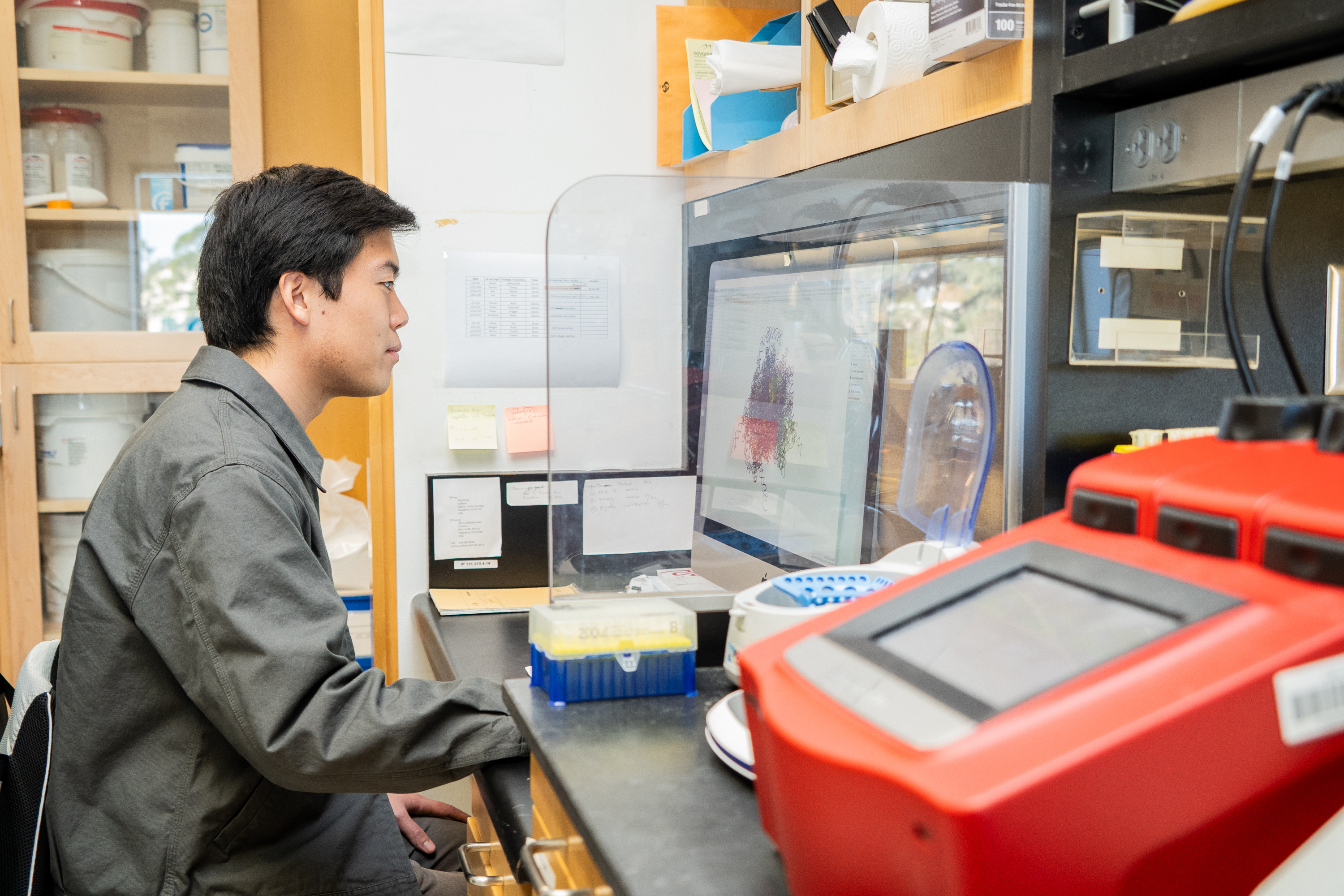
Noah Robinson
JUSTIN L. STEWART FOR THE SUNDAY TIMES
Wang, who was a researcher at the University of Cambridge before moving to Caltech seven years ago, compared the construction of genetic code to trying to put the pages of a large encyclopedia in the right order without any page numbers. “Except with DNA you have just four letters — and imagine that sometimes you have entire pages of just As,” he said. “It is really difficult to put those in the right order.”
This makes synthesising repetitive DNA — which comprises 50 per cent of the human genome — almost impossible. Even simple genetic sequences are often put together in the wrong order.
Wang and Robinson have solved this problem by developing an algorithm which adds DNA “page numbers” to strands of code, allowing them to be accurately ordered. Once the sequence has been completed, the page numbers are removed.
According to the Nature publication, this Sidewinder technique cuts mismatch errors from roughly one in ten to one in a million.
In time, Wang said, the aim is to make DNA synthesis 1,000 times cheaper and 1,000 times quicker.
Robinson added: “We feel this has such big promise because every lab has the tools to do this. There’s no special equipment or material, it’s all common stuff. You just need our algorithm.”
The Genyro scientists are not the only team working on synthetic biology. Jef Boeke, of New York University, is leading a global consortium attempting to synthesize the yeast genome, which, with 6,000 genes over 12 million base pairs, is a far more daunting proposition than a virus.
Danger zone
While democratising genomic synthesis is a noble prospect, there are serious security concerns.
If any lab in the world could make a new virus from scratch, it is not much of a leap to imagine new Covid superstrains that evade our vaccines or smallpox varieties that cannot be picked up by testing.
“That’s where the responsibility comes in,” said Woolfson. “Humankind needs to decide who is going to define the guard rails. Who is going to decide what gets written? Who’s going to decide on the governance? Society needs to know this is happening, so people can have these conversations.”
Genyro is making a start. The Sidewinder tool will be licensed to established DNA construction companies and to universities, but in order to get the algorithm which provides the page numbers for each set of code, the sequence will first have to be screened to ensure it can do no harm.
When Hie was making his Evo2 model, meanwhile, he ensured it was not trained using viruses which are pathogenic to humans.
But there are other concerns. Synthetic biology could conceivably put us on a slippery slope to designer babies with genomes written to give them higher intelligence, better looks and longer lifespans.
Woolfson, in his book, proposes a “manifesto for life” to govern use of the new technology. He proposes a framework to safeguard the “inalienable rights” of human nature and enforce a moratorium on creating parentless synthetic humans or altering the germline — DNA code that is passed from parent to child — for non-medical enhancement.
He writes: “The unprecedented power these technologies convey, offering the prospect of being able to redesign and synthesise human genomes from first principles … raises some of the most challenging philosophical and ethical issues that humankind has ever had to address.”
On the Future of Species: Authoring Life by Means of Artificial Biological Intelligence by Adrian Woolfson, is published on February 12.