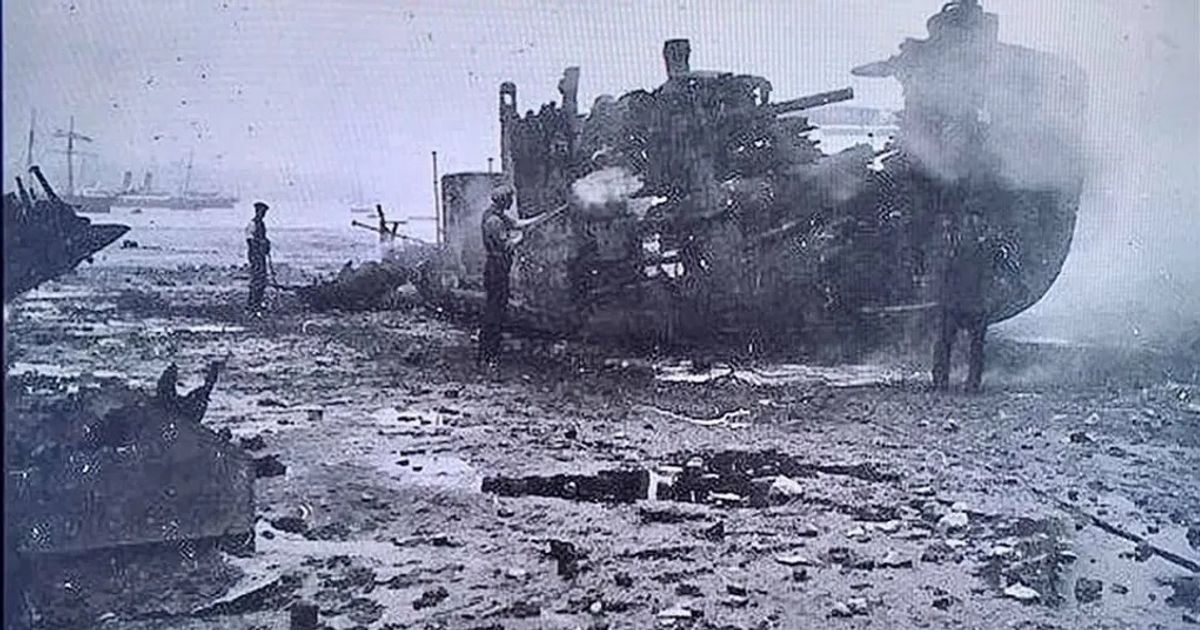
New Ferry was a popular tourist trap until its pier was accidentally destroyed when a drunken Dutch captain drove his ship into it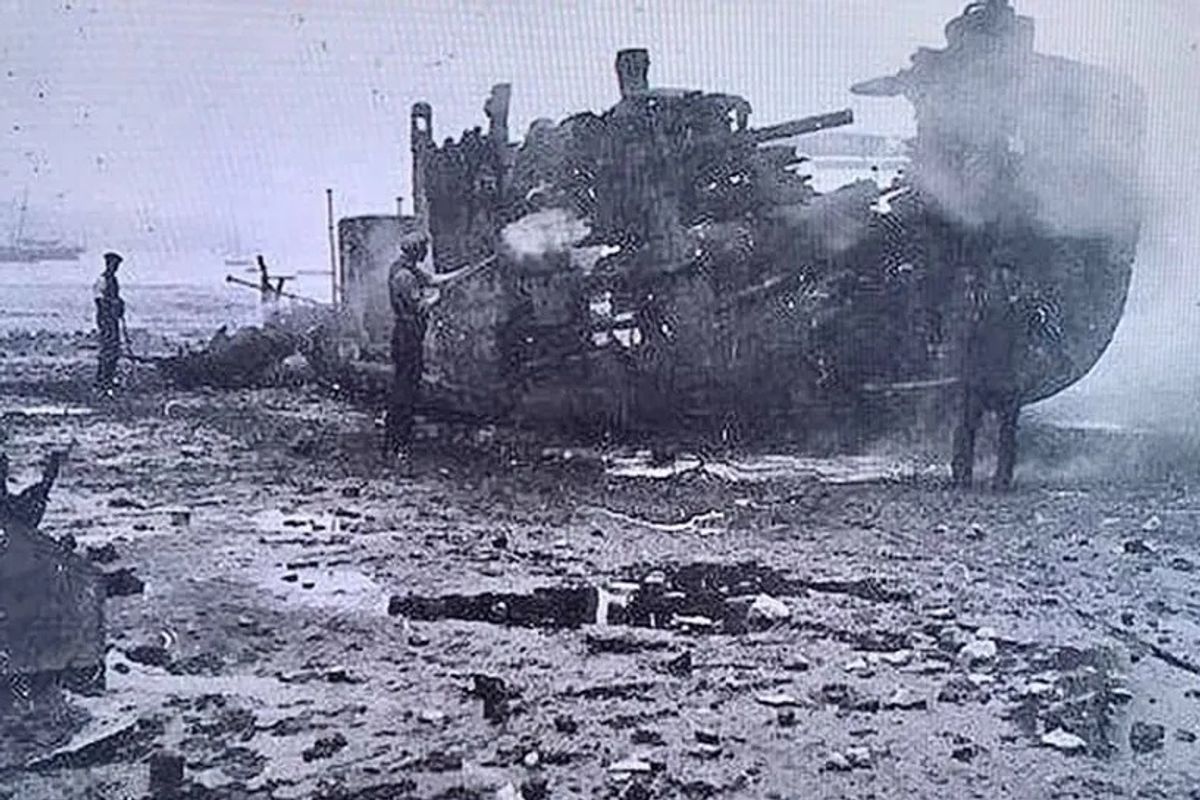
The battered remains of the ship after it crashed into New Ferry pier(Image: New Ferry Online)
On the western bank of the River Mersey, overlooking the vast Liverpool skyline, Rock Ferry is known as a quiet, unassuming residential suburb. The area features a modest number of shops and limited attractions, ranking it low on the list when it comes to tourist destinations, as visitors are more likely to turn to nearby Port Sunlight or Birkenhead.
But just over 100 years ago, New Ferry was one of Wirral’s most prominent honeypot sites. The introduction of steam-powered ferries in the early 1800s brought no shortage of upper-crust visitors, including King William IV before his coronation. The Minshull family, an old lineage of Cheshire aristocrats, had a large estate in Rock Ferry, and the area was also the home of the Royal Rock Beagles, once the oldest hunting dog pack in the UK.
At the centre of this bustling hive of activity was the Royal Rock Hotel on Bedford Road. The venue proved so popular it was extended in 1836 and a bath house was added.
Luxury housing was built for rich merchants, business owners and ship owners working in Liverpool. Thomas Oakshott, the mayor of Liverpool, lived there in the 19th century.
The transformation of New Ferry from a haven for the rich and powerful to sleepy working class suburb can be put down to various factors, such as the decline of local industries and the closures of prominent shops on Old Chester Road and Bedford Road. But the definite death knell for its tourist industry came in 1922, when the New Ferry Pier – the lifeline connecting the area to the River Mersey – was destroyed.
On the foggy night of January 30 1922, a Dutch steamer smashed clean through the pier, leaving disaster in its wake. The structure collapsed into the riverbed, where it remained for seven years as a symbol of New Ferry’s once grand past, now reduced to ruins.
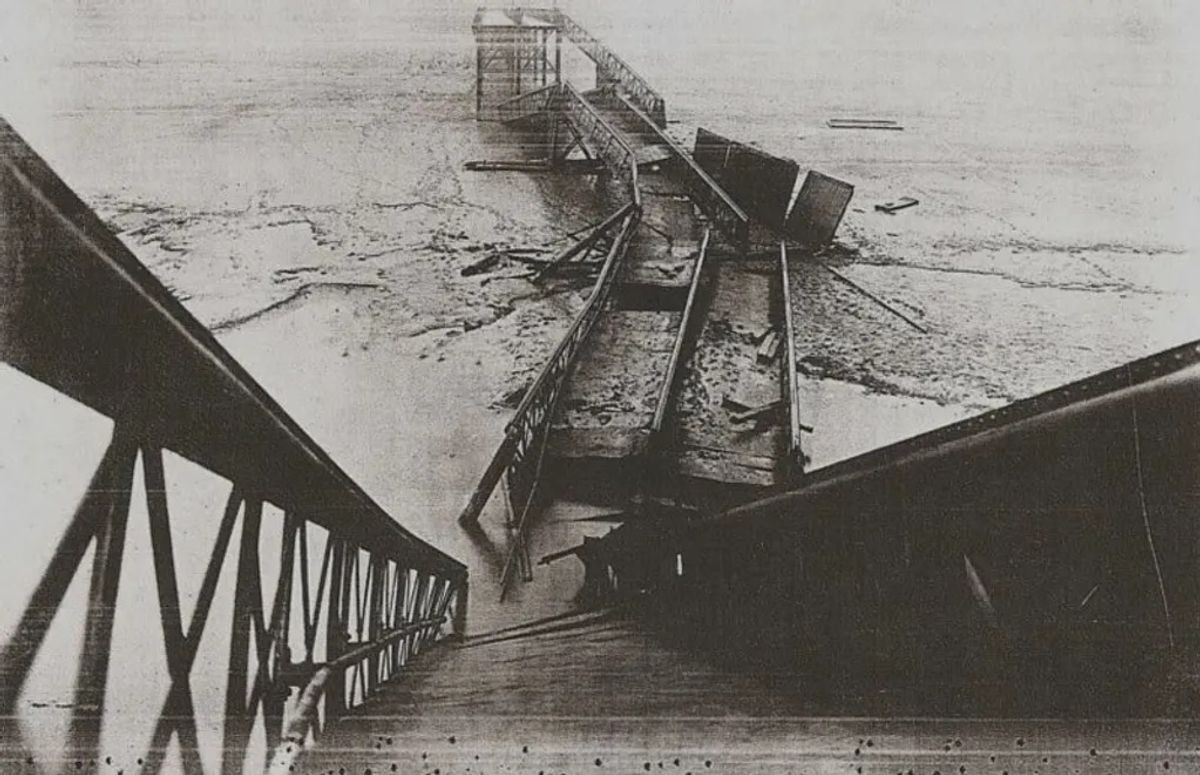
The remains of the New Ferry pier(Image: New Ferry Online)
Today, the destruction of the New Ferry pier is marked by a small sign in on New Ferry Road, in front of houses where the historic Great Eastern pub once stood. The pub was built in 1862 with a number of relics and panels from Isambard Kingdom Brunel’s SS Great Eastern, which was broken up for scrap at Rock Ferry in the 19th century.
It was demolished in 2013, despite a strong public effort to save it.
In a tribute to New Ferry’s lost tourist industry, the sign reads: “Ferry-loads of Liverpool day-trippers used to come to this place to enjoy the fresh air of Wirral and to admire the view over the River Mersey. Visitors came to walk along the river cliffs at Shorefields, use the athletic ground, and to spend time in the pub hotel which had its own bowling green and stables to the rear.
“New Ferry enjoyed over 60 years as a tourist location until the pier was accidentally destroyed in 1922 when a drunken Dutch captain drove his steamer ship into it.”
As the years went by following the disaster, the number of visitors coming into New Ferry dwindled. Mansions were converted into flats or demolished to make way for new houses, shops closed their doors, and the once-popular Royal Rock Hotel finally shut down in 1970. It was demolished five years later.
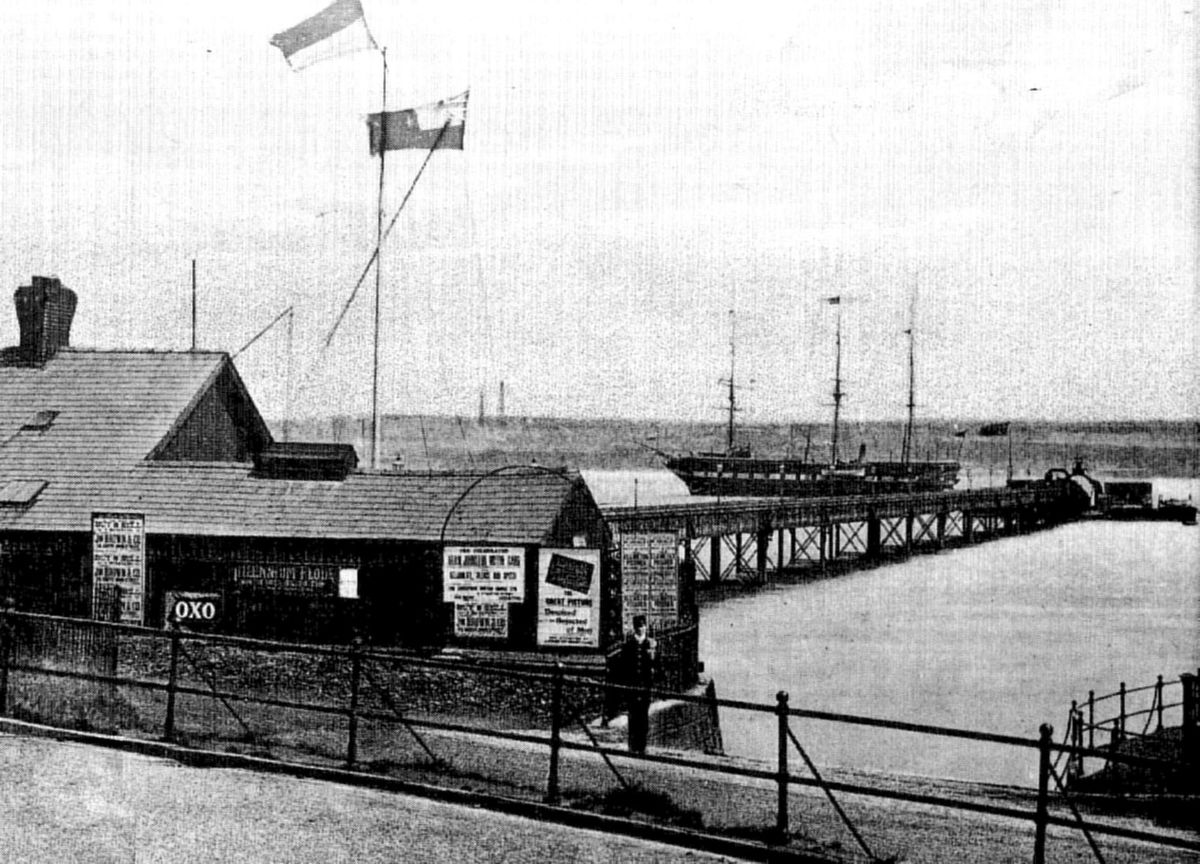
The New Ferry pier was once a major link to Liverpool(Image: New Ferry Online)
Eventually New Ferry lost its lustre, and became a sad example of urban decay. Speaking in the Commons in 2015, Birkenhead MP Alison McGovern said: “It is very close to a cancelled housing site that is now just scrubland, and there are lots of empty shops. There is a genuine need, not just for business investment but for regeneration.
“The area needs reshaping and a new idea of what it can be; there are so many empty shops that people do not go there any more. No business is prepared to risk expending capital by itself on New Ferry.
“What the Government have done means that there is no mechanism to make regeneration happen, so I am standing here today to ask the Minister to create a mechanism—to find a way for the state to do regeneration in our towns once more. That is desperately needed and it must be done.
“I will briefly share some of my constituents’ views. In advance of this debate, I distributed leaflets and used Twitter and Facebook to tell my constituents about it, and they have written to me in great numbers to tell me what they think. Miriam Clack of Stanley Road in New Ferry said, about the place that we are from: ‘it’s a pig hole, and it’s a disgrace, and no one is in the least bothered about it.'”
The situation worsened in March 2017, when the Homes in Style store in the middle of the town exploded, destroying or damaging 63 buildings in the surrounding area and injuring 81 people, two of them seriously. A dance studio in the same building had finished a class just a few hours earlier.
Seven businesses were destroyed and never reopened, and since then, those who lived in the town argued it has continued to see a decline.
But efforts have been made to breathe new life into New Ferry in recent years. In 2024, an additional £1.2m was given to an existing project to redevelop the town’s high street, bringing the total funding to £1,829,842. Wirral Council promised to “make the shopping areas more attractive for traders, visitors and residents.”
The new and improved Bebington Road will include traffic-calming measures, new planting and seating, and more CCTV to deter anti-social behaviour. This is in addition to new housing planned for Woodhead Street and part of New Chester Road, with development work anticipated to start early this year.