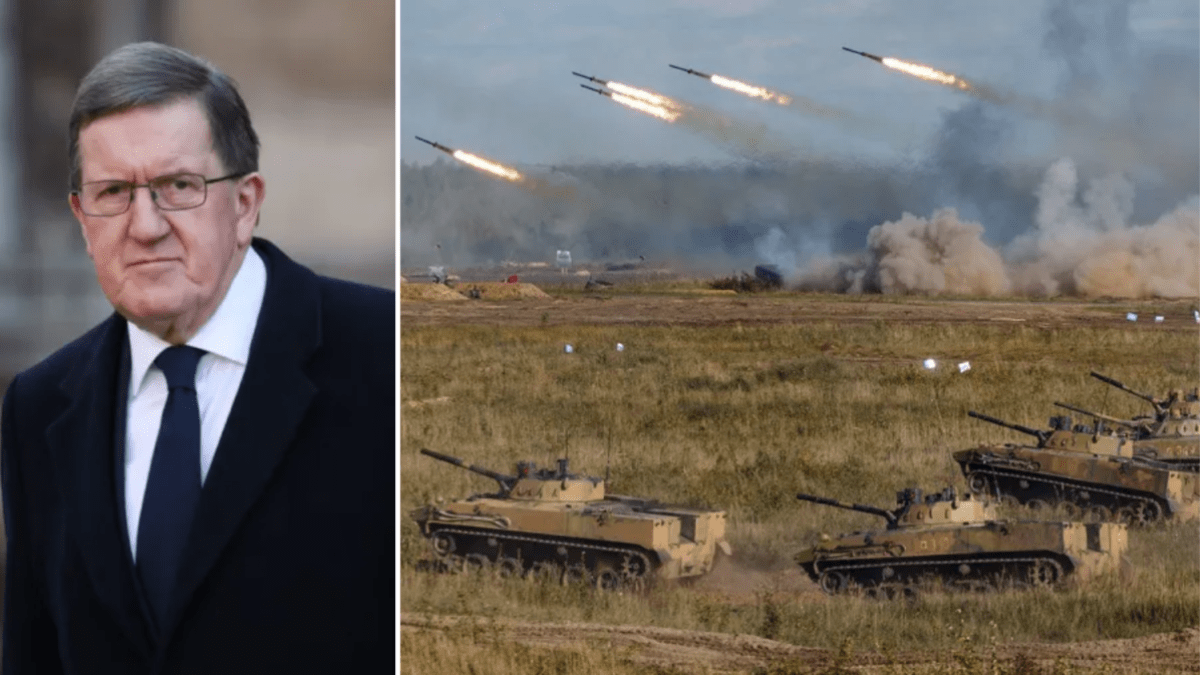
The public is unaware of the true scale of the threat posed to the UK, Lord Robertson, the former secretary-general of Nato, told The i Paper
The British public is unaware of the true scale of the threat posed to the UK amid a rapidly accelerating global threat landscape, the former secretary-general of Nato has warned.
“The volatility of events and the velocity of change has made us much more vulnerable than we were before,” Lord Robertson, who led the military alliance from 1999 to 2003, told The i Paper.
“The danger is that the public don’t yet know that, and don’t appreciate enough about how much of a threat there is to us, or therefore what to do about it.”
New FeatureIn ShortQuick Stories. Same trusted journalism.
The warning comes a week after US President Donald Trump prompted a crisis in the Nato alliance when he threatened to invade Greenland, a semi-autonomous territory of Nato ally Denmark, and also threatened tariffs on European nations that sent troops to defend it.
Although Trump subsequently walked back his threats, the severity of the situation was such that Western allies characterised it as a “rupture” in the global order and in their relations with the United States.
The turbulence caused by Trump’s threats has left Britain and its allies more exposed than ever to the aggression of an increasingly emboldened Russia.
In the UK, businesses and institutions have been targeted by cyber attacks, warehouses storing aid for Ukraine have been set on fire, and Russian dissidents have been killed. These actions have been linked to the Kremlin, which has a long history of conducting such activities.
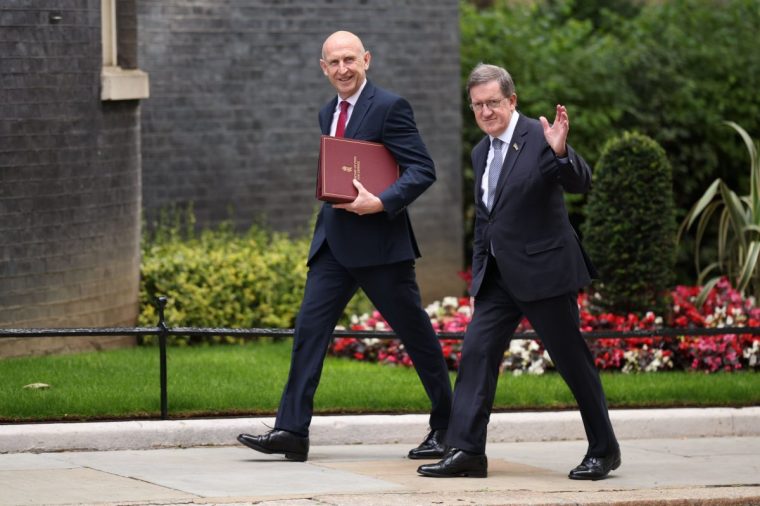 Defence Secretary John Healey and Lord Robertson (R) arrive for a Cabinet meeting at 10 Downing Street in July 2024 (Photo: Dan Kitwood/Getty Images)
“Britain is very vulnerable to an external enemy, because we’re already being attacked,” said Lord Robertson, who was also UK defence secretary from 1997-1999. “We are under attack at the present moment, in the grey zone in terms of cyber attacks, targeted assassinations and sabotage and the rest of it.”
But he warned: “We now know that the threat could be even greater.”
Lord Robertson said that the UK should expect to face an expanding threat, not only from an increasingly reckless and malevolent Russia but from a “deadly quartet” that includes China, North Korea and Iran.
All are carrying out sabotage campaigns including cyber attacks on British soil. This loose anti-Western alliance “is endangering our future, and we need to be aware of that”, he said.
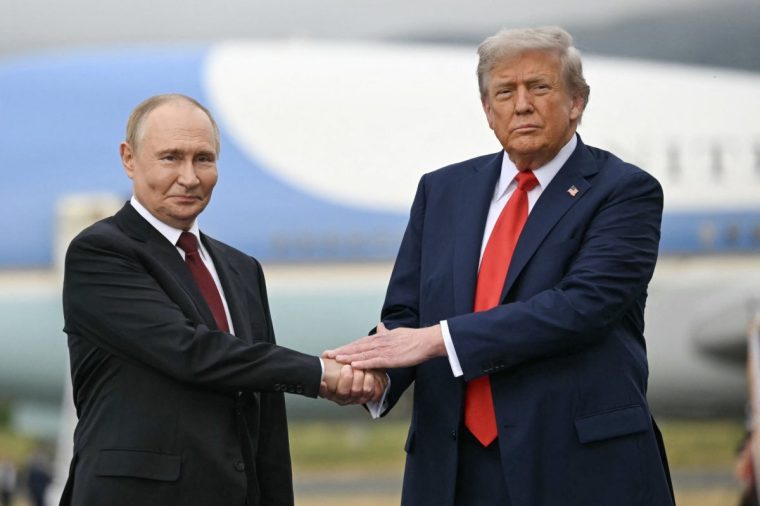 Vladimir Putin will feel emboldened by Donald Trump’s threats to the Nato alliance (Photo: Andrew Caballero-Reynolds/AFP)
Lord Robertson was one of the authors of last summer’s Strategic Defence Review (SDR), which set out the threats facing Britain, what capabilities were needed to meet them and the resources available to do so.
He emphasised to The i Paper that while the SDR had laid out the gravity of the situation facing the country and the government had accepted all 62 of its recommendations, there was a continuing lack of urgency to address it.
“I think that the Treasury needs to be reminded about how much danger this country is in,” he said. “You would think [the SDR] would galvanise all aspects of government. But it doesn’t seem to have done so yet.”
“The fact is that the pressure points are not coming from the public on defence, they’re coming on welfare. They’re coming on justice and the health system. And people need to be reminded through a national conversation about what the threat is to this country and what we need to do.”
Prime Minister Keir Starmer has committed to raising defence spending to 2.5 per cent of GDP by 2027, up from 2.3 per cent, with an “ambition” to reach 3 per cent in the next Parliament – “subject to economic and fiscal conditions”.
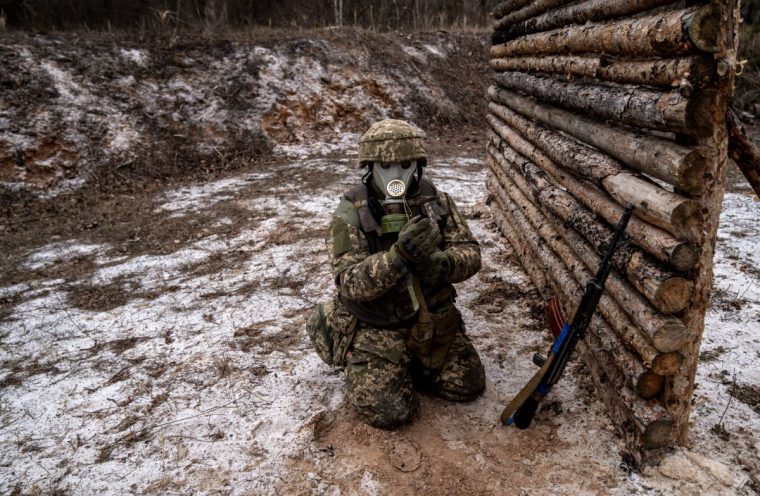 Ukrainian soldiers training in rural Ukraine as the war between Russia and Ukraine continues (Photo: Jose Colon/Anadolu via Getty Images)
Excluding nuclear spending, the UK spent only 1.9 per cent of its GDP on Nato-qualifying defence in 2023–24, according to the Institute for Fiscal Studies.
The government has repeatedly delayed the release of its Defence Investment Plan, which will lay out funding to implement the vision of the SDR. Reports have suggested that cost concerns may be behind the delay, with military chiefs warning of a £28bn funding shortfall.
This month, Sir Richard Knighton, Chief of the Defence Staff, said the UK was “not as ready as we need to be for the kind of full-scale conflict we might face”.
However, Lord Robertson has emphasised that fighting a war is never solely about the military. Equally important is the resilience of the population.
He told a panel this week, discussing European defence at the Rand Impact and Innovation Forum in London, that Britain could no longer afford to think of defence as solely down to the military, and criticised the “risk averseness of some government departments”.
“There is an inability to think of resilience in defence of the nation state,” he said. Article 3 of Nato’s founding charter, which declares that each country needs to be capable of defending itself from an armed attack, was equally important, he said.
Lord Robertson emphasised: “We can’t defend Europe. Our competitors are at war with us in the grey zone. We are underprepared, uninsured, under attack.”
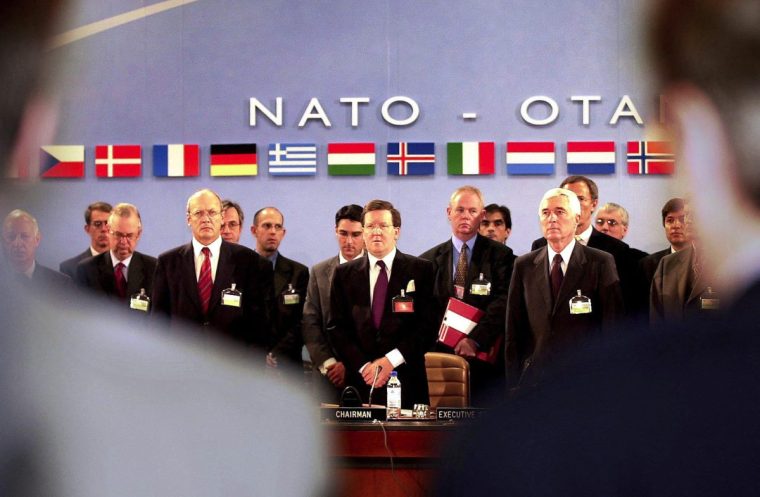 Lord Robertson as Nato secretary-general in 2001 holding a minute’s silence to remember the victims of the 9/11 terror attacks (Photo: Oliver Hoslet/ EPA Belga/ AFP via Getty Images)
Lord Robertson told The i Paper he hoped that Trump’s actions over the past few weeks would be a “wake-up call for all of us”.
“You can call it an inflection point or a watershed, but it’s a point in time where we have been reminded of how vulnerable we are and what we need to do. The fact that the Trump administration is indicating that we need to do more and that they won’t always be available, I think brings a new urgency to how we deal with our enemies.”
He added: “I think sorting the imbalance inside Nato is now an imperative and the Europeans have got to acquire the capabilities that we don’t have at the moment, and for which we depend on America.”
Your next read