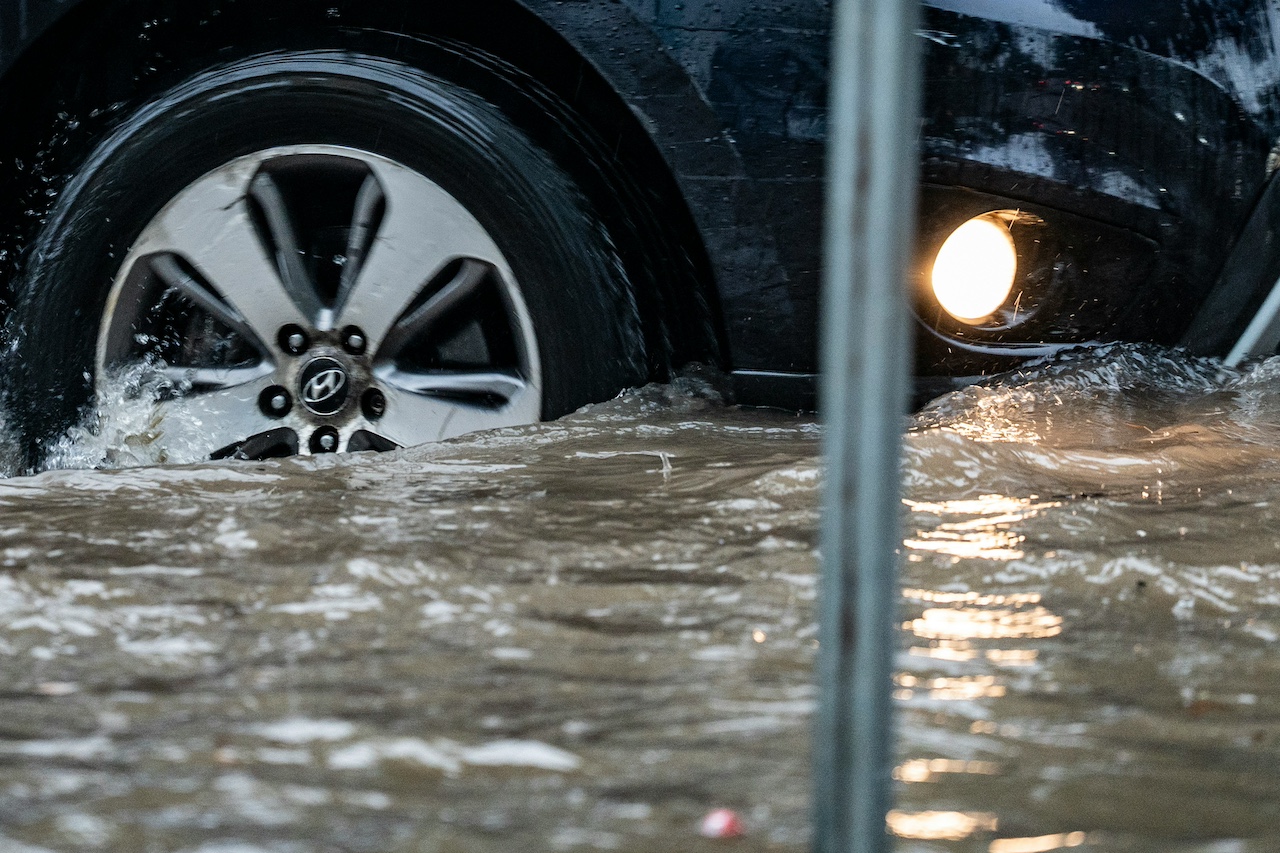
Storm Chandra, hitting the United Kingdom and Ireland on 27 January 2026, is causing strong winds and heavy rainfall, leading to flooding and power cuts. Travellers should be aware that roads, rail networks, ferries, and air traffic are heavily impacted by the extreme weather conditions.
Since the evening of 26 January 2026, parts of the United Kingdom and the Republic of Ireland have been hit by Storm Chandra. On 27 January 2026, many schools in the UK and Ireland remained closed, while thousands of households were left without power.
#StormChandra continues to bring heavy rain, strong winds and hill snow to many areas this afternoon ⚠️
Rain will push northeastwards and behind this, heavy, blustery showers follow 🌦️
Feeling cold under cloud and rain, and in brisk winds 🌬️ pic.twitter.com/DSZVyuTcv4
— Met Office (@metoffice) January 27, 2026
A series of amber and yellow weather warnings has been issued by the national meteorological services known as the Met Office and Met Éireann. According to the warnings, people should be aware of a number of possible natural dangers, including large waves, heavy winds “from a more unusual southeasterly or easterly direction”, flooding, landslides, and more. Depending on their location, people are urged to stay safe inside or to seek shelter elsewhere if their home is located in a place where heavy flooding is likely.
Flooding in Dublin, Ireland this morning due to Storm Chandra…🌊pic.twitter.com/xMpkQnPB5Q
— Volcaholic 🌋 (@volcaholic1) January 27, 2026
Road and rail
Travellers, whether they are going by road, sea, rail, or air, are likely to experience some disruption caused by Storm Chandra. Across the UK and Ireland, roads have become dangerous because of flooding or fallen trees, with some parts being closed off, while traffic on many bridges, such as the M48 Severn Bridge, was banned or restricted.
“Following weeks of heavy rainfall, flooding is likely, and drivers shouldn’t take risks driving with ongoing vehicle faults. In these conditions, drivers need to slow down and stay alert. Wet roads can double stopping distances, so taking a cautious, steady approach and allowing extra time to react is essential”, the Royal Automobile Club (RAC) warns.
Major flooding in Nutgrove in Dublin, Ireland this morning due to Storm Chandra 👀👀pic.twitter.com/09EdvfLV2b
— Volcaholic 🌋 (@volcaholic1) January 27, 2026
As far as rail traffic is concerned, many rail operators seem to be impacted by the storm in some way. In the United Kingdom, Avanti West Coast, CrossCountry, and Northern trains are affected due to fallen trees, power cuts, and other events, according to the National Rail. ScotRail mentions speed restrictions on the West Highland line connecting Glasgow with Oban and Fort William. In Ireland, Irish Rail says travellers should expect major disruptions, especially because of flooding. All passengers planning a trip are advised to check their operator’s website for more information.
Air and sea
Those who were planning to or from the UK or Ireland by plane should be prepared for major disruptions. Belfast airport, located at the heart of the region affected by the Met Office amber warning for high winds, seems to be the most impacted at the time of writing. At least 30 flights operated by Aer Lingus Regional and British Airways have been cancelled. Passengers at Dublin Airport are warned to expect delays, while Scottish airline Loganair has already cancelled some 20 flights across UK airports.
As one might expect, sea traffic in the affected area has been hit by Storm Chandra as well. Ferry services between Liverpool and Belfast, as well as those travelling from Cairnryan to Larne and Belfast, and other services across the region have been cancelled because of the extreme weather. At the time of writing, services should be reinstalled as of the late afternoon of 27 January, but this could be subject to change depending on the conditions.
Storm Chandra battering Ardglass Harbour in County Down on Tuesday morning. Footage from harbour workers Chris Feenan. #StormChandra pic.twitter.com/23HsRqluiw
— Barra Best (@barrabest) January 27, 2026
Storm Chandra is the third named storm to hit the region since the start of 2026 and comes just days after Storm Ingrid, which already caused major disruptions and widespread damage.