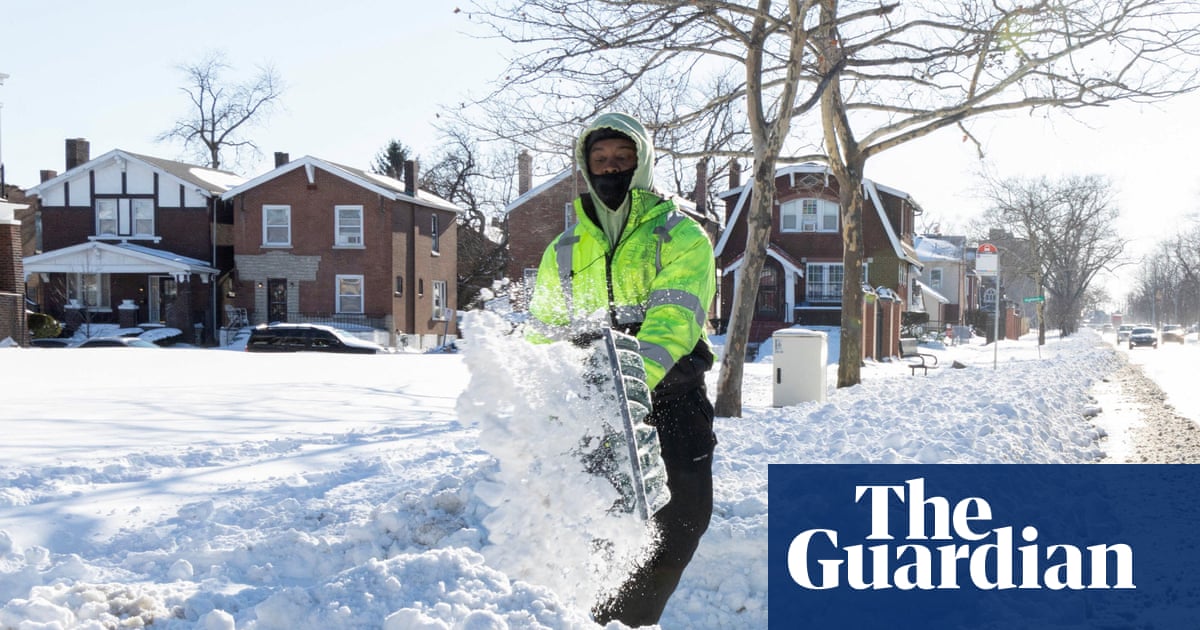
Many in the US faced another night of below-freezing temperatures and no electricity after a deadly, colossal winter storm heaped more snow Monday on the north-east and kept parts of the south coated in ice.
More than 30 deaths were registered in more than a dozen states afflicted with severe cold, according to reports. There were still nearly 550,000 power outages in the nation on Tuesday morning, according to poweroutage.us. Most of the outages were in the south, where weekend blasts of freezing rain caused tree limbs and power lines to snap, inflicting crippling outages on northern Mississippi and parts of Tennessee. Officials warned that it could take days for power to be restored.
Deep snow – over a foot (30cm) extending in a 1,300-mile (2,100km) swath from Arkansas to New England – halted traffic, canceled flights and triggered wide school closures on Monday. The National Weather Service said areas north of Pittsburgh got up to 20in of snow and faced wind chills as low as -25F (-32C) late Monday into Tuesday.
The bitter cold afflicting two-thirds of the US wasn’t going away. The weather service said on Monday that a fresh influx of Arctic air is expected to sustain freezing temperatures in places already covered in snow and ice. And forecasters said it’s possible another winter storm could hit parts of the east coast this weekend.
A rising death toll included two people run over by snowplows in Massachusetts and Ohio, fatal sledding accidents that killed teenagers in Arkansas and Texas, and a woman whose body was found covered in snow by police with bloodhounds after she was last seen leaving a Kansas bar. In New York City, officials said eight people were found dead outdoors over the frigid weekend.
In Mississippi, officials scrambled to get cots, blankets, bottled water and generators to warming stations in hard-hit areas in the aftermath of the state’s worst ice storm since 1994. At least 14 homes, one business and 20 public roads had major damage, Mississippi governor Tate Reeves said on Monday evening.
The University of Mississippi, where most students hunkered down without power Monday, canceled classes for the entire week as its Oxford campus remained coated in treacherous ice. Oxford mayor Robyn Tannehill said on social media that so many trees, limbs and power lines had fallen that “it looks like a tornado went down every street”.
The US had more than 14,000 flight delays or cancellations nationwide on Monday, according to flight tracker flightaware.com. On Sunday, 45% of US flights got cancelled, making it the highest day for cancellations since the Covid-19 pandemic, according to aviation analytics firm Cirium.
The impact extended far beyond the storm’s reach because such major hubs as the Dallas-Fort Worth international airport were clobbered by the storm, stranding planes and flight crews.
More light to moderate snow had been forecast in New England through Monday evening.
New York City saw its snowiest day in years, with neighborhoods recording between 8 and 15in of snow. Though public schools shut down, roughly 500,000 students were told to log in for online lessons on Monday. The nation’s largest public school system saw snow days stripped away after remote learning gained traction during the coronavirus pandemic.
Meanwhile, bitter cold followed in the storm’s wake. Communities across the midwest, south, and orth-east awakened on Monday to subzero weather. All of the US’s 48 contiguous states were forecast to have their coldest average low temperature of -9.8F since January 2014.
In the Nashville, Tennessee, area, electricity returned for thousands of homes and businesses on Monday. About 146,000 others still didn’t have power on Monday evening after subfreezing temperatures overnight. Many hotels were sold out overnight to residents escaping dark and frigid homes.
Alex Murray booked a Nashville hotel room for his family to ensure they had a working freezer to preserve pumped breast milk to feed their six-month-old daughter. Anticipating a long wait until power gets restored at his home, Murray planned to extend their hotel stay through Wednesday.
“I know there’s many people that may not be able to find a place or pay for a place or anything like that, or even travel,” Murray said on Monday. “So, we were really fortunate.”
Guardian staff contributed reporting