Unlock the Editor’s Digest for free
Roula Khalaf, Editor of the FT, selects her favourite stories in this weekly newsletter.
The UK government has set an unrealistic deadline for inheritance tax payments on unused pensions, posing a “huge problem” for estate executors, a cross-party group of peers has warned.
The House of Lords economic affairs committee on Wednesday urged the government to extend the deadline for pension fund personal representatives — typically estate executors — to pay inheritance tax from six months to 12, when new rules apply from April 2027.
“There are serious worries for people on the administration side,” said Lord Roger Liddle, a Labour peer who supports the overall aim of the policy, but said the deadline was too tight. He singled out instances where a death was unexpected, with several pensions to track down, and where beneficiaries might have different personal representatives.
“All of this might get quite messy and put individuals in a position where they can’t pay the tax on time and are liable for the very high rate of interest you have to pay on late tax,” he said.
The Lords report said extending the deadline to 12 months “would mean diligent personal representatives have a more realistic opportunity to comply in the timeframe”.
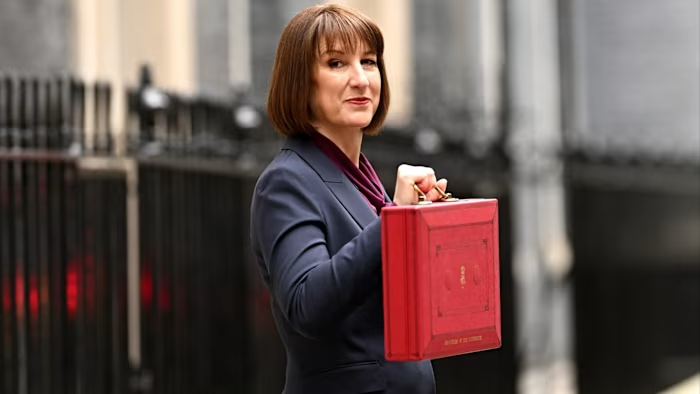
The Lords’ concerns come after Chancellor Rachel Reeves announced in her first Budget in the autumn of 2024 that pension funds would become part of inherited estates from April 2027, a blow for tax planning by wealthy people, which would raise £1.5bn a year for the Treasury by 2030.
Recommended

Initially, the responsibility to pay tax owed would sit with pensions providers, but following “overwhelming feedback” from the industry, which warned this was impractical, the government announced in July that personal representatives would instead be in charge of reporting and paying the tax.
The Lords report said the six-month inheritance tax deadline was already a challenge for estate executors and the misalignment with pension timelines risks “delaying the grant of probate and payments to beneficiaries, as well as exposing estates to late payment interest even where personal representatives have acted diligently”.
It added: “This measure could mean that personal representatives become liable for inheritance tax on assets they cannot access or control, creating cash flow pressures and increasing the personal risk of acting as a personal representative.”
The government is still finalising the technical details and further regulations are expected, leaving uncertainty around how the implementation of the rules will work.
“There’s only a year to get these systems sorted . . . it’s a huge problem as a lot of people have multiple pensions now,” Liddle said.
He added that the government should be more rigorous in consulting stakeholders before they bring in tax changes to avoid having to make numerous amendments after a policy is introduced — pointing also to the lifting of the threshold for agricultural and business property reliefs from £1mn to £2.5mn made late last year.
“The government produced a plan which they then had to change and they now have to change it again,” he said, adding that policymakers recognised there was a problem for personal representatives, particularly as they may be grieving family members who have the task of sorting out the estate.