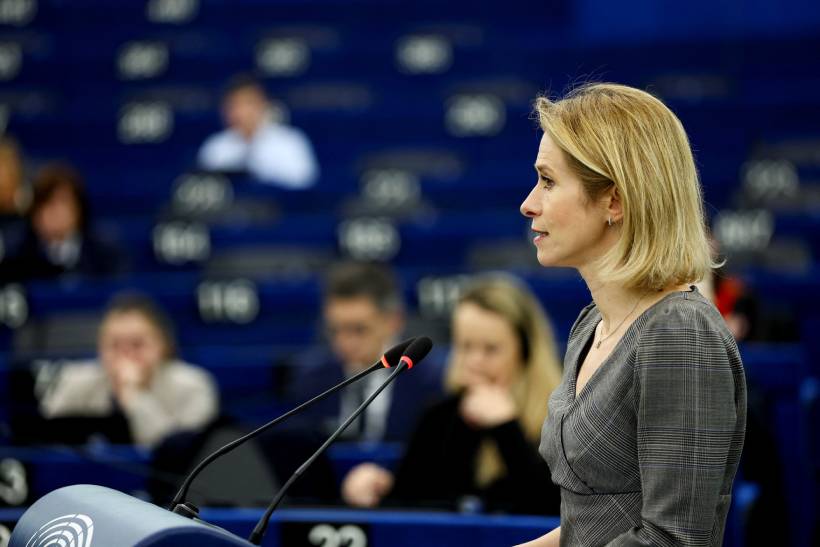
Europe is no longer the primary strategic focus of the United States, and the shift is structural rather than temporary, EU foreign policy chief Kaja Kallas said on Wednesday. Speaking at the European Defence Agency’s annual conference, Kallas highlighted the ongoing need for Europe to recalibrate its role amid evolving U.S. priorities under President Donald Trump’s administration. While the EU continues to seek strong transatlantic ties, she emphasized that Europe must recognize new geopolitical realities and prepare to act more independently in defense and security matters.
NATO and European Responsibility
Kallas underscored that NATO remains vital but must become “more European” to maintain its strength. The remarks reflect growing concerns among EU leaders that reliance on Washington may be insufficient in the face of emerging global challenges. Europe’s strategic autonomy is increasingly framed as a necessity, not a choice, in areas ranging from defense and cybersecurity to trade and foreign policy.
Geopolitical Risks
The EU official also warned of broader risks in global politics, cautioning against a return to “coercive power politics, spheres of influence and a world where might makes right.” This signals concern over rising great-power competition, territorial disputes, and unilateral actions by major states. Kallas’ comments suggest that Europe may need to strengthen its diplomatic, economic, and military instruments to navigate a world in which U.S. attention is shifting elsewhere and traditional alliances cannot be taken for granted.
Analysis: Structural Shift, Not Temporary
Kallas’ statement indicates a structural reorientation in transatlantic relations. Europe faces the dual challenge of maintaining cooperation with the United States while enhancing its own strategic capabilities. The push for a “more European NATO” reflects a recognition that reliance on Washington alone is no longer sufficient to ensure regional security or global influence. This shift also dovetails with broader trends, including the U.S. focus on Indo-Pacific policy, China’s economic rise, and increasing geopolitical uncertainty, all of which require Europe to strengthen its capacity to act independently while still engaging with allies.
With information from Reuters.