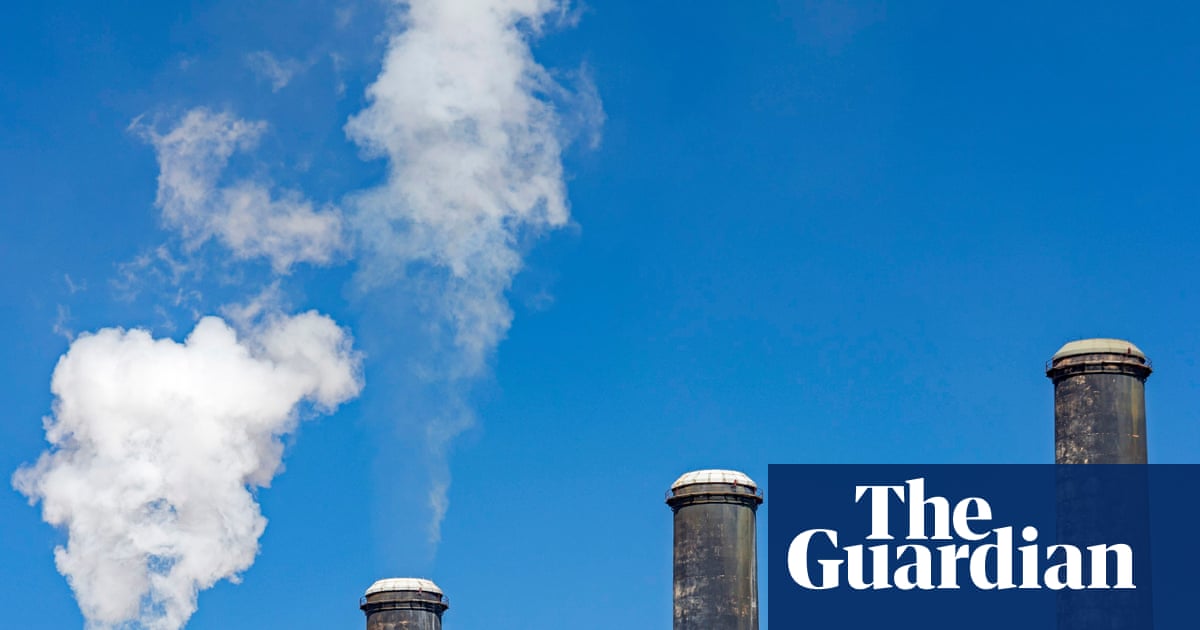
The US is leading a huge global surge in new gas-fired power generation that will cause a major leap in planet-heating emissions, with this record boom driven by the expansion of energy-hungry datacenters to service artificial intelligence, according to a new forecast.
This year is set to shatter the annual record for new gas power additions around the world, with planned and under-construction projects earmarked for 2026 set to nearly triple the amount of existing gas capacity, a report by Global Energy Monitor (GEM) found.
The US is at the forefront of a global push for gas that is set to escalate over the next five years, after tripling its planned gas-fired capacity in 2025. Much of this new capacity will be devoted to the vast electricity needs of AI, with a third of the 252 gigawatts of gas power in development set to be situated on site at datacenters.
All of this new gas energy is set to come at a significant cost to the climate, amid ongoing warnings from scientists that fossil fuels must be rapidly phased out to avoid disastrous global heating.
Chart showing gas-powered capacity increasing
The gas projects in development in the US will, if all completed, cause 12.1bn tonnes in carbon dioxide emissions over their lifetimes, which is double the current annual emissions coming from all sources in the US. Worldwide, the planned gas boom will cause 53.2bn tonnes of emissions over projects’ lifetimes if fulfilled, pushing the planet towards even worse heatwaves, droughts, floods and other climate impacts.
“Locking in new gas plants to meet uncertain AI energy demand means hard-wiring decades of pollution into a gambit that could be solved with flexible, clean power,” said Jenny Martos, project manager at GEM’s oil and gas plant tracker.
“As the AI bubble inflates, the US must decide whether it will double down on a fossil future while the rest of the world pivots to renewables.”
Several countries around the world are betting big on gas, according to GEM’s tracker, which tallies projects that have been announced or are at various stages of construction. Last year, China, the world’s largest carbon emitter, installed 22.4GW of gas, its most gas capacity ever for single year.
But it is the US that is leading the way, accounting for nearly a quarter of all global gas capacity in development, followed by China, Vietnam, Iraq and Brazil. Texas is the epicenter of this boom in the US, with 57.9GW of new gas power under way last year, leading Louisiana and Pennsylvania. In 2026, new gas additions are set to surpass the annual record of 100GW of new gas added in the US, set in 2002.
chart showing US leading on gas fired capacity globally
Much of this power will be swallowed up by vast datacenters being built by tech companies to grow the AI industry. The growth of AI has been enthusiastically promoted by Donald Trump, with the president stating his administration will do “whatever it takes” for the US to lead in AI, vowing to sweep away “foolish rules” that slow the build-out of datacenters.
The proliferation of datacenters has, however, caused a bump in greenhouse gas emissions and boosted demand for electricity. This has raised power bills for many Americans, despite Trump’s promise to cut such costs in half in his first year in office.
chart showing US gas-fired power plant capacity tripling
The administration has also blocked numerous clean energy projects and has escalated the export of liquified natural gas, with both measures raising the price of energy for American households, experts say. Domestic gas prices rose last year and, after a static 2026, are forecast to surge again next year.
“Frenzied datacenter growth with little transparency or guardrails puts the public at risk of massive cost increases,” said Steve Clemmer, director of energy research at the Union of Concerned Scientists, which predicts electricity demand in the US could explode 60% by 2050 due to new datacenters.
A grassroots backlash against datacenters over power bills and the facilities’ rampant use of water has, however, halted some projects and caused a political headache for Republicans, with Trump recently promising that big tech companies such as Microsoft will “pay their own way” for the new infrastructure, although details on such a plan are scant.
“I said, You can’t create this much energy,” Trump conceded recently at a speech in Davos, Switzerland. “We needed more than double the energy currently in the country just to take care of the AI plants, and I said we can’t do that.”
The datacenter juggernaut shows little sign of slowing down, however, with plans such as tech giant Meta building a $1.5bn datacenter, powered by gas, in El Paso, Texas.
In western Pennsylvania, meanwhile, a shuttered coal plant is set to be resurrected as the largest gas-fired facility in the US in order to service a datacenter campus. The plan for the 3,200-acre Homer City site, about 50 miles east of Pittsburgh, has divided the local community, according to Tom Pike, director of campaigns at the Clean Air Council, a local green group.
“The coal plant was an environmental monstrosity, but it was a pillar of the local economy and some people are nostalgic for that,” Pike said.
“But no one wants to live next to a datacenter. The ammonia, and the smell of that, from gas will be worse than the coal plant, and the power generated will be used in service of private profit rather than keep households’ lights on.
“There’s no way it won’t impact power prices, either. There is tremendous public concern about this plan.”