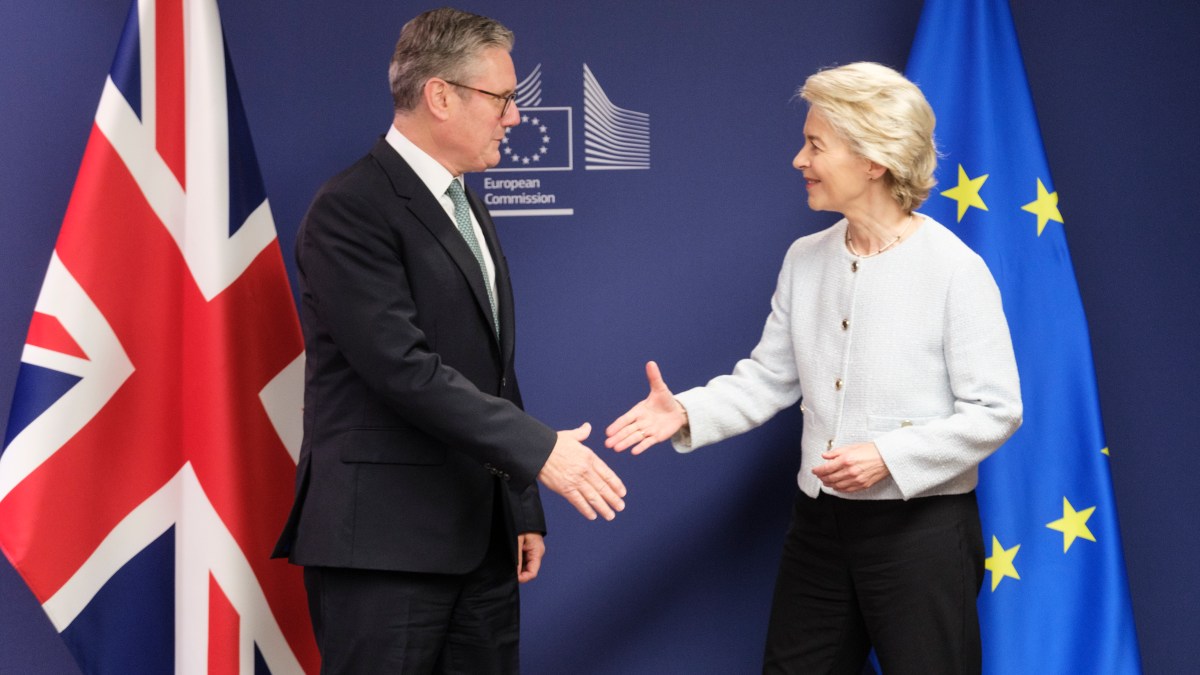
As Sir Keir Starmer seeks to reset relations with Brussels, the temptation for the prime minister to edge closer to the EU’s regulatory orbit is real.
But while revamping post-Brexit rules to encourage growth and innovation is welcome, the UK’s vision for a globally competitive financial services sector must not be compromised by a return to EU rule alignment. At the same time, the EU remains a critical market and global firms would welcome further arrangements to enable business with European clients.
The City has so far successfully lobbied Starmer to exempt financial services from closer alignment with EU rules. Financial services are the jewel in the UK’s economic crown, employing 1.2 million people and generating a trade surplus of $127 billion (£92 billion) last year.
The EU remains a major market, accounting for more than 30 per cent of exports, on par with the US. Since Brexit, the UK’s share of exports to the EU has fallen, while trade with the US and the rest of the world has increased.
Leaving the EU bloc brought pain — regulatory frictions increased, passporting rights lost. But it also delivered gains. The UK changed key financial rules to create greater transparency and it is now easier for businesses to list in London, banks face lower capital requirements, and domestic rules are being simplified to boost competitiveness.
These changes have kept the City attractive for new business. Reversing them would risk stalling recovery and deterring global investment. Businesses operating across borders crave certainty, not upheaval.
The City’s future lies in balancing sensible collaboration while retaining key freedoms. The UK has always been open for business and firms would welcome continued access to EU clients in a reciprocal way.
This does not mean rules must be aligned, but continued access to the EU is worth fighting for. Bilateral deals, such as the Berne Financial Services Agreement with Switzerland, show that open market access can be achieved without surrendering independence.
An interesting angle is the derivatives business lost to the US. While the UK and EU do not recognise each other’s exchanges, the US has recognition from both. The EU is considering the UK’s application for equivalence, but this has taken years and could have been resolved sooner.
Another example is the memorandum of understanding signed earlier this month between UK and European regulators that strengthens co-operation on oversight of critical third parties — it is another valuable area for the stability of the UK financial services sector.
The UK must reinforce its message that it is open for global business and competitive. Financial services are where Britain excels. The government must ensure it does not trade away the City’s competitive edge.
Penny Miller is a partner at the law firm Simmons & Simmons