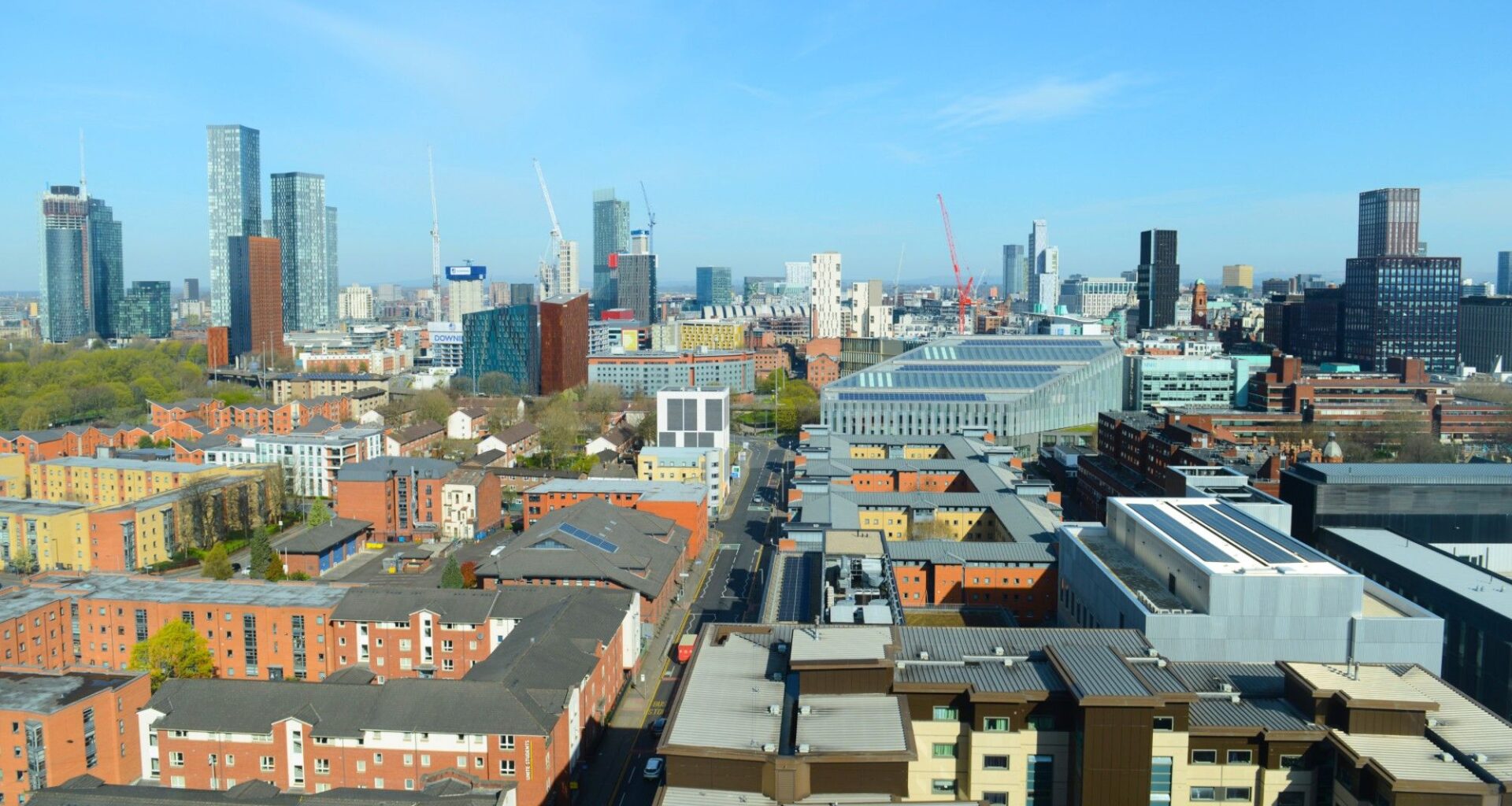
Some politicians in the United Kingdom hope a growing movement in the city of Manchester could help turbocharge the country’s political and economic landscape. This school of thought, dubbed Manchesterism, originated in the city decades ago, but has been championed by Greater Manchester’s mayor in recent months. But while many people in Manchester view the idea positively, it has been received with more skepticism across the U.K. at large.
Manchesterism also goes hand-in-hand with devolution, or the delegation of power from a centralized federal government to more local governments. In 2014, Manchester signed a devolution agreement that “gives the region additional powers, and greater accountability through an elected mayor,” said the GMCA. Since then, there have been “further deals that have brought new powers and responsibilities to the city region.”
The Week
Escape your echo chamber. Get the facts behind the news, plus analysis from multiple perspectives.
SUBSCRIBE & SAVE
Sign up for The Week’s Free Newsletters
From our morning news briefing to a weekly Good News Newsletter, get the best of The Week delivered directly to your inbox.
From our morning news briefing to a weekly Good News Newsletter, get the best of The Week delivered directly to your inbox.
The city’s government has adopted a positive view of Manchesterism. Manchester has the “fastest-growing city-region economy in the U.K., proof that it is possible to use public funds effectively while reducing crisis spending,” said Greater Manchester Mayor Andy Burnham in an op-ed at The Guardian. Burnham, who has called Manchesterism “business-friendly socialism,” thinks that deindustrialization “left people and businesses paying way over the odds for the essentials” and is the “root cause of today’s cost-of-living crisis.” Replicating Manchesterism on a national scale “could mean putting electoral reform center stage as the means to create a more collaborative politics.”
Would it work across the United Kingdom?
Opinions are mixed on whether Manchesterism can have a practical effect nationwide. It “could revive Britain’s fading grandeur,” said The New Statesman, partially because it has happened in the U.K. before — the “extraordinary economic success of Manchester, Liverpool, Cardiff and Leeds enabled Britain to take on its important role through the 19th century and into two world wars.” Manchesterism could encourage Great Britain to “remove one of the main barriers to U.K. prosperity and productivity by embracing a far more radical devolution of economic power to cities other than London.”
But Manchesterism is largely affiliated with the U.K.’s center-left Labour Party, which is “now far more commonly associated with the obsessions of metropolitan liberalism than with industrial organizing, worker representation, or old-fashioned class politics,” said UnHerd. Burnham’s “hour may have come, but the jury’s out on whether his inchoate offer of ‘Manchesterism’ is the answer to our precipitous trajectory of national decline.”
Burnham additionally “does not give us the price tag for his industrial strategy, but there is clearly a lot of money involved and most of it seems to be coming from the government,” said The Critic. He “should be commended for his focus on growth” in Manchester, but the “problem is that he sees market failures everywhere and, like all industrial strategists, thinks he has found tremendous business opportunities that the brightest minds in the private sector have failed to spot.”