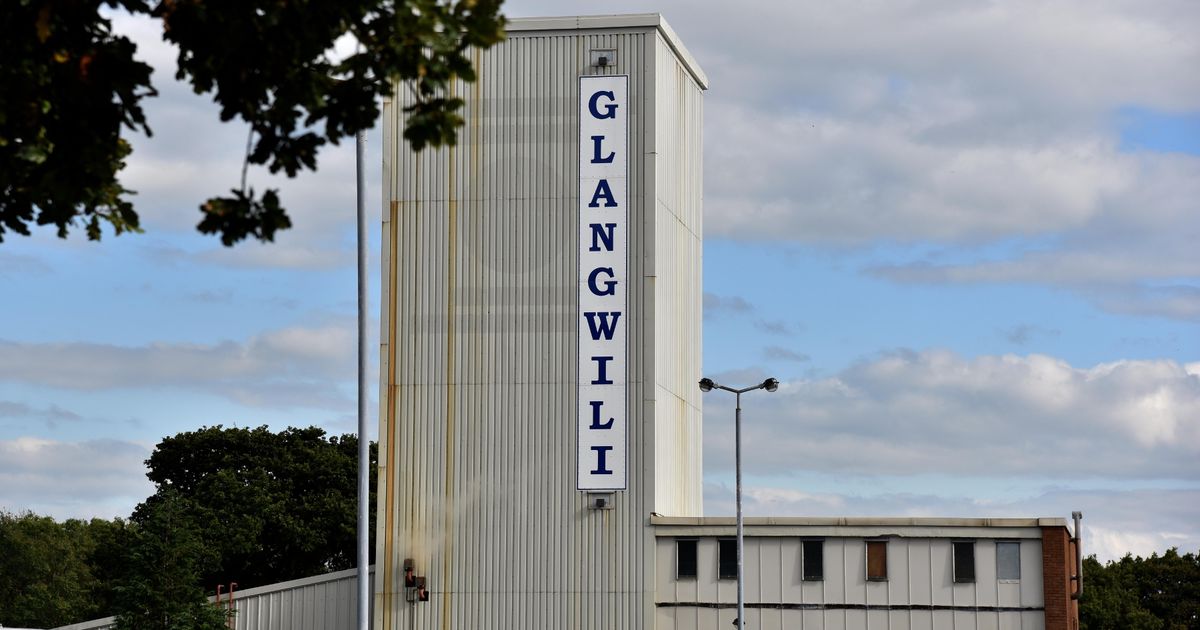
More than £50m has been spent on Glangwili Hospital in Carmarthen and Withybush Hospital in Haverfordwest in recent years but issues and pressures remain
15:36, 29 Jan 2026
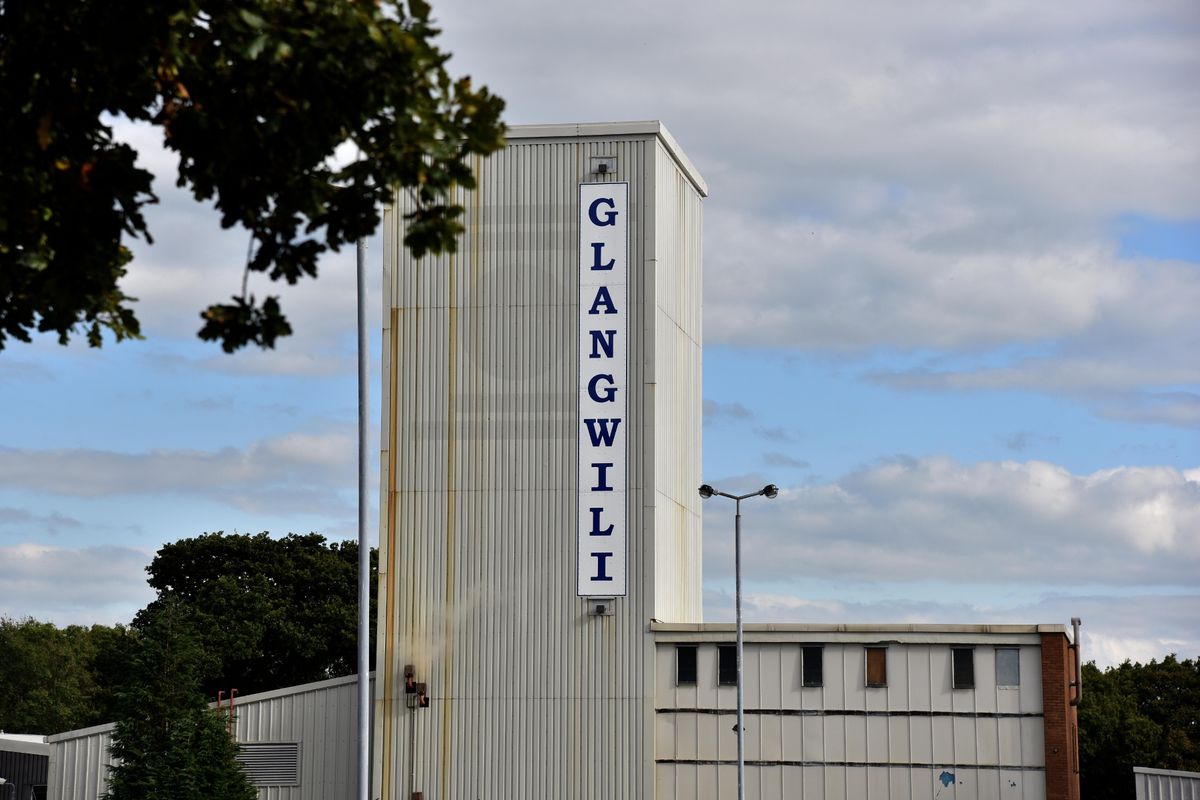
Glangwili Hospital in Carmarthen, formerly called West Wales General Hospital, was first opened in the 1940s(Image: Western Mail)
A major hospital in Wales is in a state of “crisis” with patients being forced to sleep for hours in chairs because wards are too full, a petition signed by more than 1,300 people has claimed.
Glangwili Hospital in Carmarthen is the biggest hospital managed by Hywel Dda University Health Board, the body responsible for healthcare provision across Carmarthenshire, Pembrokeshire, and Ceredigion. Glangwili is home to the only accident and emergency department (A&E) in Carmarthenshire following the closure of the equivalent unit at Llanelli’s Prince Philip Hospital several years ago.
Just this week the health board said it was working under “significant pressure”, particularly at Glangwili, and asked members of the public not to attend the hospital unless it was essential they do so. Stay informed on Carms news by signing up to our newsletter here.
Upon sharing the message on social media the health board disabled the comments function – a sign of the negative reaction which usually greets such notices from frustrated members of the public.
Last autumn a petition, which garnered 1,304 signatures, was set up which stated: “The reduction/closure of services at other Hywel Dda hospitals has caused a crisis at Glangwili. Patients are having to travel huge distances to reach emergency care, increasing reliance on ambulances.
“The Clinical Decision Unit (CDU) is no longer functional and is operating as a ward, with unwell patients being forced to sleep in chairs in the unit or remain in A&E as there is no ward space to admit them. The NHS staff are doing their best but the situation is untenable.”
It’s fair to say that hospital care across the Hywel Dda region has been in a state of flux in recent years. There are concerns over the long-term future of Withybush Hospital in Haverfordwest with politicians lamenting cuts to services and pleading with the health board that “enough is enough”.
Further east, in Llanelli, first the A&E department at Prince Philip Hospital bit the dust and then the site’s minor injury unit had its opening hours slashed in half.
The unit used to be open 24 hours a day but a temporary change to an 8am-8pm service became a permanent one last year despite locals protesting about being left to feel helpless and abandoned. The hospital is 24 miles from Glangwili and 11 miles from Swansea’s Morriston Hospital.
Last year we reported that a much-needed new hospital in Carmarthenshire, first mooted back in 2006, might never be built after all. We are now eight years on from the launch of the official plans in 2018 and yet the beginning of construction has never seemed further away.
The petition referenced above, calling on the Welsh Government to “take urgent action to improve the NHS in west Wales and address the crisis at Glangwili Hospital”, was discussed at a meeting of the Senedd’s Petitions Committee this week.
The committee had previously sent the petition to bosses at Hywel Dda and the health board’s chief executive, Dr Phil Kloer, admitted in responding correspondence that “the health board accepts and acknowledges that it has a number of fragile services and that the experience for some of our patients is not always as it would want it to be”.
He added: “The health board faces a number of specific challenges. These include workforce deficits, an ageing estate, rurality, and the duplication of hospital services on multiple sites.”
The “ageing estate” includes the oldest acute hospital in Wales (Glangwili) while “nearly 90%” of Withybush Hospital is affected by reinforced autoclaved aerated concrete (RAAC).
Dr Kloer adds: “The health board, supported by the Welsh Government, has spent over £50m on these two sites alone over the past few years.
“Unfortunately most of this expenditure is in response to critical service continuity risks, such as RAAC, remedial fire works, and other aspects including electrical infrastructure.”
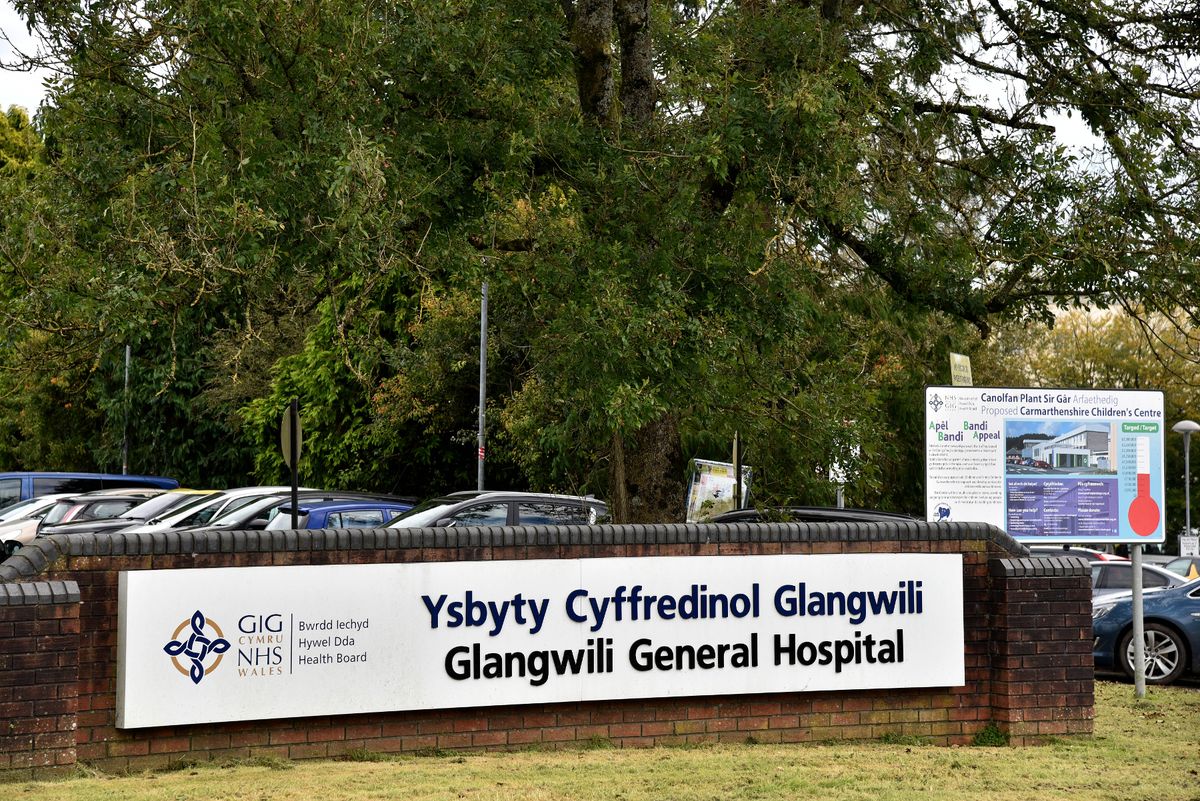
Glangwili Hospital is regularly operating under ‘significant pressure’, health bosses have admitted (Image: Western Mail)
A further £2m in Welsh Government funding has recently been secured which will be spent on improving Glangwili – work that will include increasing capacity and improving patient environment at Priory Day Hospital for patients who currently access A&E. It is hoped this work will be completed within the coming months.
In the letter sent to Carolyn Thomas MS, the chair of the Senedd’s Petitions Committee, Dr Kloer, who said the use of agency nurses is 64% lower than it was in 2024, wrote: “We understand there are strong feelings about local hospitals and access to services.
“Given our rurality west Wales typically has services spread across multiple sites. This often means services are fragile, reliant on a small number of individuals and unable to meet modern standards of care.
“The health board has had further constructive discussions with the Welsh Government on the infrastructure challenges facing the organisation, in particular at the Withybush and Glangwili sites.
“Change will be necessary and we will continue to work with our population to identify the most appropriate solutions and mitigate the impacts as much as possible.”
The health board has also said that improvements are being carried out at Glangwili’s A&E department focusing on “cleanliness and facilities”, “patient experience and communication”, “digital and service innovations”, and “staff support and training”.
Andrew Carruthers, the health board’s chief operating officer, said on Thursday: “Glangwili Hospital is a vital part of our healthcare services for people across Carmarthenshire, and Hywel Dda, and our staff work incredibly hard, often under real pressure, to care for patients who need hospital treatment the most.
“Like many hospitals Glangwili is facing sustained demand, which is why it’s so important that people are supported to access the right care in the right place at the right time. While the hospital is essential it isn’t always the right answer and many people can be cared for more appropriately through GP practices, community services, or other local support.
“We want to work closely with our communities to help people understand their options and ensure Glangwili can focus on those who need specialist or emergency care, now and in the future.”