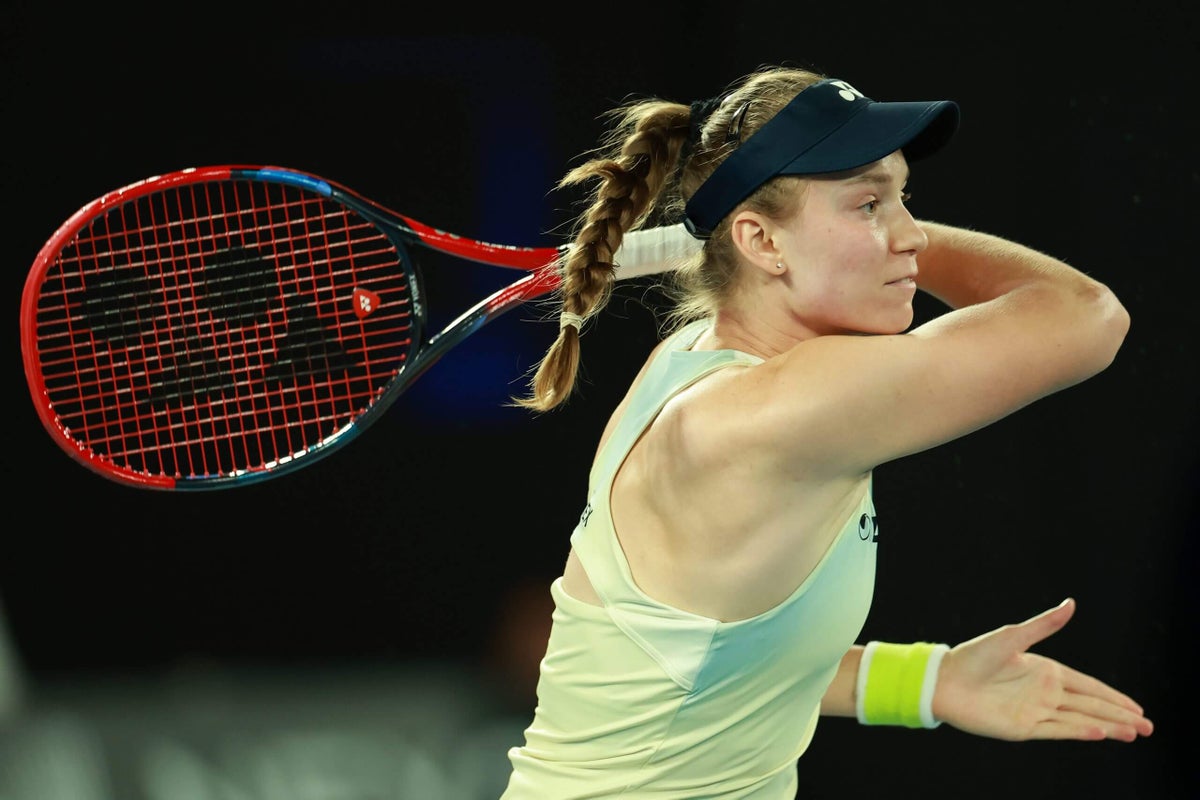
MELBOURNE, Australia — Elena Rybakina fended off a late Australian Open surge from Jessica Pegula in a 6-3, 7-6(7) semifinal win Thursday night, to set up a heavyweight final against the world No. 1, Aryna Sabalenka.
Rybakina is not the world No. 2, but the No. 5 seed is the opponent Sabalenka would least like to face. She won their last meeting in straight sets, including a tiebreak to love against a player who has won their last 20 at Grand-Slam level. That was the WTA Tour Finals championship match in November, one of Rybakina’s 20 wins in her past 21 matches. In that time, she has picked up two titles and posted a 9-0 record against top-10 opponents.
With her huge serve, easy power, clean ball-striking and underrated ability to generate huge speed even when extended, Rybakina is one of the very few players who can take the racket out of Sabalenka’s hands, as Madison Keys did to win last year’s final.
She is also the world No. 1’s temperamental opposite. Where Sabalenka wears her emotions on court and lives through them, Rybakina is near-totally zen and unreadable, even though Pegula’s late fightback in the second set brought some mild anguish across Rybakina’s face. When she won the Wimbledon title in 2022, her reaction was more akin to someone being told they could finish work early than someone who had just won their first Grand Slam.
“She’s so chill,” Pegula said in a news conference afterward. “She doesn’t really give you anything, and I think that’s hard sometimes. You’re not really sure if she’s upset or if she’s excited or what it is.
“I think in today’s game that goes a long way. You don’t really have a lot of energy to play off of, so I think that’s always kind of her number one thing.”
Sabalenka may not appreciate how relaxed Rybakina will seem when she, by contrast, will be outwardly battling the stress of trying to avoid losing a third Grand Slam final out of four.
In her news conference, Rybakina said that despite her apparent calm, inside she “was very nervous, frustrated when it was not going my way.”
Rybakina also paid credited her coach, Stefano Vukov, for her recent form. The WTA banned Vukov for a year last February after finding that he had breached its Code of Conduct during an investigation that found he had “engaged in abuse of authority and abusive conduct” toward Rybakina, according to a confidential summary sent to Vukov and Rybakina from WTA Tour chief executive Portia Archer.
Vukov appealed, which went to arbitration, and the ban was lifted last August.
“It’s a big help, because of course he knows me the best,” Rybakina said. “With his advices on the court during the matches, it definitely makes a difference.”
Sabalenka was busy performing post-match duties after hammering Elina Svitolina in her own semifinal, but when she sits down to watch Rybakina’s defeat of Pegula Thursday night, she will see a rival playing with complete conviction, bar a late wobble down the stretch. Things otherwise look so uncomplicated for Rybakina when her game is song, built around arguably the best serve on the WTA Tour.
“It’s so tough with her because you just know that she can throw in a couple aces at any time,” said Pegula, who was disappointed with herself at failing to adapt to playing in a night match for the first time this tournament.
“She threw in a couple big serves at the end in that tiebreak. How she always kind of keeps you guessing with the serve I think is definitely one of her strengths.”
She won the first six points of the match against Pegula, breaking early to go 3-0 up after 10 minutes. That break was all Rybakina needed to roll through the first set, winning 77 per cent of first-serve points and 79 percent on the second. She didn’t face a break point.
As against Iga Świątek in the quarters, Rybakina’s serving fluency meant she could tee off once the rallies got started, rocking Pegula back on her heels so much that she frequently gestured to her box about the experience.
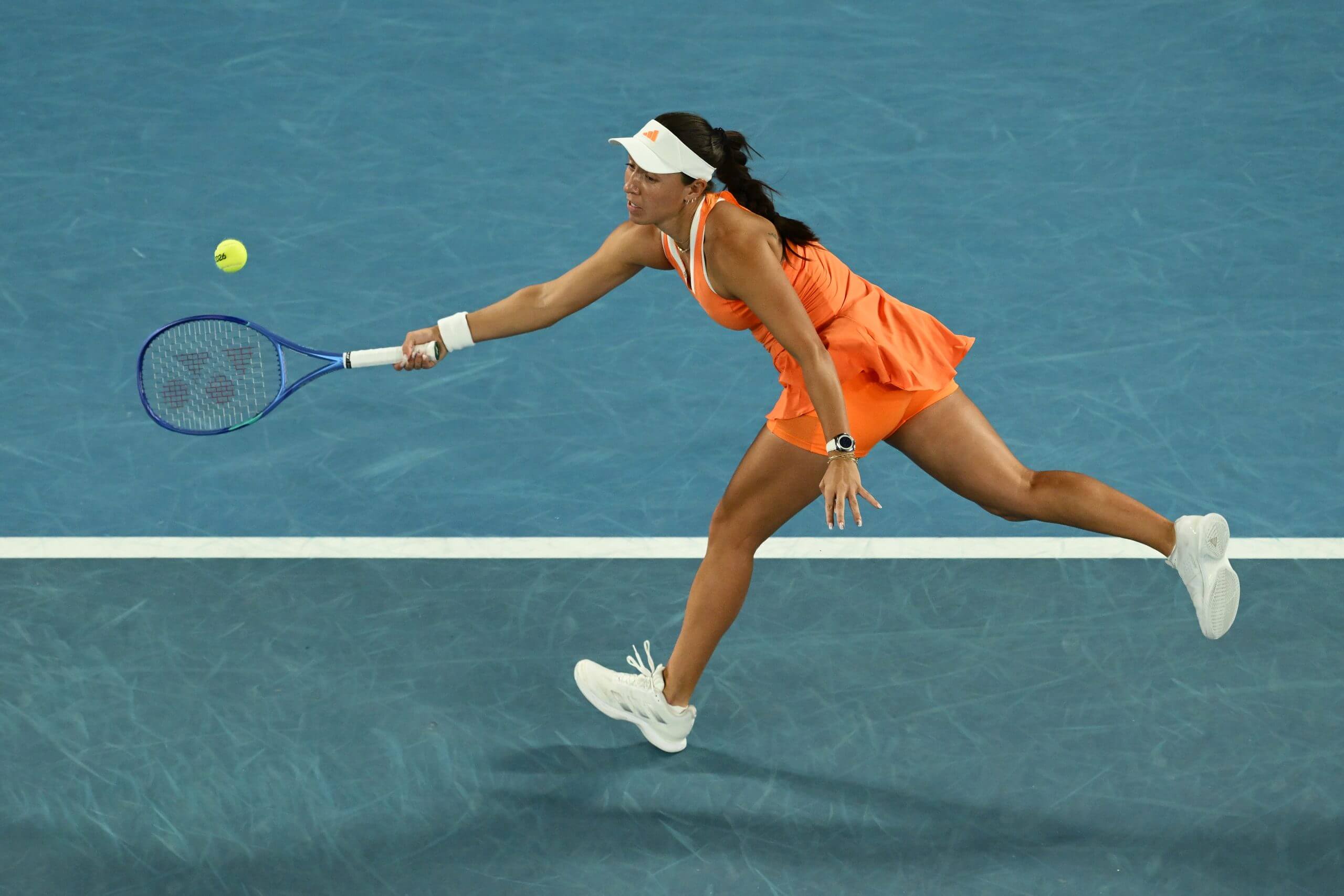
Jessica Pegula found herself constantly on the back foot against Elena Rybakina. (Quinn Rooney / Getty Images)
Pegula, who hadn’t dropped a set all tournament until Thursday night, had found a way to diffuse and redirect Keys and Amanda Anisimova’s power back on them in the previous two rounds, but this was another level. And when she had 30-30 on her opponent’s serve early in the second set, Rybakina slammed the door shut with a huge ace down the T. She then broke in the next game for 2-1, with a devastating inside-out forehand return winner.
The pair then exchanged breaks, before a pair of aces helped Rybakina hold for 4-2. Pegula, a U.S. Open finalist two years ago and in the best form of her career, was fighting hard, but it felt like she was always swimming against the tide. When a fourth ace flew by her to move Rybakina to 5-3, Pegula let out a resigned “yeah” — summing up the powerlessness she must have been feeling. A game later it looked like it was going to be all over, as Rybakina attempted to ease her opponent into submission one last time and brought up three match points on Pegula’s serve. A forehand return, that flew onto the line to bring up the third, drew a look of disbelief from the American.
But Rybakina could not convert any of the match points, and so had to serve out at 5-4. Pegula immediately hit two return winners, to go up 0-30.
Rybakina drew even with the strength of her serve, but one tight forehand in the net and another that sailed long gave Pegula a break and a set that looked done was suddenly level at 5-5.
The tension was clear, as Rybakina immediately broke back before again being broken, tightening up as the finish line approached and sending the match into a tiebreak.
Once there, Pegula had two set points to go into a decider but Rybakina staved them off. A forehand onto the baseline, after an 81 mph Pegula first serve, saved the first, before an ace down the T took Rybakina to a fourth match point. This time there was no mistake, as one last clean-as-a-whistle backhand flew past Pegula for a return winner.
After their straight-set semifinal wins, even with the late tension in the latter, Sabalenka and Rybakina will now meet with neither having dropped a set on their way to the final. They are undeniably the two best players in the world right now, and their meeting will be a repeat of the final here in 2023, which Sabalenka won in three thrilling sets. That was Sabalenka’s first major title, while Rybakina has not been to a major final since.
Everything is set up for another barnburner Saturday, when the sequence of one-sided and straight-sets matches will be tested to the max by two such well-matched players. So while this is the final Sabalenka probably wanted to avoid, it is also one that fans desperate for a sustained competitive encounter will be relishing.