Entrepreneurship, according to economist Israel Kirzner, is a “tendency for profit opportunities to be discovered and grasped by routine-resisting entrepreneurial market participants”.
Kirzner, an alumnus of the University of Cape Town and emeritus professor at New York University, is celebrated for his work defining entrepreneurship. The successful market actor, he says, is always “spontaneously on the lookout for hitherto unnoticed features of the environment which might inspire new activity”.
South Africa has no shortage of such routine-resistant entrepreneurs, but a fraction find success. A constraint usually cited is capital. Corporates, government bodies and NGOs eager to nurture entrepreneurship respond accordingly, channelling funding towards promising start-ups. A Kirznerian reading of the landscape points to a different bottleneck. The most striking absence is not money but a reliable route to market.
“As entrepreneurs, we struggle to gain access to the right people, the relevant decision-makers,” says Sbu Khumalo, whose hydropower start-up is in its infancy. Khumalo was a winner in the Route to Market (RTM) Challenge 2025, run by the Centre for African Management & Markets (CAMM) at the Gordon Institute of Business Science. The challenge identifies high-potential, early-stage businesses and empowers them to bring their ideas to market. The competition is unusual because it does not offer a monetary prize. Instead, the top three candidates in each category have the opportunity to engage with an incumbent in their industry, interact with other entrepreneurs and learn from academics and practitioners who have been there before.
“Our thesis when we started the competition,” says Gibs Prof Adrian Saville, “was that we could help entrepreneurs build something successful not by offering money but by opening doors. Three years on, I think we’ve evidenced that thesis.”
SMEs are often better placed to operate in these underserved markets
Khumalo’s business, FlexDeploy Hydro, is a case in point. The start-up aims to build small hydropower plants to provide electricity to rural areas that are unsupplied. The relatively low-cost concept harnesses the energy of water flowing through pre-existing systems, such as water treatment plants, to generate electricity for a single neighbourhood.
“It’s a great initiative. It’s bold,” says Nhlanhla Zama of uMngeni-uThukela Water (UUW), the partner for this category of the RTM Challenge. “We are eager to ‘go green’ at UUW, so I will fight for him to gain access to the dams where we have infrastructure.” Khumalo at present earns a living by driving a minibus taxi. Without the guidance and connections of UUW, his path to key infrastructure was unclear. Regulatory requirements posed another potentially insurmountable challenge.
Start-ups are not the only beneficiaries of this model. The RTM Challenge shows that engagement with early-stage firms can deliver tangible benefits to incumbents, beyond meeting corporate social objectives. Take the winner in the logistics category. Freddy Mahhumane is the founder of KasiD Township Delivery Service, an e-commerce and logistics platform with a township-first design. Delivery drivers are recruited locally, and the technology behind the platform reflects township operating conditions — including the need to navigate streets with informal or unconventional numbering.
“We don’t generally have a township delivery network,” says Anthony Beckley, vice-president of operations at DHL Express Sub-Saharan Africa. “But if we could partner with someone like Freddy who has the support of the community, that would be a good thing for Freddy and a good thing for DHL and our customers.” South Africa’s cultural, geographic and economic landscape creates gaps that large businesses struggle to fill. SMEs are often better placed to operate in these underserved markets.
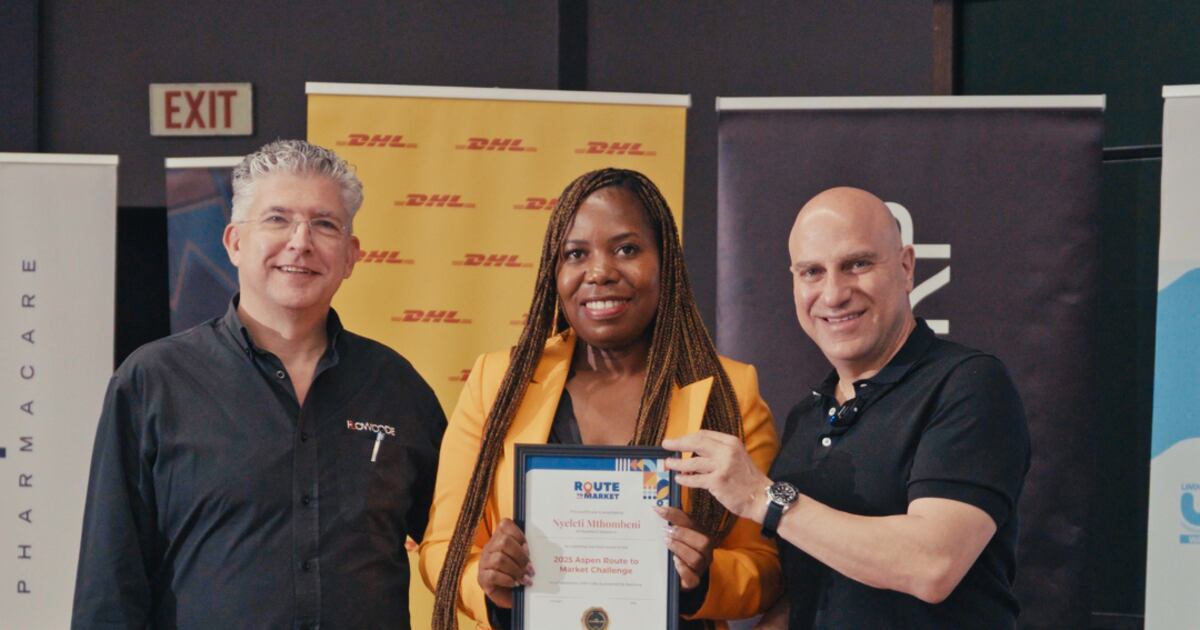
Nyeleti Mthombeni, a runner-up in the health category, offers a similar example in rural Limpopo. Her company, Afrileadtech Research, operates a clinical trial centre in Vhembe that could expand research capacity to competition sponsor Aspen Pharmacare and help to diversify trial populations. Mthombeni has worked to build trust with a local community unfamiliar with clinical trials and potentially sceptical of multinational research organisations.
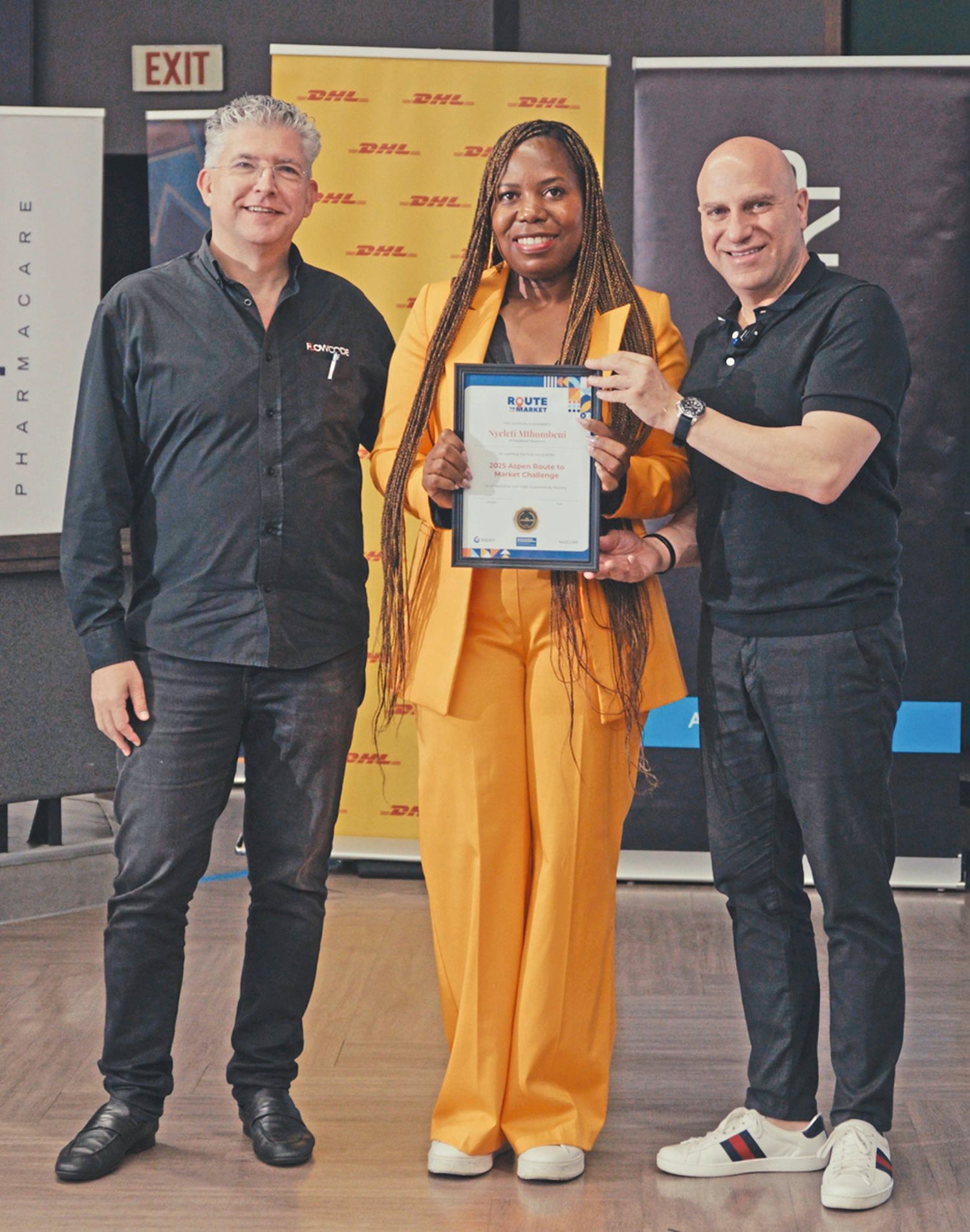 Nyeleti Mthombeni was a runner-up in the health category of the RTM Challenge 2025. She is flanked by Raizcorp’s Allon Raiz and Aspen Pharmacare’s Stavros Nicolaou (Supplied )
Failure is a feedback mechanism. Entrepreneurs act on perceived gaps in the market. Some of those gambles fail. That’s how markets learn. But ideas that never make it to market cannot be tested or allowed to flourish.
In the South African context, the consequences should not be underestimated. Formally registered SMEs contribute between 52% and 57% to GDP and more than 60% to employment generation, according to the National Empowerment Fund. Include informal businesses and those numbers are even higher. The challenge, then, is to resist routine and approach the task of supporting new businesses with the spirit of innovation that motivates their founders.
The Centre of African Management & Markets at the Gordon Institute of Business Science conducts academic and practitioner research and provides strategic insight on African markets