

A new study has found that an oat-based diet could have benefits beyond fibre and protein.
(aywan88 via Getty Images)
Cholesterol is one of those things that tends to creep up on you. One day you’re feeling fine, and the next day, high cholesterol is quietly increasing your risk of cardiovascular issues – so it’s important to ensure you’re eating the right foods that can help lower cholesterol levels.
But getting your cholesterol under control doesn’t have to be an expensive or time-consuming endeavour. New research suggests that there is one very cheap staple breakfast food that could be surprisingly effective at the job.
Oats could hold the key to lowering cholesterol, according to scientists at University of Bonn. The popular grain, which can be picked up at any supermarket for just a couple of pounds, is high in fibre and protein and is a complex carbohydrate that offers even more health benefits.
The trial study found that consuming a diet consisting almost exclusively of oatmeal for just two days could improve cholesterol levels “significantly”.
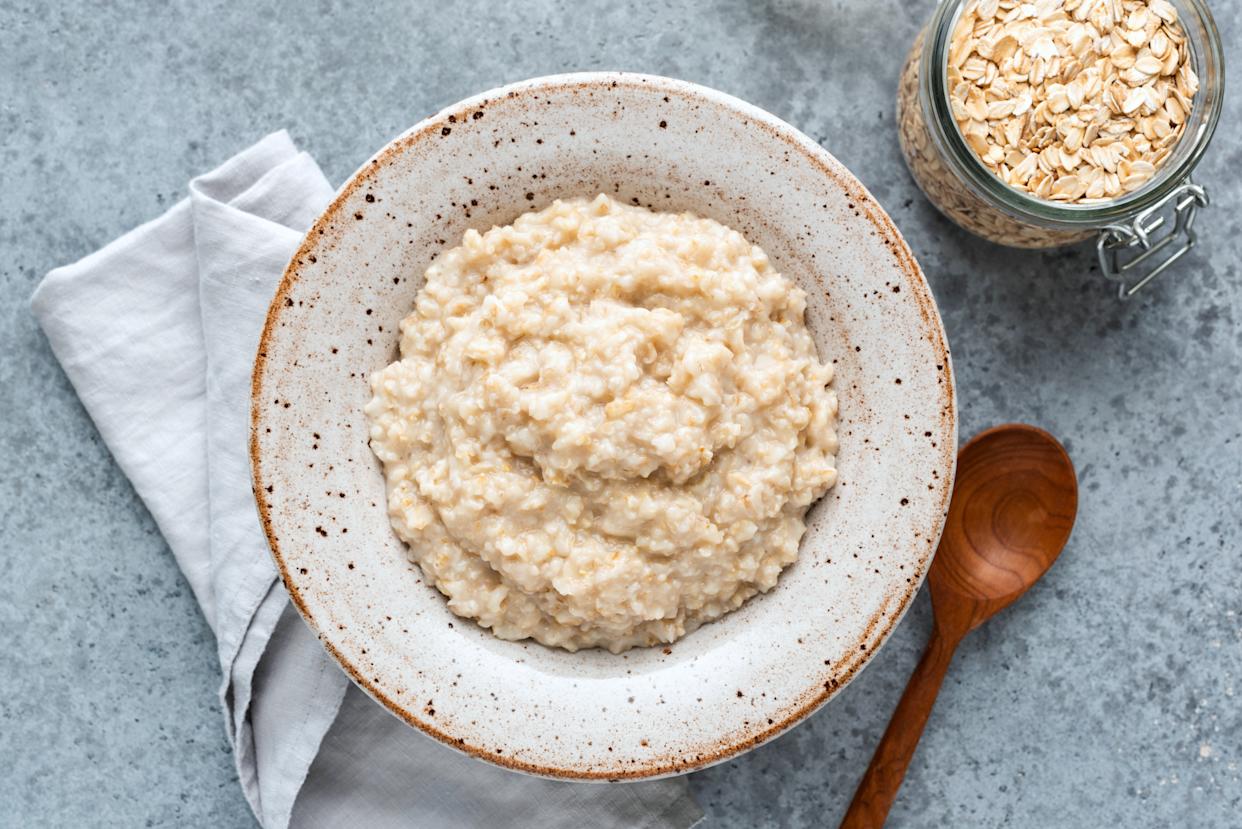
The participants ate a diet of oats cooked in water for all three meals over two days.
(Arx0nt via Getty Images)
Whilst it was a small-scale study involving just 68 participants, scientists found a “substantial reduction” in levels of harmful LDL low-density lipoprotein (LDL) cholesterol among those who followed the oat-exclusive diet.
The diet consisted of 300g oatmeal cooked in just water for all three meals a day, and participants were only allowed to eat some fruit or vegetables to their dishes.
Commenting on the results, Marie-Christine Simon, junior professor at the Institute of Nutritional and Food Science at the University of Bonn, said: “The level of particularly harmful LDL cholesterol fell by 10% for them – that is a substantial reduction, although not entirely comparable to the effect of modern medications.
“They also lost two kilos in weight on average, and their blood pressure fell slightly.”
LDL cholesterol becomes deposited in the walls of blood vessels if there is too much of it in a person’s blood, and these deposits are known as plaque.
The plaque narrows blood vessels, leading to higher blood pressure. The risk of deposits rupturing and forming blood clots that can block the blood vessels is also high, and can lead to deadly cardiovascular problems.
How oats could help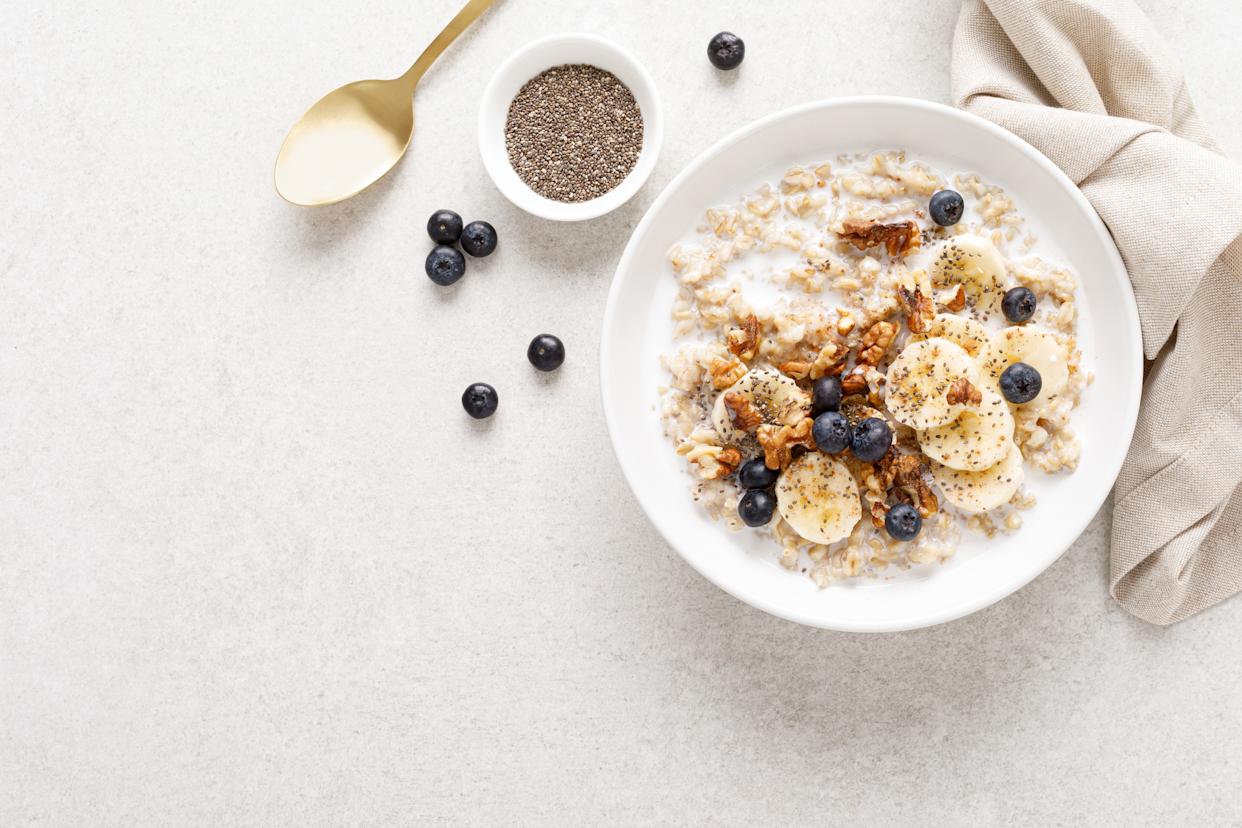
Scientists found that oats could help lower cholesterol by increasing the amount of a certain gut bacteria, which releases an acid that can positively influence cholesterol levels.
(YelenaYemchuk via Getty Images)
Oatmeal helps reduce cholesterol by increasing the number of certain bacteria in the gut, said Linda Kluempen, lead author of the trial. The bacteria produces phenolic compounds, including something called ferulic acid, which “has a positive effect on the cholesterol metabolism”, she explained.
The study also found that eating an oat-based diet short-term, but regularly, was more effective than eating a smaller volume of oats over a longer period of time.
The positive effects of the two-day oats diet was still evident even after six weeks. However, the study showed that participants who consumed 80 grams of oats per day over six weeks saw only a small benefit in comparison.
“A short-term oat-based diet at regular intervals could be a well-tolerated way to keep the cholesterol level within the normal range and prevent diabetes,” Simon said.
“As a next step, it can now be clarified whether an intensive oat-based diet repeated every six weeks actually has a permanently preventative effect.”
10 cholesterol-lowering foods to add to your diet
-
Wholegrains, including barley and quinoa
-
Oily fish, such as salmon and mackerel
-
Beans, like chickpeas and kidney beans