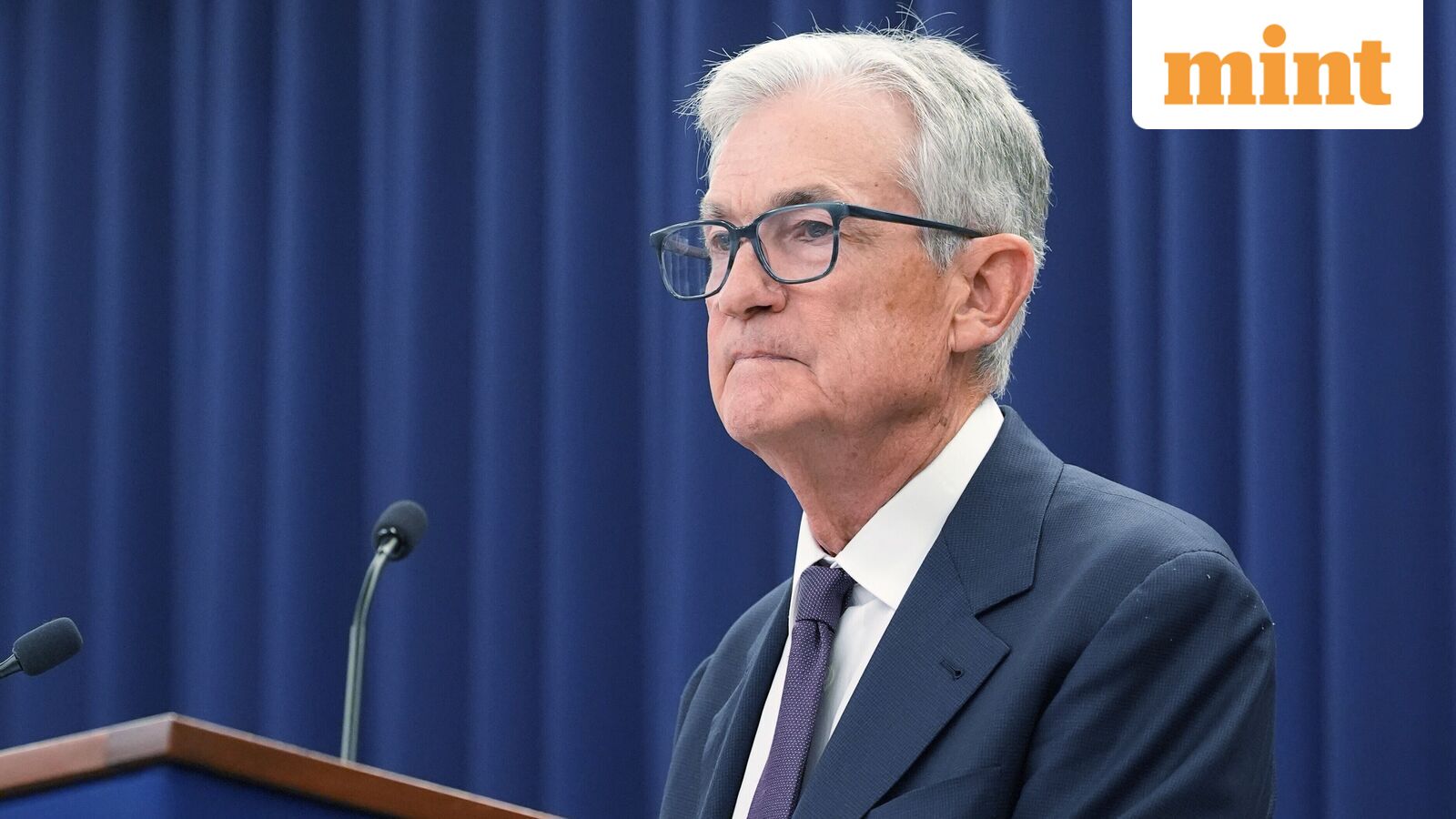
As Powell explained at a press conference Wednesday, which followed the Jan. 27-28 Federal Open Market Committee meeting, monetary policy is now close to neutral, risks look more balanced, and there is little urgency to lower interest rates.
Indeed, the FOMC held its benchmark rate steady at 3.5% to 3.75% in a 10-2 vote at the latest meeting, after lowering rates by three-quarters of a percentage point in last year’s second half. Fed Governors Christopher Waller and Stephen Miran dissented this week in favor of another quarter-point cut.
In the policy statement issued at the meeting’s conclusion, the FOMC described growth as “solid”—an upgrade from December’s description of expansion “at a moderate pace.” The statement also said job gains remain low but the unemployment rate has shown signs of stabilization. The Fed dropped language that had pointed to rising downside risks in the labor market. Inflation, the committee said, “remains somewhat elevated.”
Powell, whose term ends in May, repeated that assessment to reporters. Policy, he said, is “within a range of plausible estimates of neutral,” and well positioned to respond as the data evolve.
Vincent Reinhart, chief economist at BNY Investments and a former senior Fed staffer, said that by cutting rates in last year’s second half, the Fed “bought insurance in case something bad happened.” Nothing happened in terms of further weakness in the labor market, and with inflation holding steady, albeit above target, that argues for staying the course.
Analysts at Morgan Stanley and Macquarie also read the press conference as reinforcing a longer pause, even though many Fed watchers expect modest easing later this year, after Powell’s term as chair ends.
Powell’s tone on the economy was more upbeat than it has been in months. He pointed to resilient consumer spending, continued business investment, and rising productivity, while acknowledging pressure on lower-income households that are trading down and trying to economize. He said part of the recent strength in growth reflects early investment tied to artificial intelligence.
Inflation, by Powell’s estimates, is still around 3%, well above the Fed’s 2% annual goal. But the chair said that is largely because tariffs are pushing goods prices higher. Disinflation, he said, continues across the services sector. The worst of the tariff-driven effects may be over by the end of the year. A rate hike, he said, “isn’t anybody’s base case right now.”
Powell repeatedly has said that there is “no risk free path” for the Fed, given heightened inflation and a weakening labor market. But on Wednesday he appeared to take more of a glass-half-full approach. Stephen Douglass, chief economist at NISA, noted that Powell highlighted diminishing stagflation risks, with both upside risks to inflation and downside risks to employment easing.
If Powell sounded upbeat about the economy, he was careful in discussing politics. He declined to comment on Justice Department subpoenas, criticism from the White House, the value of the dollar, or whether he plans to remain on the Fed’s board after his term as chair ends. He answered several questions with a succinct “I’ve got nothing for you on that.”
One issue drew a longer response. When asked why he attended Supreme Court oral arguments in a case involving the Trump administration’s efforts to removal of Fed governor Lisa Cook, Powell said it is “perhaps the most important legal case in the Fed’s 113-year history.” He said there was precedent for a Fed chair to attend such hearings and added that it would have been harder to explain staying away than showing up.
Powell was also expansive when asked about central-bank independence. Independence, he said, is about protecting the public from the use of monetary policy for short-term political gain. He noted that advanced democracies similar to the U.S. have converged on the model that separates central-bank decisions from those of governing bodies, and warned that once public trust in that arrangement is lost, it is difficult to regain. Still, he said of the Fed’s independence from political interference, “we haven’t lost it and I don’t believe we will.”
President Donald Trump is widely expected to announce his nominee to replace Powell in the coming weeks. Powell said he would offer three pieces of advice to his successor: Stay out of electoral politics, treat Congress not as a burden but as a core responsibility, and rely on the Fed’s staff, which he described as an unusually capable group of professionals dedicated to the public interest.
The dissents from Waller and Miran lean against Powell’s economic message. Miran, a recent Trump appointee, has dissented in favor of cuts at each meeting in which he has participated. But Waller’s vote stood out for its lack of advance signaling. Reinhart, the BNY economist, said the absence of foreshadowing makes Waller’s dissent more consequential.
Waller is also considered one of four finalists in Trump’s search for the next Fed chair.
Still, as Powell’s term nears its end, the center of the committee appears comfortable holding policy where it is. Powell appears equally comfortable with that stance.
Write to Nicole Goodkind at nicole.goodkind@barrons.com