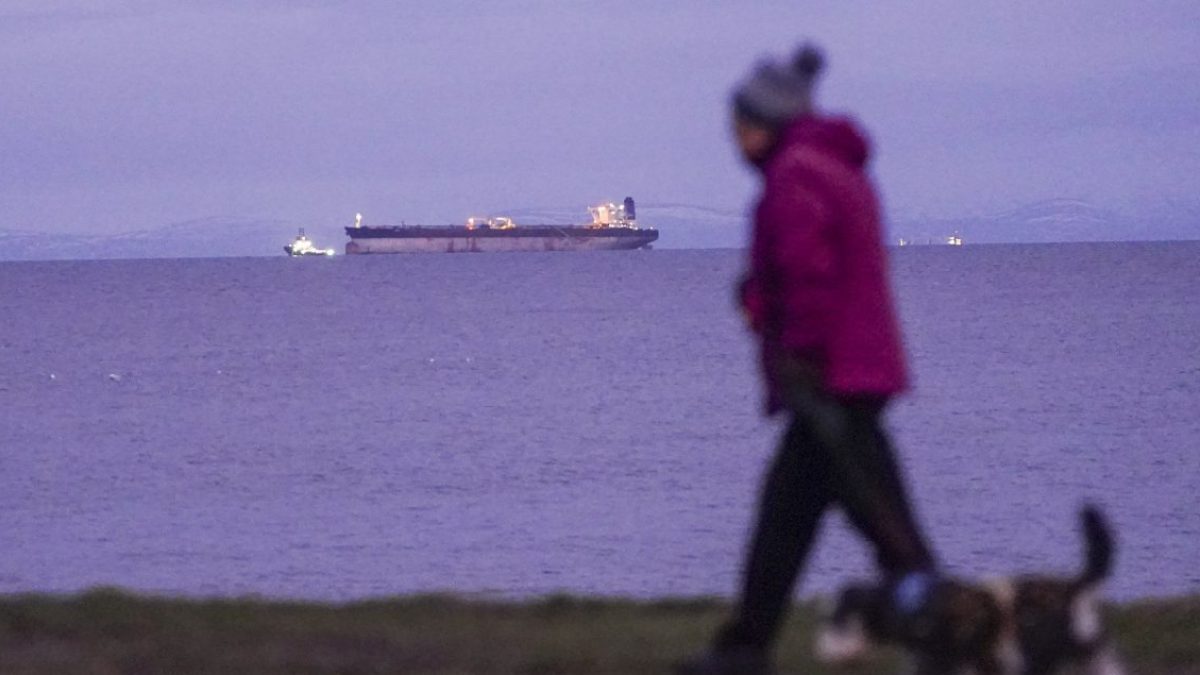
The logistics for storing seized vessels, their cargo and crew are being laid out by officials behind closed doors
After a days-long cat and mouse chase, members of Ireland’s elite Army Ranger Wing rapelled from a helicopter on to the deck of the MV Matthew.
The Panamanian cargo ship had been the focus of Irish revenue and security officials in an operation dubbed “Piano”. The boat was boarded, the crew arrested and 2,253 kilograms of cocaine worth over €156m (£135m) seized.
The September 2023 operation is the largest drugs bust in the country’s history, but the Matthew still haunts the shores of Ireland’s southern coastline – costing taxpayers millions in maintenance costs.
New FeatureIn ShortQuick Stories. Same trusted journalism.
As UK ministers aim to clamp down on Russia’s so-called “shadow fleet”, lessons from Operation Piano are now being considered.
Vladimir Putin relies on a vast network of more than 1,400 shadow vessels to evade sanctions, enable illicit trade deals – a major income source for Moscow’s war in Ukraine – and launch hybrid warfare operations in the West.
Despite the Government’s promise of “assertive action” against this fleet, the ships have continued to pass freely through British waters. France and Germany have since taken decisive action against sanctioned Russian ships while the UK’s role in seizures has so far been a supporting one.
However, the logistics and frameworks for storing seized vessels, their cargo and crew are being laid out by officials behind closed doors, The i Paper can reveal.
The Ministry of Defence is believed to be reluctant to store any seized ships in naval ports, pathing the way for them to be docked in or near commercial ports across the country. UK officials are understood to have opened conversations with commercial port owners who have indicated a willingness to help the UK Government store seized vessels in theory.
But a seized tanker of around 200 metres long could affect the port’s trade and present financial, environmental and security risks.
Huge costs and toxic hazards
Documents released to Ireland’s Dáil Committee of Public Accounts show the Matthew, currently detained in Cork Harbour, was costing €110,000 (£95,300) per week to berth and maintain.
According to Niall Cody, chairman of the Office of the Revenue Commissioners, the Matthew – around 190 metres in length – represents a “significant environmental and ecological risk as well as an economic risk to the operations of the Port of Cork”. Costs relating to insuring and crewing of the vessel, provisioning, bunkering fuel, supplies, berthage, essential repairs and maintenance had surpassed €12m (£10.4m) since September 2023.
One solution if the UK were to follow its Nato allies in seizing shadow fleet vessels – floated by officials and recently aired by Defence Secretary John Healey – is to use the very oil revenues raised from seized ships to help fund the operations, as well as assets seized after Russia’s invasion of Ukraine.
Healey told the Commons Defence Committee that he has “identified further military options” to target shadow vessels and suggested using seized Russian oil revenues to support Ukraine.
He told the committee that the UK would shortly be hosting a meeting of Joint Expeditionary Force nations to “look at the legal basis on which we can act against shadow shipping and sanctioned ships, and the military options that we might use.”
He added: “And frankly, I’d want to see any oil revenue that could be raised from seized sanctioned ships recycled and put into Ukraine in order to fight Putin’s invasion.”
Tensions in UK and European seas on rise
Elisabeth Braw, senior fellow at the Atlantic Council, warned that the challenges for Britain involve practical and political considerations.
“When it comes to shadow vessels, there are two problems. First, is there enough space in commercial ports of any size to hold these vessels as commercial ports are incredibly busy and may be able to hold a small number of shadow vessels, but what if we start seizing more vessels than that, where are they going to go?
“The second part is, would the UK Government be able to reclaim those costs from ships owners? I think that would be pretty challenging since the owners do their best to hide.
“Because the reason we’re holding them is that they violate various maritime rules and are not fit to sail – so they have to be maintained to make sure they don’t cause harm to UK waters. When you have this environment where participants feel they can violate maritime rules, it’s very hard to be the side that tries to maintain order.”
Tensions across Europe’s seas have increased following the successful boarding of MV Marinera earlier this month. Ministers now feel they have a legal standpoint to launch further seizures of sanctioned Russian vessels passing near British waters, while special forces and Navy sources have indicated to this paper that the military capability is ready and on standby to conduct a seizure operation.
But while European allies have begun to prevent Russian ships sailing past their shores and performing seizures of their own, dozens of sanctioned Russian vessels have continued to sail through UK waters.
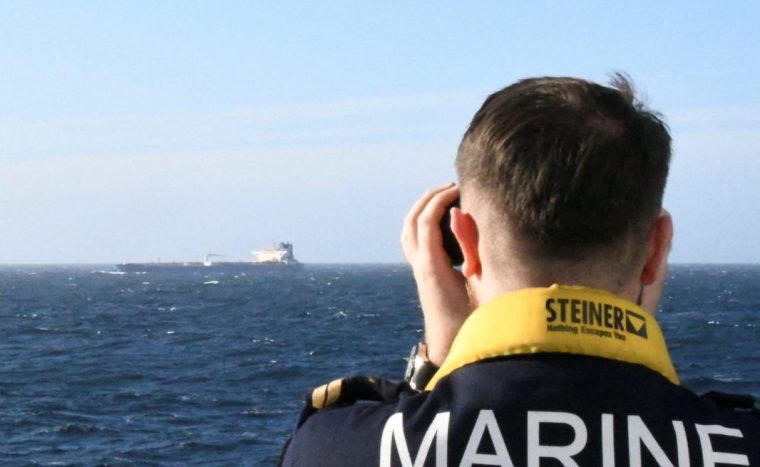 The French navy seized the suspected shadow cargo tanker Grinch on 22 January with the help of UK intelligence (Photo: Reuters)
Last week, The i Paper revealed that more than 100 ships suspected of belonging to Russia’s shadow fleet have sailed through British waters this year, with dozens passing through the Channel following the UK Government’s crackdown.
A Russian-flagged cargo vessel, not sanctioned, was ordered to leave UK waters while operating off the coast of Minehead on Wednesday evening. The vessel had been monitored by UK surveillance aircraft at nearby airbases after dropping its anchor around 3 kilometres off the coast.
Earlier this week, the UK and 13 European allies issued a statement warning ships sailing in the Baltic and North Sea under false flags may be treated as stateless vessels and subject to seizure.
All vessels, the joint statement issued, must maintain valid documentation, communication with relevant authorities and follow safety rules and international regulations in a bid to “uphold and strengthen maritime safety in the Baltic Sea and North Sea region”.
Your next read
A Nato source said the rules, when applied strictly, meant all stateless, uninsured, irregularly registered ships would be barred from entry or exit. “Even legitimately Russian-flagged ships would need to meet a host of requirements,” they added.
A spokesperson for the Department of Transport said that since October 2024, the UK has “challenged” around 600 “suspected shadow fleet vessels”.
They told The i Paper: “We will continue to take strong action against Russian-flagged ships as well as to deter, disrupt and degrade the shadow fleet by stepping up our response through robust sanctions enforcement.”