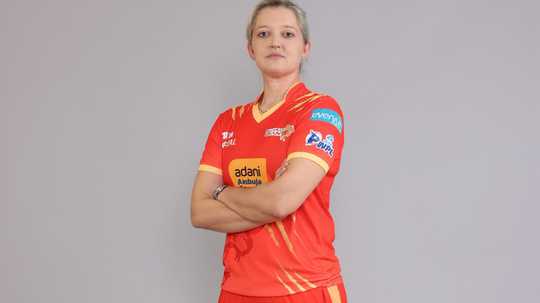
Sarah Taylor lights up as the coffee arrives.
She’s apologising, again, for the coffee and for being enthused by it. She’s apologising to the barista, to her team manager, to absolutely everyone in sight. The interruption has completely derailed her train of thought. “This is why my interviews take so long,” she giggles. “I just really love little things.”
She gasps at the size of her flat white, and apologises once more for the break. “Everyone here knows I’m an absolute lunatic; you guys are just witnessing it for the first time.” Then she finally settles in, secure in the knowledge that her morning fuel is here. And just like that, when the conversation seamlessly shifts back to cricket after mild caffeinated chaos, Taylor drops a big revelation.
“It was obviously made out like I had retired because of my mental health. I didn’t retire because of my mental health,” she says offhandedly.
For years, it was widely believed that Taylor’s decision to step away from elite cricket, at the age of 30, was driven by her long-term battle with anxiety. Now she’s explaining that wasn’t the full story.
“I was made aware that I wasn’t going to get offered a contract again. And because I was in the place I was in mentally then, I didn’t want to have that meeting. So I just said, ‘I hang up my boots then.’ I didn’t want to face that meeting, so I didn’t go to Lord’s that day. I didn’t go to the ECB. I didn’t do anything. I just said, ‘I’m retired.’ That’s why I stopped playing for England. I wasn’t going to have a contract anyway, so I was never going to play for England again.”
There are no dramatic pauses, or an attempt to set the record straight with force. Taylor’s statement is just an honest correction, followed by instinctive second-guessing. “There we go. That’s probably not even in the news,” she says, pausing mid-way as if suddenly aware of how it might sound. “But, that’s what happened.”
This self-reflection is a recurring theme through the 24 minutes with Taylor. She drops insights, from her long and distinguished career both as a coach and as an athlete, and then wonders out loud if any of it made sense. Her guard isn’t so much lowered, for it never really existed in the first place. Not since her wicket-keeping days, anyway.
The interruptions continue. There’s banter mid-answer. She loses her train of thought, apologises again, finds her way back, and laughs again. Amid all this, there’s also absolute clarity about what happened, even if she momentarily indulges the thought of what might have been.
“I do regret how I retired… I probably should have gone to that meeting.” Something productive could have come out of it? “No, I don’t know, probably not. Probably not.
“But looking back on my career, again, I probably wish I’d dealt with it a little bit better.”
Meeting Taylor and getting a glimpse into her world, it’s hard not to wonder if her mental-health struggles were less a personal failing and more a very human response to the unforgiving environment that is elite cricket. Taylor started young, and cricket became her everything. “I was consumed by cricket. It was all my life really. Or what felt like all my life at the time.”
She trained obsessively, was fiercely committed, and demanded nothing but excellence from herself. She possessed a skill-set so exceptional it earned the respect and envy of Adam Gilchrist. What she didn’t have at the time, admittedly, was perspective.
She relates how she would later gain such perspective whilst coaching a Sussex men’s wicketkeeper of Islamic faith.
“Inshallah, Inshallah [god-willing]. It’s like, ‘what will be, will be,'” she reflects.
Another quick apology. “This is getting really deep, sorry,” before getting back at it just as quickly. “I talk to the girls now: ‘We will do training, and we will tick off every box but actually, at the end of the day, whether I score runs or not, what will be, will be. I’ve done everything I could possibly do to prepare for that.’
“I wish I’d lived by that, because that would have been amazing. I feel like I put too much pressure on myself. I wish I’d just been like, Inshallah. Just like, what will be, will be. I don’t know what it is in other religions…”
Then, she lights up again. Que Sera Sera was an easy one to pick up.
“I should have it written on the bag: Sarah Taylor coaching – Que Sera Sera,” she grins, half-asking her manager if it’s actually doable. “But, yeah, I wish I had probably mentally just lived the game a little bit better. Yeah, you live and you learn.”
Taylor is in India now, with the Gujarat Giants working as an assistant coach under Michael Klinger. She was supposed to be here last year, but personal matters held her back. “I told Maxi last year I’m really sorry I can’t make it. But, please, please, please do ask me again next season. Please, just please.”
And Klinger did, having worked with her at the Manchester Originals in the Hundred in the meanwhile. What started essentially as a keeping-coach role with the men’s side translated into a more permanent fielding-coach job with the women’s team simultaneously. When Klinger approached again for something in the similar capacity at the Giants, it was an instant confirmation this time. “Yes, please. Where do I sign?” she laughs. “Because you want to be part of these tournaments, right?”
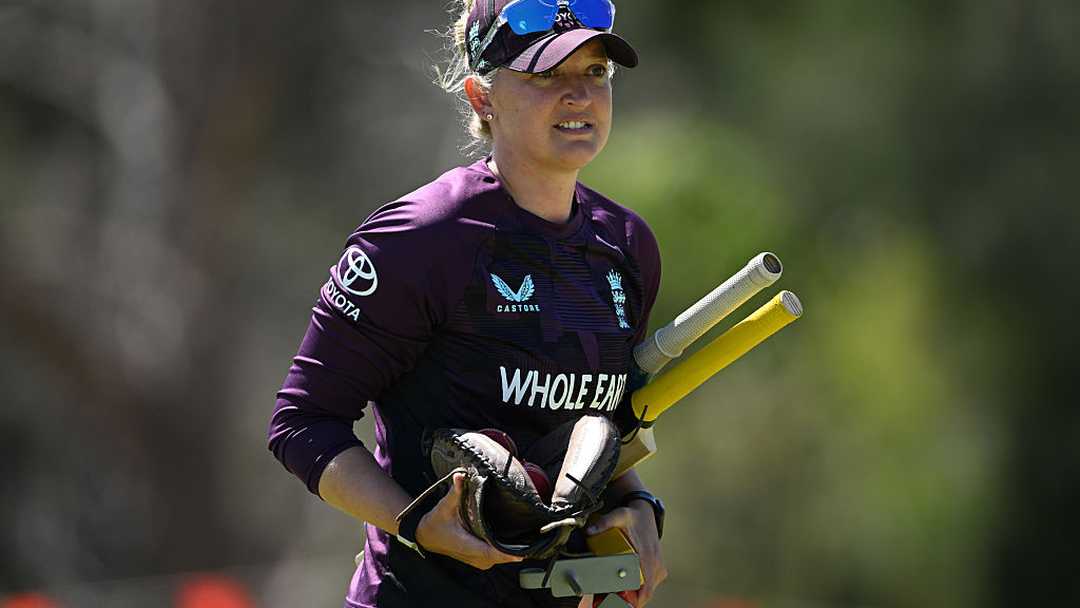
Taylor is now coaching across top-tier men’s and women’s teams. ©Getty
It’s Taylor’s first time walking into a women’s league in India, where the talent pool barely resembles the one she left behind as a player seven years ago. “The power, I think, has got to be the biggest difference,” she says.
“India always produced gorgeous cricketers that timed the ball, and it was just so lovely to watch. It was so elegant. They actually probably lacked that power to clear the ropes. So when the games got tough and they needed runs at the end, they would struggle to get there.”
Another self-check. “I hope they don’t mind me saying that, but that was probably the difference between the two sides [then] – just that power.”
The same applies to bowling, Taylor feels. The players may be slight in stature, but they’re strong, skillful and fearless now. Exposure, she believes, is everything. Playing under lights, with overseas stars, in front of big crowds, and the tight finishes have helped domestic cricketers step into international cricket without being overwhelmed by the stage.
“The game’s moving, and the game’s moving really quickly. So, as soon as they step up into the international stage, they’re like, ‘I’ve been here, done this, this is easy, right? I’ve done this before.’ It’s it’s scary to think where India will be in five years’ time with the exposure that these girls are getting.”
Taylor is particularly animated when she talks about young players in the set-up. Shivani Singh, their uncapped wicketkeeper-bat, picks up things in ten minutes that Taylor had planned a 45-minute session for. “You’re just like, well, do we stop here now or do we keep going?
“She’s so lovely to work with, and she’s so coachable. I remember my first session [with Shivani] was her going: ‘This is what I’ve been doing. I want to get better at this, this, this and this. Please help!'” Taylor laughs. “She’s absolutely brilliant.”
“Kanika [Ahuja], she’s amazing. She thinks about the game so much. I’ve got a little bit of a soft spot for Anushka [Sharma]. I think she’s an unbelievable player. We’re already seeing some amazing cricket from her, and [that’s when] she’s got a bad hand. So I dread to think where she’ll be in five years’ time because it would be scary how good she’ll be.” She pauses. “Don’t tell her I said that,” and then immediately adds: “You can print that. She won’t read it.”
All this playfulness aside, Taylor describes herself as an otrovert – a word she teaches everyone in the room mid-interview. We all have a hard time believing her. “If I am really comfortable and I can be silly, then I’ll be silly,” she argues, gesturing at the coffee mugs for evidence. “But when I get back into my room… I’m actually really quiet, believe it or not.”
It’s contradictory to the demands of her current job, but coaching was never part of the plan for Taylor. “I couldn’t think of anything worse than being a coach. Double the time and half the pay,” she quips.
And yet, here she is. Coaching across top-tier men’s and women’s teams, switching seamlessly between environments that others admit can have a bit of a learning curve to it. Having started her cricket in boys’ teams, training in male academies, played in professional domestic men’s teams, and now coaching both, Taylor clearly appears ahead of that curve.
“I grew up with boys and men and the banter. What I do enjoy is how they approach their cricket. It’s very factual. It’s very matter-of-fact. It’s skill-based, and they do sometimes take the emotion out of it. Whereas naturally, even myself obviously, being in a female environment, I probably invited the emotions in a little bit more.
“I genuinely say that in terms of skills, there’s nothing one stands to learn from the other. But it’s more that you almost want to open up the guys a little bit more and then probably shut down a little bit of the emotion on the women’s side.”
She stops herself for a moment to reflect, asks for reassurances, and then reverts to explaining. “Like, meet me somewhere in the middle? Women are great at vulnerability and the guys are not. Actually, women probably need to be a bit tougher sometimes and see things as a matter-of-fact, and it’s nothing to do personally. Whereas the guys do that quite well, but could probably open up a little bit more like women do when they’re struggling.
“That’s not about the cricket [that’s about people].”
By the time we are done, with the conversation and the coffee, she’s taught a new word, learned a new philosophy and revealed a long misunderstood retirement. All this while oscillating between insights and chaos with the same ease she once moved behind the stumps. Sarah Taylor, as it turns out, is still doing what she always did best: reacting quickly, thinking deeply and finding joy. Whether that’s in her slightly skewed career path in cricket, in candid conversations, or maybe just a very good flat white.