QUINCY (WGEM) – How Americans spend their dollars can depend on lifestyle, priorities, or even the number of people living in one household. However, new numbers show it can also depend on the number that appears on the weight scale.
According to the American Medical Association, spending on Glucagon-like Peptide-1 Receptor Agonist (GLP-1) grew by over 500% from 2018 to 2023. That equates to $13.7 billion to $71.7 billion in just five years.
Name-brand Ozempic grew the most in that time, growing from $410 million to over $26 billion.
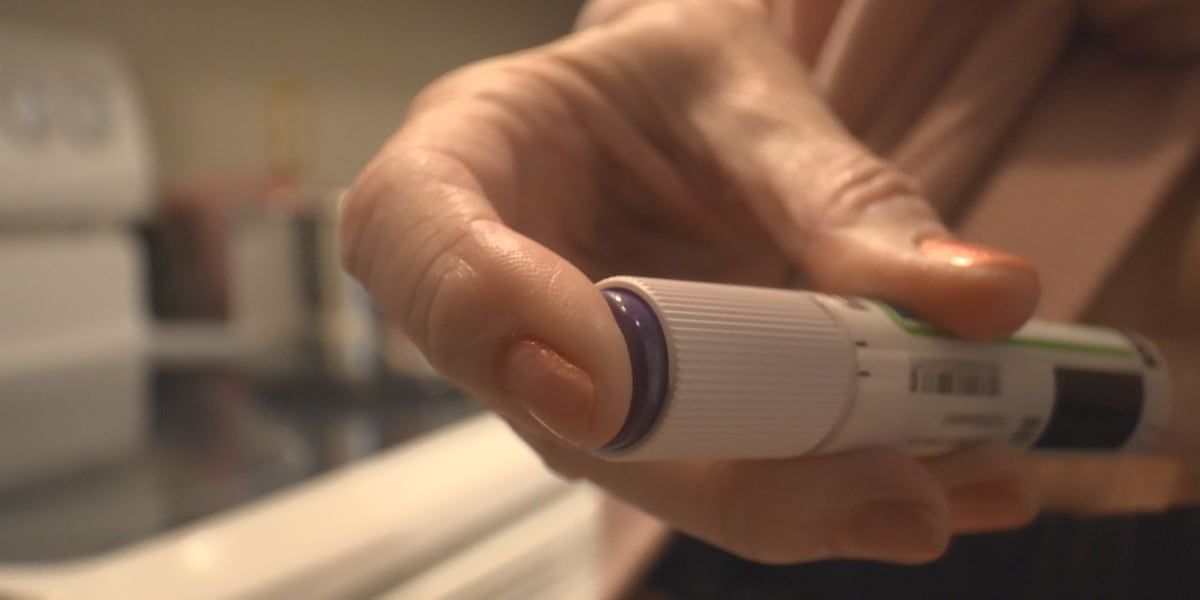
GLP-1 drugs mimic a natural gut hormone to help control blood sugar, reduce appetite and slow stomach emptying. Until now, they could only be taken by injection. However, near the end of 2025, the Food and Drug Administration (FDA) approved the first oral GLP-1 for weight loss.
While cost could still prevent some people interested in such drugs from using them, the innovation is forging a path forward to treat a disease that the World Health Organization calls “one of the most defining health challenges of our time.”
Obesity over the years
In 1990, the prevalence of obesity among adults in the U.S. sat at 18%. The World Health Organization reports that the number has since more than doubled, reaching 38% in 2024 and nearly 43% in 2022.
Per the CDC, obesity accounts for nearly $173 billion in medical expenditures every year, and as of 2023, roughly one in three adults in 23 states are obese. Illinois, Iowa and Missouri are included in that list, with 36%, 37%, and 35% obesity prevalence.
The ‘weight roller coaster’
Lori Miles, of Quincy, faced weight challenges most of her adult life. Following her college days, her weight fluctuated. She’d try the latest trend, lose weight, but eventually regain weight. Having children contributed to the cycle.
“I just continually felt like I was on a weight rollercoaster,” Miles said.
Miles said it was through spending time with her children that she realized the direct impact her weight was having on her everyday life. She said she was always worried about what she physically could and couldn’t do.
“We went to a [QHS] Blue Devil basketball game and we had to park really far away, and I would already be thinking I don’t think I can park here because I don’t think I’m going to make it walking all that way,” she said.
Miles eventually got gastric bypass surgery in 2018. She lost 150 lbs with the surgery, but four years down the road, she regained about 60 lbs.
That is when Miles said she felt like she hit rock bottom. The stomach can expand, even after such surgery.
At a doctor’s appointment, she asked about GLP-1 drugs. Her doctor said she fit the criteria and she started taking a GLP-1 shortly thereafter. During the appointment, her doctor asked her questions related to anxiety, depression and other matters. Miles said she answered “yes” to all except for having thoughts of harming herself.
“This really hit home that, you know what, it’s not my fault,” Miles said. “It’s not willpower, it’s my brain, and my brain signals and the hormones.”
A tool in the toolbox
Dr. Imran Shaikh specializes in sleep medicine and obesity medicine at Quincy Medical Group. Part of his job is to provide oversight to patients who are using GLP-1 drugs.
He has noticed the steep increase in GLP-1 usage, claiming that roughly 30% to 50% of his patients are using weight loss drugs.
A common misconception of GLP-1 drugs is that they are a cure-all medication. Dr. Shaikh describes GLP-1s as a tool, not a fix-for-good drug.
“You really have to do your part with nutrition,” he said. “These medications definitely help you, they for sure should be suppressing your appetite, cutting cravings and they kind of do teach you how to eat.”
Dr. Shaikh said his patients often talk of GLP-1’s eliminating “food noise.”
Miles said that’s what helps her. She takes an injection once per week and when that week is almost up, she said she can start to tell a change in appetite. She fears what would happen if she, one day, couldn’t afford it.
“We make concessions within our budget for me to be able to take it,” Miles said.
Miles said her injection allows her to have a flexible diet. When she wants “dirty” food, like pizza, she eats it, but in very small amounts. She still hits certain protein and hydration goals throughout the day and is regularly active. She now always takes the stairs and does more physically active things with her grandchildren.
“I don’t even know if I would have thought about suggesting we go do those things,” she said. “I could see myself saying, let’s go sit at the kitchen table and do some art projects.”
The lifestyle
Both Dr. Shaikh and Miles describe GLP-1 drugs as a tool. Like any other tool, if used incorrectly, mistakes can be made. What Dr. Shaikh said needs to ultimately change is the lifestyle.
“I always tell people, don’t count on this medication alone. They work wonders when you’re on them. If you come off them and your lifestyle is the same as it was before, you can expect to regain back weight,” Dr. Shaikh said.
In a recent study published in the BMJ, an international medical journal, people who stop taking weight-loss medications for the treatment of obesity gain a considerable amount of weight back between 12 and 18 months.
“If you haven’t changed that lifestyle component, it’s basically bound to happen,” Dr. Shaikh said on regaining weight.
Miles hopes the stigma surrounding GLP-1 users will one day be gone. Both Miles and Dr. Shaikh said people don’t take a GLP-1 to reach a certain number on the scale, but instead, to simply be healthier.
“At some point, I have to say that I have to do what I know is right for me and what is right for my health,” Miles said.
“I would not call these medications the easy way out, I would call them a tool and that’s what I think everybody has to think of them as,” Dr. Shaikh said.
Roughly one in eight adults report having ever used a GLP-1 agonist medication, per a survey published by KFF in late 2025.
Copyright 2026 WGEM. All rights reserved.