Welcome back to World Brief, where we’re looking at Russian attacks on Ukrainian energy infrastructure, Syria’s historic peace deal, and the next chair of the U.S. Federal Reserve.
Kyiv’s Brief Reprieve
Moscow confirmed on Friday that Russian President Vladimir Putin has agreed to halt strikes on Kyiv until Feb. 1. According to Kremlin spokesperson Dmitry Peskov, the limited truce comes at the personal request of U.S. President Donald Trump and is aimed at creating “favorable conditions for negotiations” ahead of trilateral talks in Abu Dhabi, the United Arab Emirates, on Sunday.
Welcome back to World Brief, where we’re looking at Russian attacks on Ukrainian energy infrastructure, Syria’s historic peace deal, and the next chair of the U.S. Federal Reserve.
Sign up to receive World Brief in your inbox every weekday.
Sign up to receive World Brief in your inbox every weekday.
Sign Up
By submitting your email, you agree to the Privacy Policy and Terms of Use and to receive email correspondence from us. You may opt out at any time.
Enter your email
Sign Up
Loading…
Kyiv’s Brief Reprieve
Moscow confirmed on Friday that Russian President Vladimir Putin has agreed to halt strikes on Kyiv until Feb. 1. According to Kremlin spokesperson Dmitry Peskov, the limited truce comes at the personal request of U.S. President Donald Trump and is aimed at creating “favorable conditions for negotiations” ahead of trilateral talks in Abu Dhabi, the United Arab Emirates, on Sunday.
During a cabinet meeting on Thursday, Trump announced that he had asked Putin “not to fire into Kyiv and the various towns for a week, and he agreed to do that,” adding that his ask was in response to “extreme cold” in the region. Peskov, however, did not mention the weather as a factor.
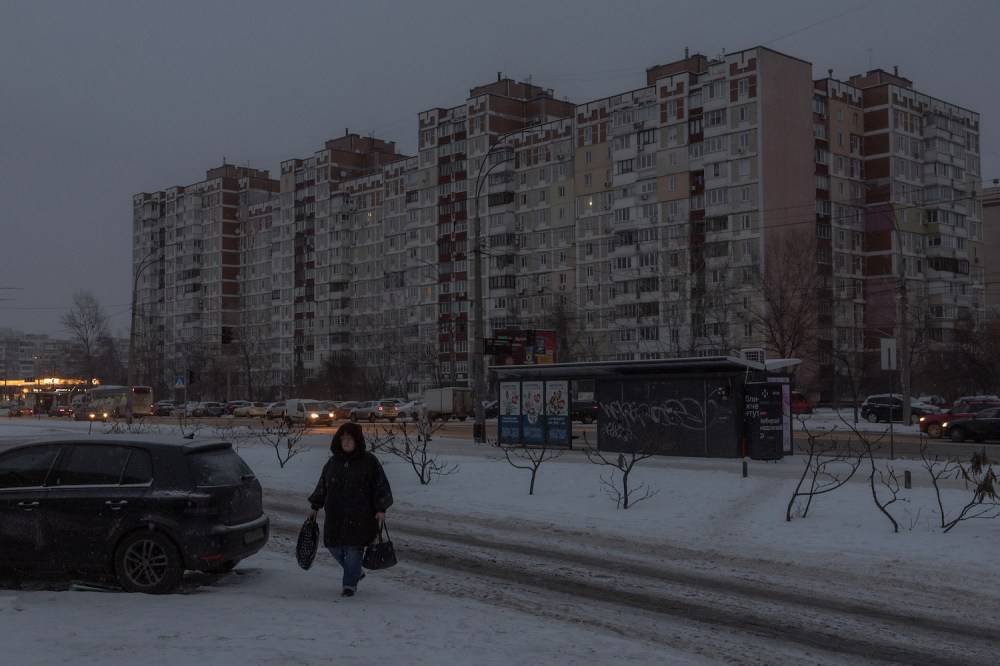
Russian forces have repeatedly targeted Ukraine’s energy infrastructure in an effort to freeze the country into submission. This month, Russian strikes on Kyiv and other major cities have caused massive power cuts across 80 percent of the country. In the capital alone, 15 percent of residential buildings were without heat this week, according to Kyiv Mayor Vitali Klitschko. Forecasters expect below-freezing conditions to continue throughout the region.
As of Friday evening, local time, though, Russia’s brief pause in strikes on Kyiv appeared to be holding. Earlier in the day, Ukraine’s Air Force accused Moscow of launching more than 100 drones at 15 locations, killing and wounding several people. However, it confirmed that the capital had not been targeted.
Ukrainian President Volodymyr Zelensky has offered to halt strikes on Russia if Moscow stops targeting the country’s energy infrastructure. Yet, such a reprieve appears unlikely; the Russian Defense Ministry said on Friday that it had struck military sites inside Ukraine, including energy facilities allegedly used to support the military.
Sunday’s trilateral talks between the United States, Russia, and Ukraine are expected to address the attacks as well as other sticking points in the negotiations to secure a cease-fire deal. These include Moscow’s demand that Ukraine withdraw from roughly one-fifth of its occupied Donetsk region and the Kremlin’s rejection of international peacekeepers being deployed to Ukraine after the war.
The upcoming talks will be the second round of trilateral negotiations this month. However, on Friday, Zelensky inserted a level of uncertainty to the event, saying that the date or location could change due to the “situation between the United States and Iran”—a reference to Trump’s threats of U.S. military action against Tehran.
Even if the talks go through, however, they will not include Putin, Zelensky, or Trump. On Thursday, the Kremlin said that it had invited Zelensky to Moscow for direct dialogue. But the Ukrainian leader rejected the invitation, refusing to travel to Russia or its close ally Belarus. “It’s the same as meeting with Putin in Kyiv,” Zelensky said. “I can also invite him to Kyiv. Let him come. I publicly invite him, if he dares, of course.”
Today’s Most Read
What We’re Following
A historic peace agreement. The Syrian government and Kurdish forces reached a deal on Friday to extend their fragile cease-fire into a permanent truce. Under the agreement, state troops and the Kurdish-led Syrian Democratic Forces (SDF) will pull back from the front lines to allow government security forces to enter the northeast cities of Hasakah and Qamishli. As part of a phased effort, SDF fighters will also integrate into the Syrian army; a new military division will be created, which will include multiple SDF brigades; and several Kurdish-led governing bodies will be merged with state institutions.
The fate of the SDF has been among the biggest challenges for Syrian President Ahmed al-Sharaa following the ousting of dictator Bashar al-Assad. Damascus and the SDF first struck a deal last March, but fighting continued to embroil the country, as the SDF fought for continued control of Kurdish-majority cities in the northeast.
Now, negotiators hope that Friday’s agreement will finally end the bloody conflict. “Both sides have taken courageous steps,” U.S. special envoy Tom Barrack wrote on X. “[T]he Syrian government in extending meaningful inclusion and rights, and the Kurdish communities in embracing a unified framework that honors their contributions while advancing the common good.”
New Fed pick. Trump on Friday tapped Kevin Warsh, a former member of the U.S. Federal Reserve’s board of governors, to be the next chair of the central bank. “I have known Kevin for a long period of time, and have no doubt that he will go down as one of the GREAT Fed Chairmen, maybe the best,” the U.S. president wrote on Truth Social.
Friday’s announcement concludes a drawn-out search to replace current chair Jerome Powell, whose term ends in May. Powell has faced intense pressure from the Trump administration to cut interest rates more aggressively but has refused to bow to such demands. In response, Trump has threatened to fire Powell—despite legal questions about his authority to do so—and the U.S. Justice Department has served the Fed with subpoenas and threatened Powell with a criminal indictment.
Warsh must still be confirmed by the Senate. However, Republican Sen. Thom Tillis has vowed to block any nominees for Fed chair until the Justice Department’s investigation of Powell is resolved. Tillis reiterated that pledge on Friday after Warsh’s nomination, though he did note that Warsh “is a qualified nominee with a deep understanding of monetary policy.”
“Warsh is perceived as a Fed chair who may placate Trump in the short term by easing interest rates, but who will maintain more of the central bank’s independence,” FP’s Keith Johnson writes.
U.S. intervention in Latin America. Venezuela’s National Assembly approved a sweeping overhaul on Thursday of legislation concerning the country’s oil industry. The new policy grants foreign oil companies greater control over their own operations in the country, effectively relegating the state-run Petróleos de Venezuela to secondary status.
Venezuela holds the world’s largest proven oil reserves. However, Trump has used deadly strikes on alleged drug-trafficking boats, a maritime blockade on sanctioned oil vessels, and the capture of Venezuelan President Nicolás Maduro to demand greater U.S. oversight of Venezuela’s crude. Such coercion appears to have worked; soon after Venezuelan lawmakers approved the overhaul on Thursday, the White House eased some sanctions on Caracas’s oil industry.
The Trump administration now appears to be setting its sights on Cuba. On Thursday, the U.S. president signed an executive order allowing the imposition of tariffs on any goods from countries that sell or provide oil to Havana, citing Cuba as an “unusual and extraordinary threat” to U.S. national security. The order is expected to worsen the island’s already severe energy crisis and put heavy pressure on its remaining oil suppliers.
What in the World?
China’s defense ministry announced on Saturday that two high-ranking generals had been placed under investigation for “suspected serious discipline and law violations.”
One of the generals, Zhang Youxia, is—like President Xi Jinping—the son of an early Communist leader. These political scions are commonly referred to as what?
A. Red children
B. Princelings
C. Little tyrants
D. Panda cubs
Odds and Ends
Last week, Canadian Prime Minister Mark Carney received a standing ovation for his Davos speech heralding global unity in the face of a fractured world order. This week, though, Carney is focused on soft power—specifically, the Canadian show Heated Rivalry, a hit hockey romance detailing the off-ice passion between two rival players. At the Canadian Media Producers Association industry conference known as Prime Time, Carney celebrated the show and even cheekily asked for a full-body hug from Hudson Williams, who is one of the show’s stars and a British Columbia native.
And the Answer Is…
B. Princelings
Xi’s anti-corruption campaign has frozen Beijing’s political system in place, with fear now dictating the decisions of party officials, Deng Yuwen argues.
To take the rest of FP’s weekly international news quiz, click here, or sign up to be alerted when a new one is published.