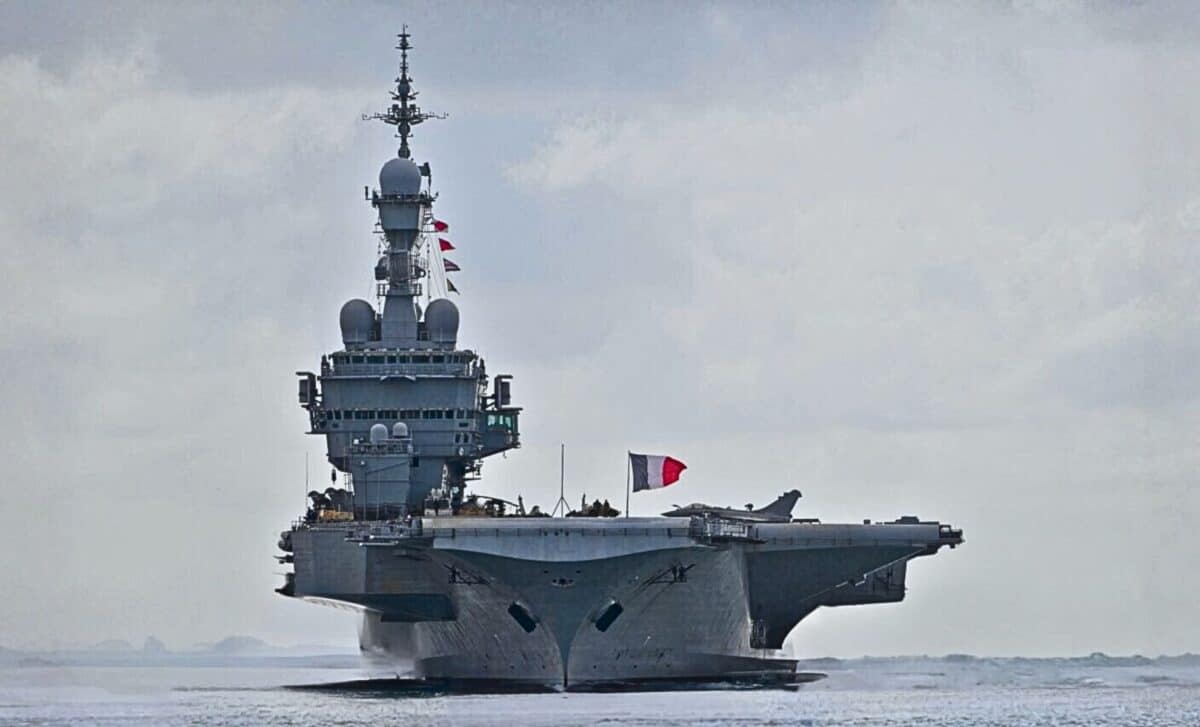
In early 2026, France shifted its strategic maritime focus in a move that has drawn attention from both NATO allies and Arctic watchers. The nation’s only nuclear-powered aircraft carrier set course for the North Atlantic, far from its usual operational waters. The deployment coincides with renewed geopolitical pressure over Greenland and shifting defense alignments within Europe.
Public details have been sparse, but officials in Paris confirmed that the mission involves joint-force operations under a European framework. The aircraft carrier, Charles de Gaulle, departed from Toulon with a heavily armed escort group. The mission’s stated objective includes enhanced deterrence, but regional analysts suggest broader intentions.
Naval Task Force Expands European Presence in Arctic Waters
Charles de Gaulle is leading ORION 2026, a joint military exercise involving more than 25 naval vessels, two amphibious helicopter carriers, and an aerial component of over 50 aircraft, including 1,200 drones. The full task force includes 12,000 personnel, forming the Groupe Aéronaval (GAN), France’s principal carrier strike group.
The French Ministry of Armed Forces described the operation as a readiness test designed to simulate combat in a contested, high-threat environment that integrates cyber, space, and electronic warfare. The exercise begins off France’s western coast, then extends into the North Atlantic and surrounding Arctic waters to reinforce European naval presence in a rapidly militarizing zone.
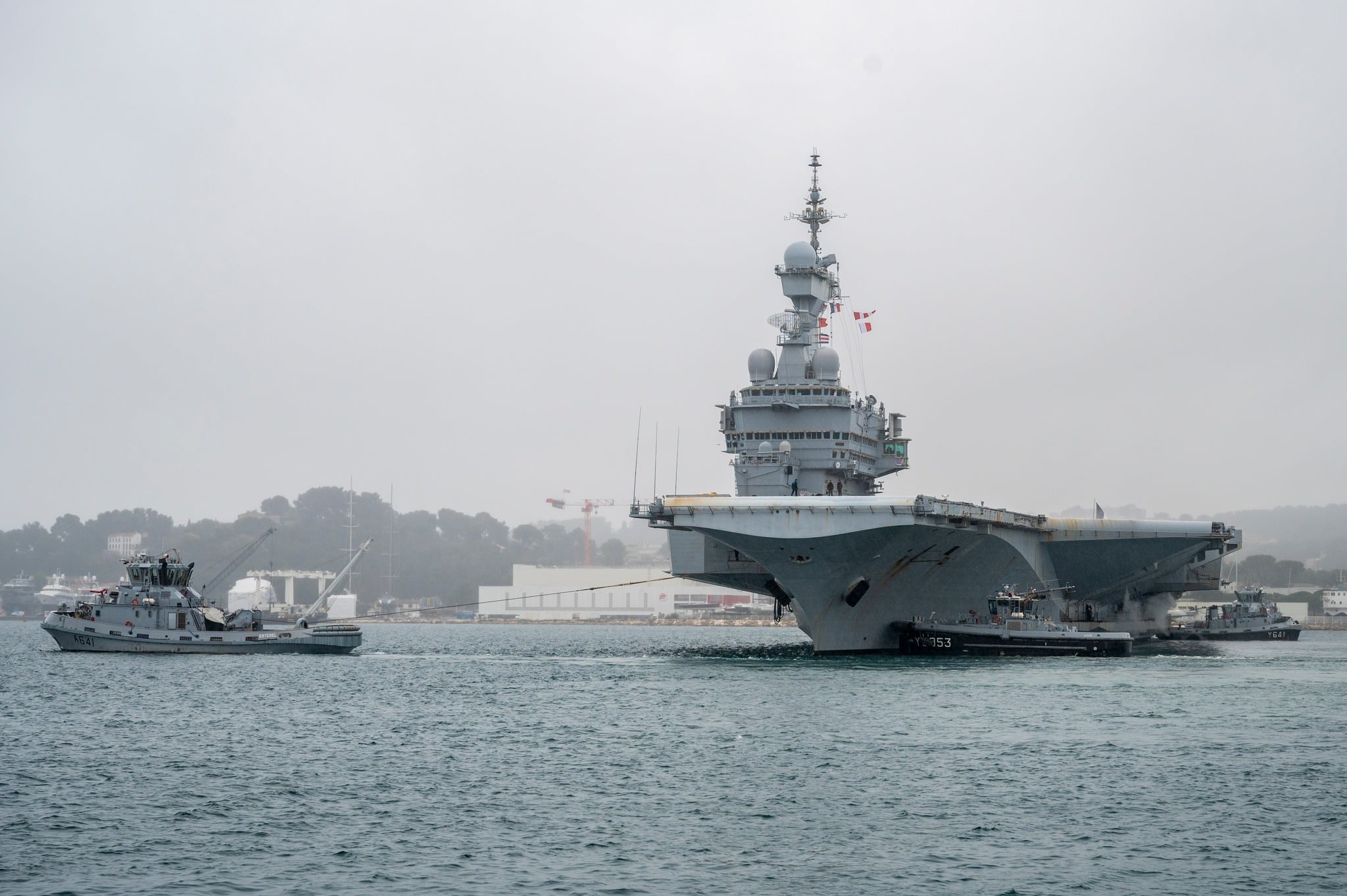 FS Charles De Gaulle (R91) left Jan. 27, 2026, from its homeport of Toulon on its first deployment of the year to take part in the French Armed Forces ORION 26, a multidomain readiness exercise. Credit: French Armed Forces
This marks the first comprehensive mission to the North Atlantic for the Charles de Gaulle in over a decade. A planned deployment in 2020 was halted by the COVID-19 pandemic. French defense strategy has traditionally concentrated on the Mediterranean, Middle East, and Indo-Pacific regions. The current mission reflects a calculated broadening of scope to secure critical northern corridors.
Greenland Dispute Revives Strategic Focus
The deployment follows diplomatic fallout from Donald Trump’s late-2025 assertion that the United States should consider annexing Greenland. That statement, reported by the Eurasian Times, sparked political backlash across Europe and drew renewed attention to sovereignty issues in the Arctic. In response, President Emmanuel Macron arranged a summit with leaders from Denmark and Greenland, aiming to reaffirm European support for territorial integrity in the region.
Although French officials have not explicitly linked the carrier mission to this incident, the sequence of events suggests that the deployment is intended to bolster France’s role as a guarantor of European stability in sensitive geostrategic zones. As the Arctic opens to commercial navigation and resource exploitation, competition over influence in the area has intensified.
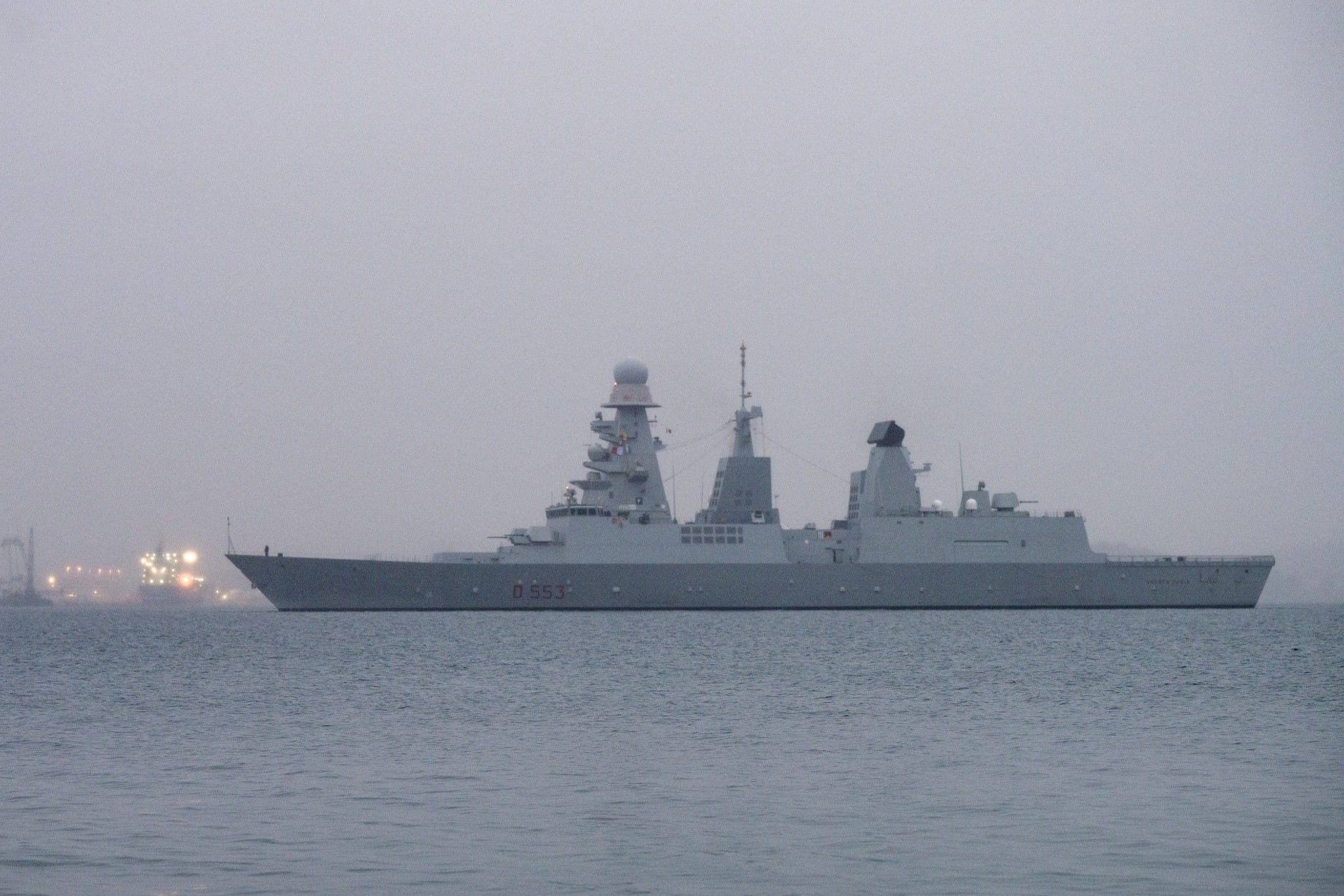 Italian Navy destroyer ITS Andrea Doria (D553) also departed Toulon, France, on Jan. 27, 2026, as part of the Charles De Gaulle CSG. French Armed Forces photo
In parallel, Russian undersea operations have increased across the North Atlantic, with NATO members expanding surveillance and maritime patrols. These developments frame the French naval initiative as both a deterrent and a signal of military preparedness.
Carrier Capabilities and Military Readiness
The Charles de Gaulle, launched in 2001, is Europe’s only nuclear-powered aircraft carrier equipped with catapults and arrestor wires, enabling it to operate fixed-wing aircraft such as the Rafale M, E-2C Hawkeye surveillance planes, and NH90 helicopters. The vessel is supported by an air-defense frigate, an attack submarine, and multiple supply ships.
Its operational history includes deployments in the Arabian Gulf, Libya, and Iraq-Syria operations, along with a high-profile Indo-Pacific tour during the 2025 Clemenceau 25 mission, where it conducted naval drills with India, Japan, and the Philippines. The current deployment highlights the carrier’s dual role in force projection and multilateral coordination.
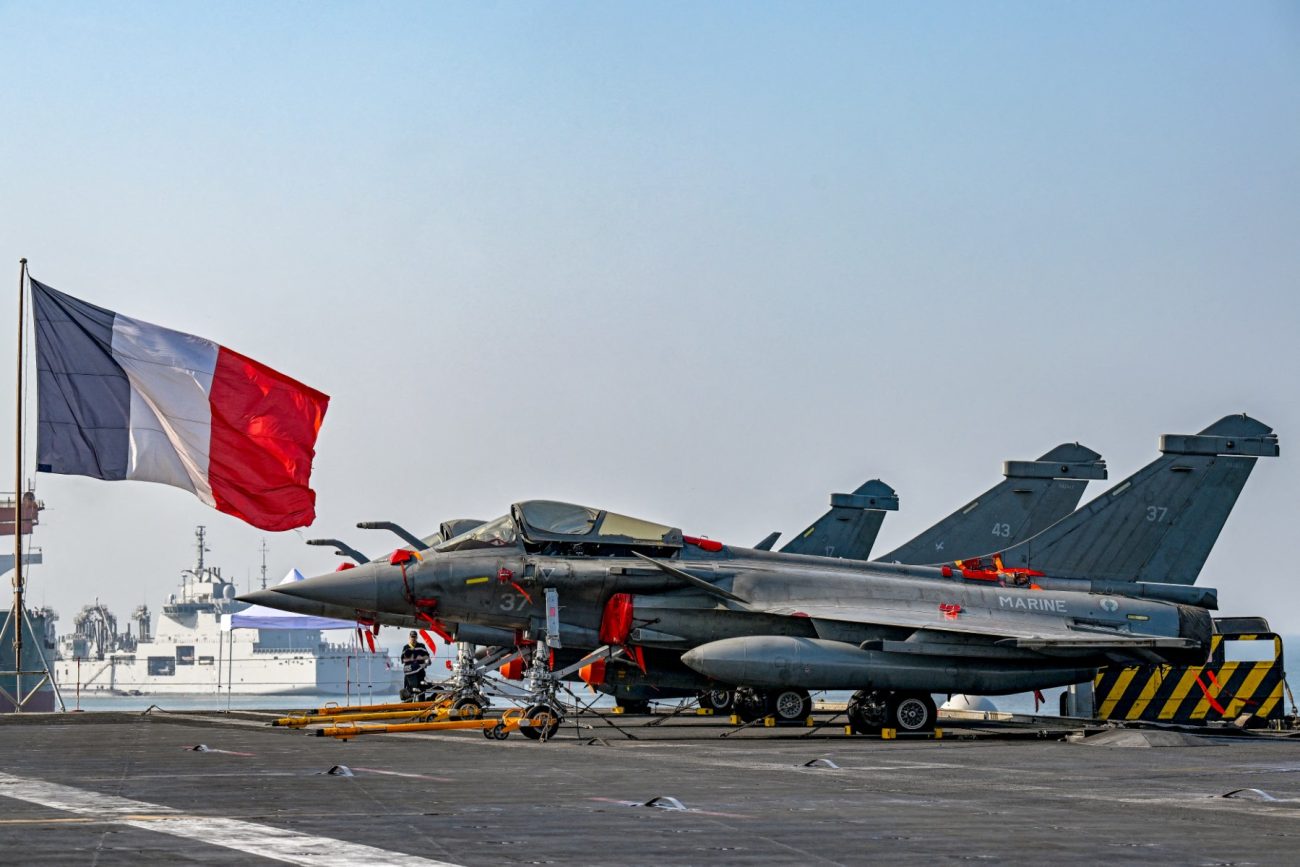 French Rafale fighter jets sit on the main deck of the nuclear-powered aircraft carrier Charles de Gaulle, during its anchor at the Mormugao Port, in Goa on January 4, 2025, as part of a joint Indo-French naval exercise Varuna. (Photo by Punit PARANJPE / AFP)
The French Ministry of Armed Forces stated that ORION 2026 will also test how quickly French-led coalitions can respond to simulated threats involving contested airspace, electronic disruption, and satellite-denied environments. As part of the evolving European defense architecture, these exercises provide valuable data on readiness benchmarks and strategic logistics.
Europe’s Strategic Divide and NATO Friction
The operation unfolds as the European Union weighs its long-term defense posture. In 2025, NATO Secretary-General Mark Rutte told the European Parliament that “Europe cannot defend itself without the U.S.,” urging member states to double defense spending to meet rising global threats. His remarks, covered in the Eurasian Times, were met with resistance in Paris. Foreign Minister Jean-Noël Barrot responded on X that European nations “can and must” assume responsibility for their own defense.
The French-led deployment reflects this philosophy of strategic autonomy, long promoted by Macron. Although EU-level military coordination remains limited, the operation serves as a high-visibility demonstration of France’s capacity to act without immediate U.S. support in securing Atlantic and Arctic interests.
Despite increased interoperability between European navies, the mission highlights ongoing challenges in logistics, financing, and joint command structures. Neither NATO nor the Danish Armed Forces has announced direct involvement in the operation, and there has been no confirmation of Greenlandic port access for the carrier strike group.