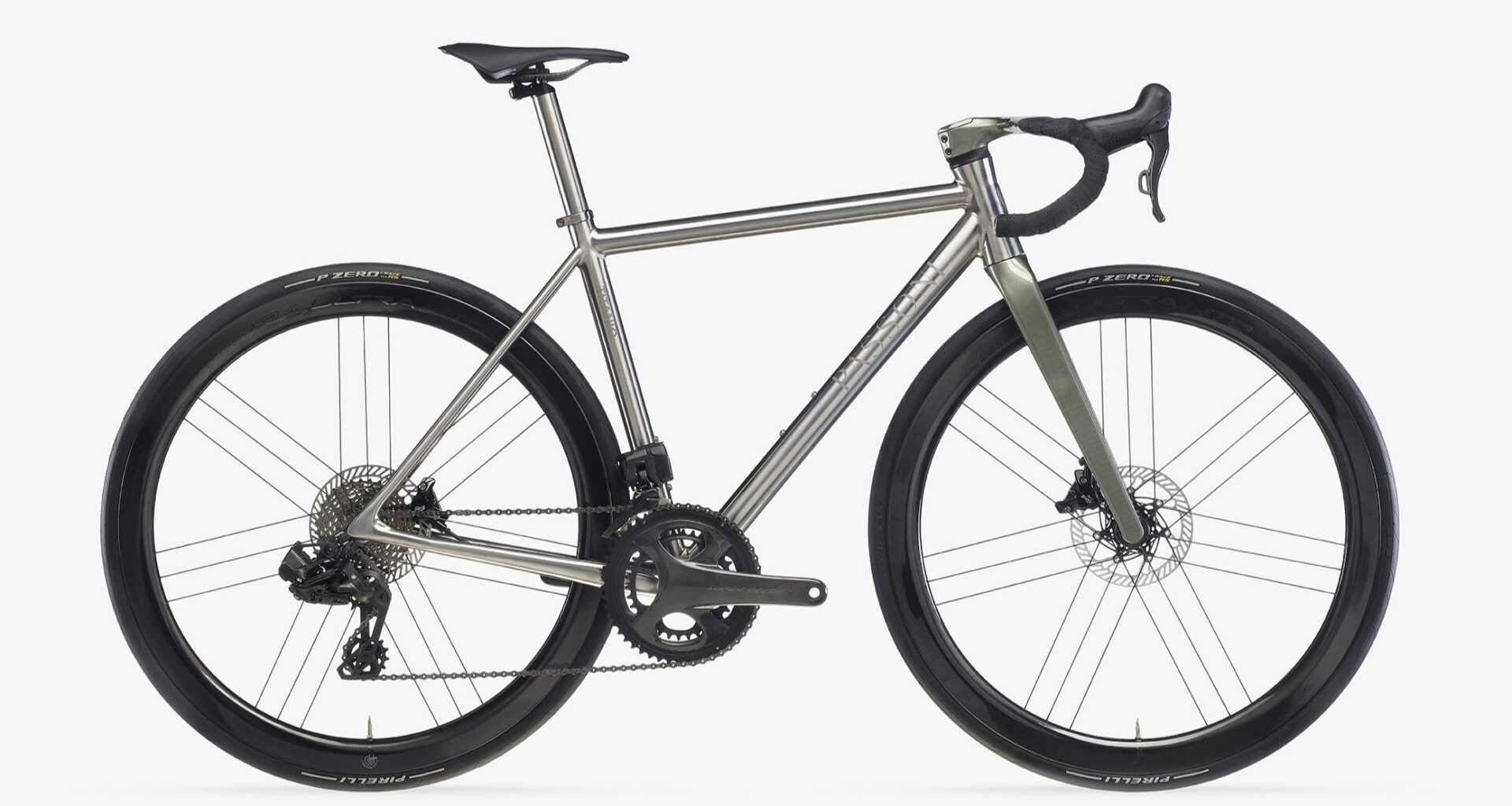
When it comes to superbikes, at times it can be hard to see past the latest sculpted carbon fibre race bike, and the last couple of years or so have certainly given us plenty to look at, from the Colnago Y1RS to the Ridley Noah and the extreme Factor One.
There are also smaller brands out there that offer top-end, handmade bikes with custom geometry and high levels of customisation options that just take things to another level, and Italian titanium specialists Passoni is one such brand. We saw this for ourselves firsthand when we visited the Passoni factory back in 2023.
You may like
An OT-01 frameset will set you back €7,020, whilst a framekit including a headset and cockpit, custom SLR saddle, Ti seatpost and leather bar tape will come in at €8,550.
A complete build with, you guessed it, Campagnolo SR13 groupset + Bora Ultra WTO 45 wheels (what else?) comes in at €15,230. All prices are subject to VAT, and deliveries are set to take 16-20 weeks for orders, plenty of time to get some training in whilst you wait.
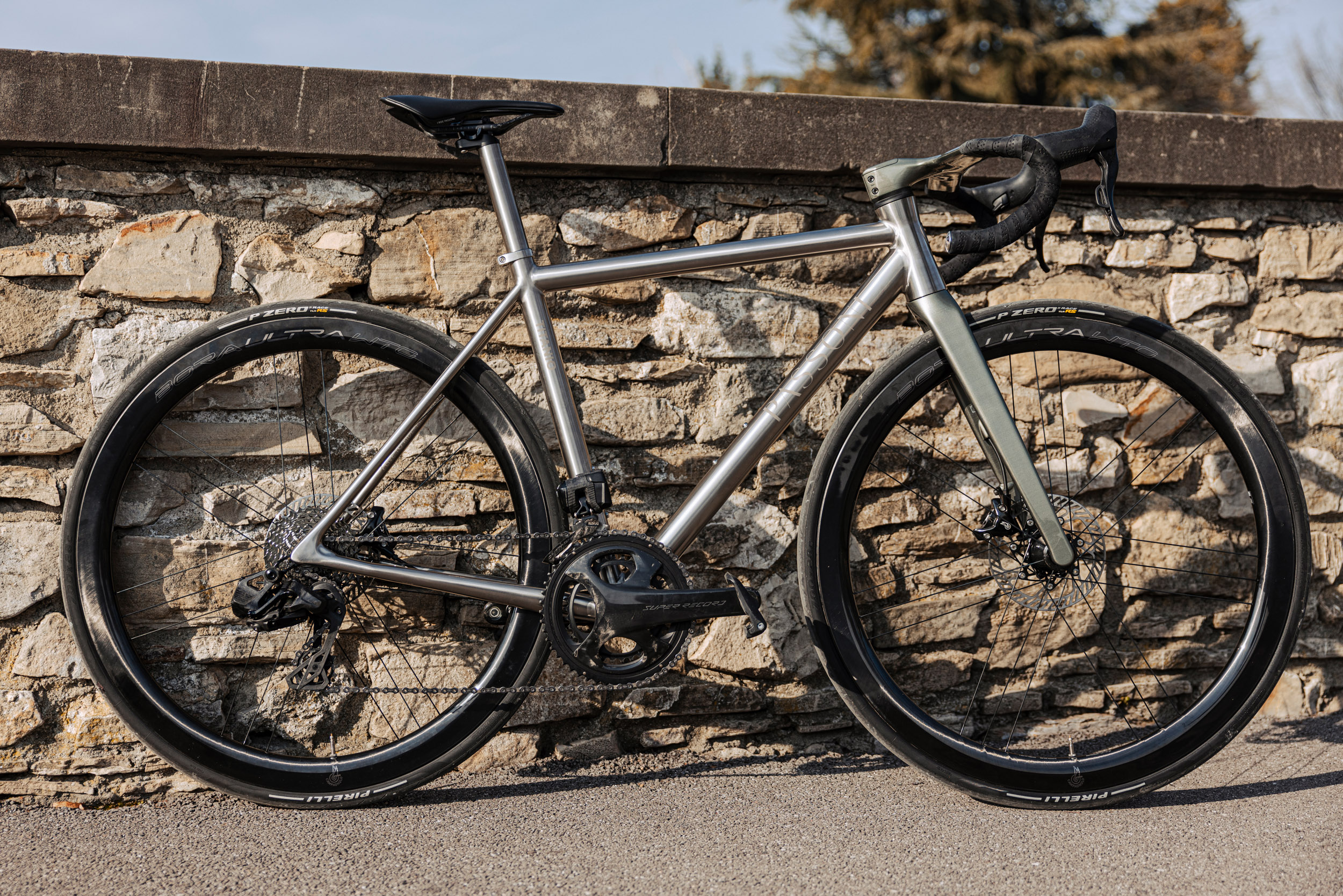
(Image credit: Passoni)
At face value, you could be forgiven for thinking ‘another high-end bike with a monster price tag,’ and you would be right. However, the OT-01 has some interesting technical details worth considering by tech fans.
We reached out to Passoni for a little more detail on the manufacturing process. Its bikes are completely handmade in Italy, so there’s plenty of manufacturing to go over.
As mentioned, this bike represents a refinement of the brand’s existing top-end model, not a complete overhaul. It has made a small overall weight saving, largely thanks to a new, smaller down tube, which is triple butted. There is also a new rear triangle which provides up to 32mm tyre clearances.
One of the biggest talking points is the new headtube and 1.5″ fork steerer tube, not unheard of, but uncommon for road bikes. The new, larger headtube is manufactured from three solid titanium billets, but it’s the new FP-01 fork and steerer that interests me. Passoni has chosen to move away from a non-round fork steerer tube, a feature that’s becoming more common on modern road bikes to accommodate internal cables and or different integrated handlebars. Many bikes use a D-shaped or similar fork steerer, accompanied by a wedge at the stem, which makes for a more complicated setup.
The brand claims the new, larger steerer ‘improves ride quality noticeably’ and that steering is more precise with increased stiffness. The steerer pairs with the new CP-01 cockpit, but also gives customers the option to use any handlebars and stem they wish, which feels refreshing in 2026.
You may like
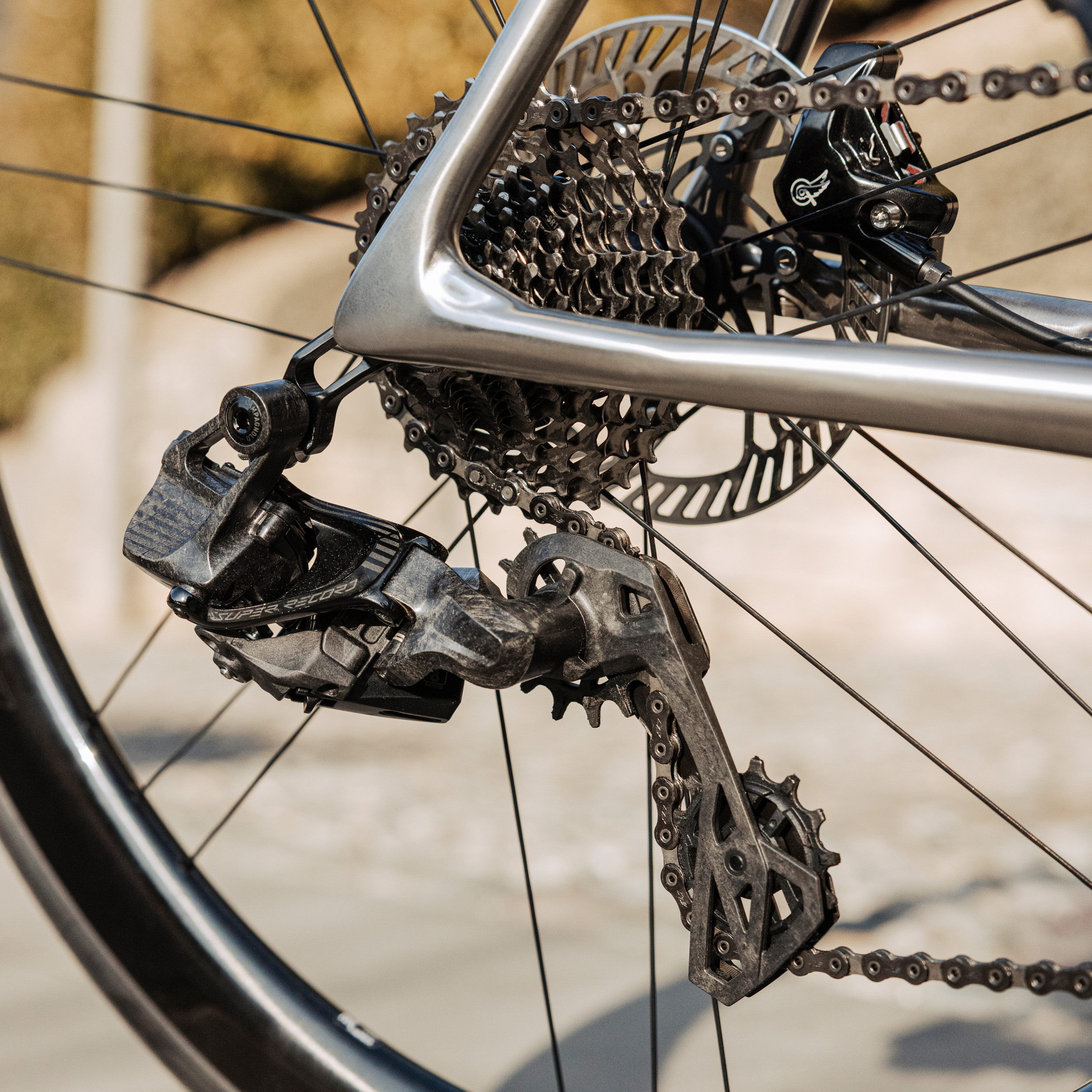
The OT-01 Omni Titanium’s blind 3D printed dropout (Image credit: Passoni)
The OT-01 also has an eye-catching blind non-drive side dropout that uses a combination of 3D printed and CNC’d titanium. Many of the best aero road bikes use blind dropouts for a small aero gain now, and it’s just cool to see it done in titanium.
Features like this are, at times, the things that can leave titanium or steel bikes feeling dated or not as ‘on trend’ as the latest carbon offerings, but it’s clearly still possible to achieve the same with titanium, though.
Passoni told Cyclingnews that it has been 3D-printing since 2018, but that this is the first full titanium frame with 3D-printed titanium parts on it. The dropout features a CNC-machined threaded insert welded inside the 3T printed dropout.
The brand explained, “This technology allows us to create very complex shapes that would be impossible to achieve with CNC machining alone. We have always been big supporters of CNC machining, as everything is produced in-house, but to move forward and develop more aerodynamic and complex designs, we now combine CNC machining with 3D printing.”
The brand also mentioned the difficulty in welding titanium, a notoriously difficult job, citing the extreme care needed to avoid oxygen contamination during welding and the need to control the amount of heat during the process.
Passoni aren’t alone in this; brands like Sturdy Cycles use a lot of 3D printed parts, and Mythos are working on a fully 3D printed bike and even using AI to scan riders for custom builds.
If fully custom isn’t for you, the brand says it has a new set of geometries aimed to maximise balance and comfort for riders.