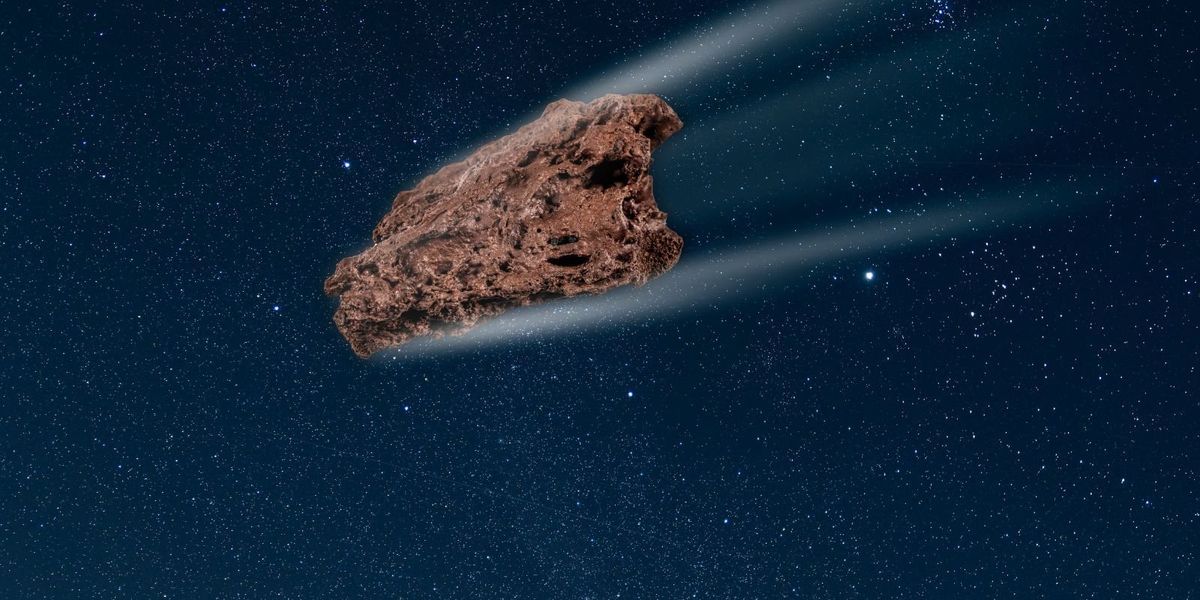
An asteroid which risks colliding with the moon in just years could produce “the most energetic lunar impact event ever recorded in human history”, scientists say.
Asteroid 2024 YR4, which at one point risked smashing into Earth, has the potential of hitting our Moon in 2032.
Scientists say such a scenario would cause a huge crater on the lunar surface and spark an unusual illumination phenomenon.
A bright glow would be visible from Earth for hours after impact, according to the new study titled “Observation Timelines for the Potential Lunar Impact of Asteroid 2024 YR4”.
The flash would be as bright as magnitude –3, which is about as bright as a planet like Mars or Jupiter can be to the naked eye from Earth.
It also indicated the collision would spark a global “Moonquake” and lead to the creation of a meteor shower, with some of the debris hitting Earth.
The impact could also for as long as 100 years.
Scientists said the asteroid would “produce a ∼1 km crater on the Moon, and will be the most energetic lunar impact event ever recorded in human history.
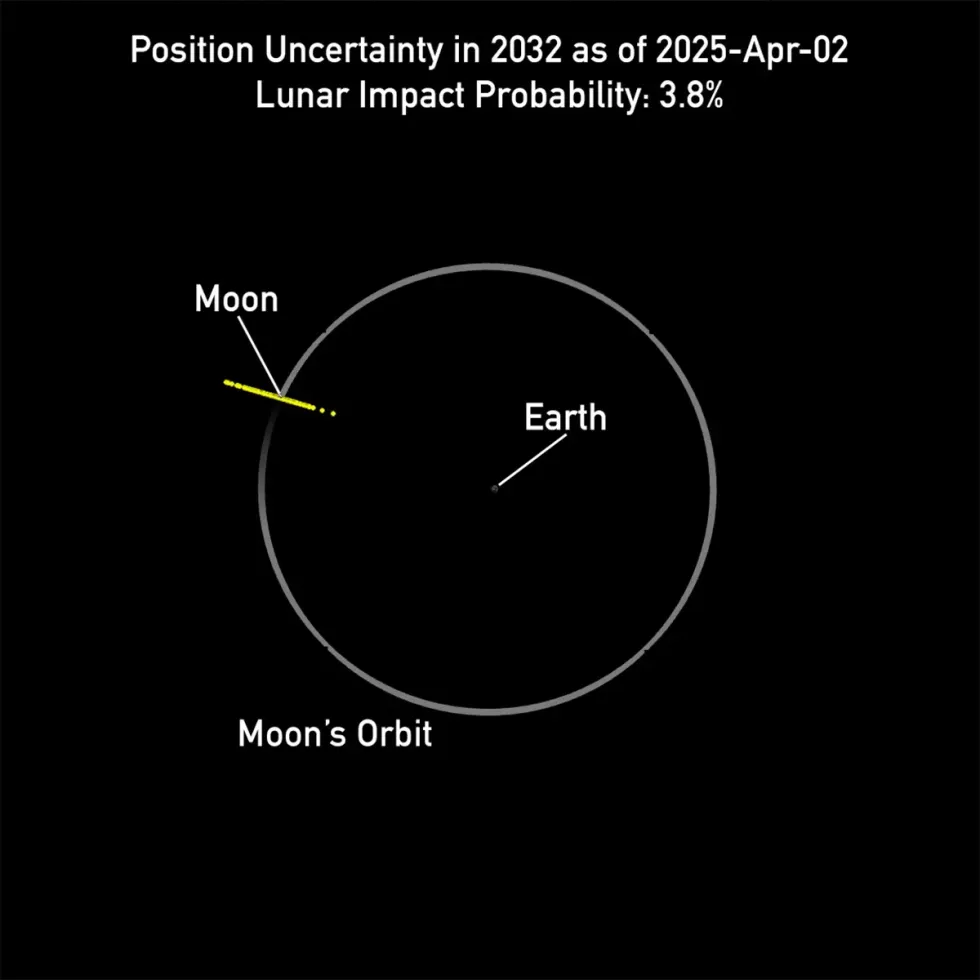
Possible locations – represented by yellow points – Asteroid 2024 YR4 could hit in December 2032
|
NASA JPL
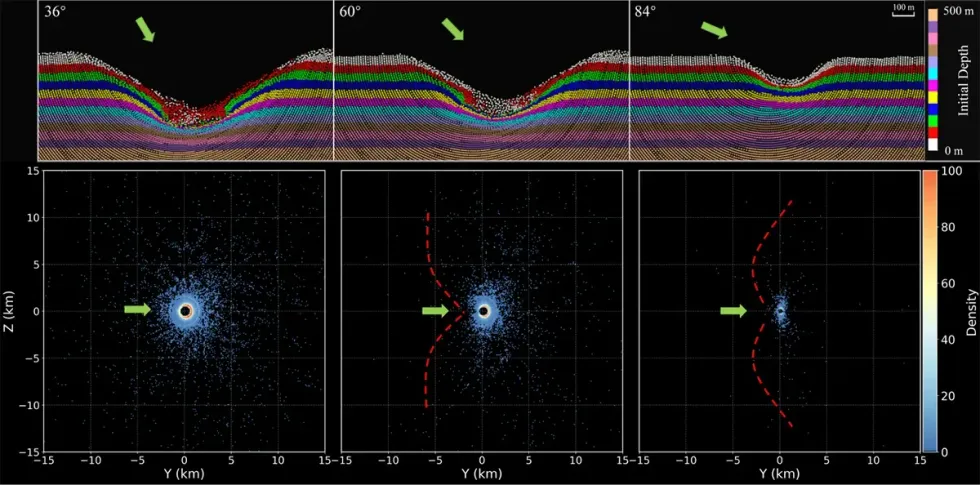
Asteroid 2024 YR4 could lead to a crater that would appear on the surface of the Moon and result in meteors being ejected from the lunar surface
|
THE DISCOVERY AND CHARACTERIZATION OF ASTEROID 2024 YR4
They added: “The associated seismic energy release would lead to a global-scale lunar reverberation (magnitude ∼5.0) that can be detectable by modern seismometers.
“Furthermore, the impact would eject ∼108 kg of debris that escapes the lunar gravity, with a small fraction reaching Earth to produce a lunar meteor outburst within 100 years.”
There is only a 4.3 per cent probability of the asteroid hitting the moon.
The study concluded that “despite the associated risk, this scenario offers a rare and valuable scientific opportunity”.
LATEST SPACE DEVELOPMENTS
There is a 4.3 per cent probability of Asteroid 2024 YR4 hitting the moon
|
GETTY
Asteroid 2024 YR4 has had the attention of scientists ever since it became the first asteroid to trigger a “coordinated international planetary defence response” amid fears of impact with Earth.
First discovered in December 2024, the space rock is travelling through space as 38,000+ miles per hour.
It is thought to be made from silicate rock and nickel-iron, and to have originated from a group of asteroids in the central Main Belt between Mars and Jupiter.
Asteroid 2024 YR4 was initially given a 3.1 per cent chance of it striking Earth in 2032, before the scenario was ruled out last year.