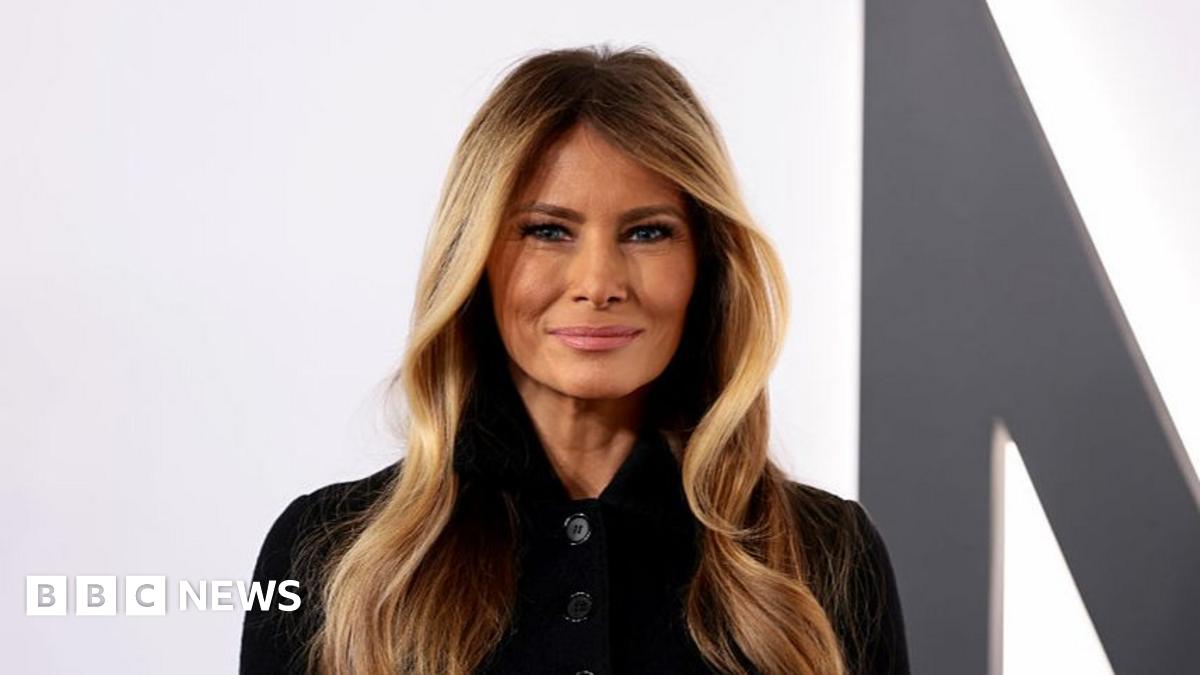
Documentaries have become a key part of the celebrity PR toolkit in the last decade. Where social media can be unpredictable, self-produced documentaries by the likes of Taylor Swift, Demi Lovato and Selena Gomez offer a revenue stream, fan service and a unique degree of image control, all with the promise of intimacy.
At a Friday afternoon showing at a cinema outside of Washington DC attended by the BBC, the audience was filled with a mostly older crowd dressed in American flag attire who cheered and clapped throughout the film.
This is part of why Trump may have chosen this kind of project, says Katherine Jellison, a women’s studies professor and expert in first ladies at Ohio University.
“As she said in her own memoir, she resents that others defined her the first time around,” Jellison told the BBC.
But unlike the glossy productions before it, the film’s ties to the Trump administration – and more importantly, its politics – have coloured perceptions even before its release.
A private screening at the White House attended by conservative influencer Erika Kirk and Apple CEO Tim Cook came hours after federal agents shot and killed Alex Pretti in Minneapolis.
Critics of the Trump administration labelled the opulent event as insensitive and out of touch. In Los Angeles, protesters vandalised public transit advertisements promoting the film. On review websites, they posted scathing ratings before the film was even released – a practice known as review bombing.
The film’s funding by Amazon has also drawn criticism, at a time when several billionaires and business leaders, including the company’s founder Jeff Bezos, have sought to strengthen their ties to the White House.
According to media reports, Amazon spent $35m (£25m) on marketing, on top of around $40m for the rights to the film. Industry veterans have described it as an uncommonly expensive documentary.
“How can it not be equated with currying favour or an outright bribe? How can that not be the case?” a former Amazon employee, who helped the company start its film division, told the New York Times, external., external
But in the film itself, Melania Trump seems to largely remove herself from the political concerns of the White House, preferring to focus on the fine details of the dinners and dresses to come. In one moment, Donald Trump calls to encourage her to watch a recent appearance of his.
She declines, in a moment that drew chuckles in the cinema – “I will see it on the news,” she tells him.
Her final take on her position, offered towards the end of the film, describes the role as an exercise in personal growth: “As First Lady, the real nobility is becoming stronger than the person I was yesterday.”