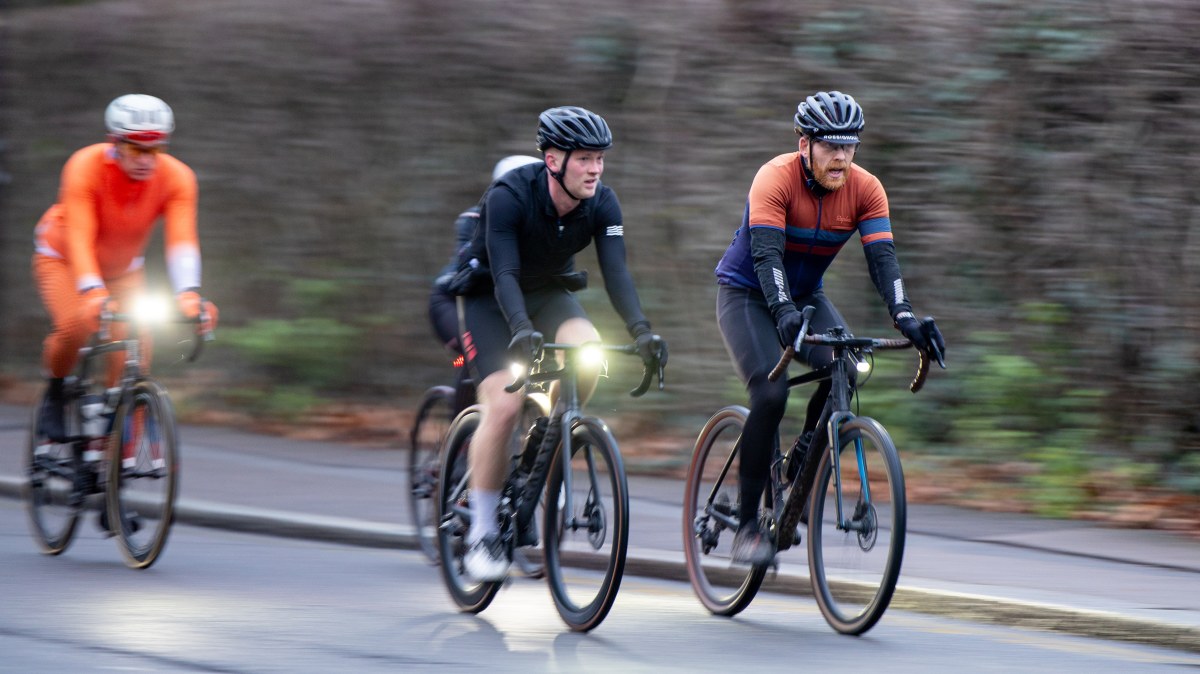
Cycling has never been easy in London. From fighting for space with cars and buses to dodging pedestrians who cross the street without looking, it has always been a white-knuckle experience.
Sir Sadiq Khan, the mayor of London, has introduced measures to make the city more cycle-friendly, including 20mph speed limits for cars in the centre of the city and the creation of dedicated bike lanes — and this has made a difference.
However, it remains a constant battle for cyclists to find a place for a decent place to ride for exercise in a city of ten million people.
For many cyclists, myself included, Regent’s Park in central London is a haven for an early morning ride and a quicker alternative to the longer weekend rides out of the city.
Yes, there is Richmond Park, in southwest London. But you have to fight through heavy traffic for the best part of an hour from central London to get there. Other green spaces in the centre of town, such as Hyde Park and Battersea Park, have dedicated cycle paths but those are more for the casual rider than for any meaningful exercise.
You can also cycle on the roads around Hampstead Heath — encountering some of the few hills in London — but you might want to pop a Xanax before confronting the potholes and traffic through Highgate or Kentish Town.
There are already five traffic lights on the 2.7 miles of the Outer Circle at Regent’s Park, which means any law-abiding cyclist is forced to slow down almost as soon as they get started. The park’s Inner Circle, a 0.65-mile loop, is surprisingly free of traffic lights but so short it is akin to going around a hamster wheel.
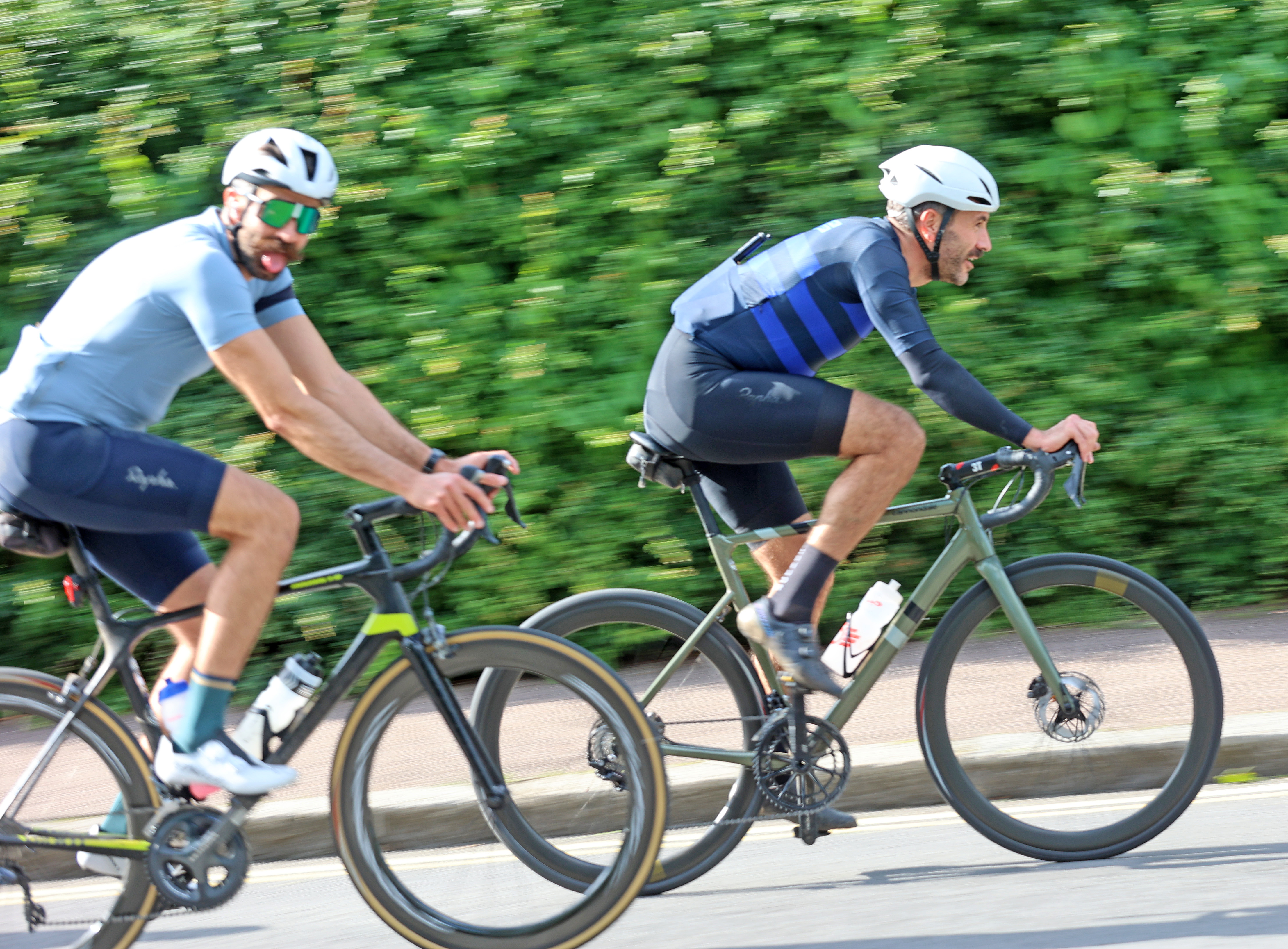
There will be eight sets of traffic lights on the 2.7 miles of the Outer Circle
PETER TARRY FOR THE TIMES
There is no doubt that the recent decision by the Royal Parks to install three new traffic lights on the Outer Circle — to ease concerns about pedestrian safety — will make it that much harder for cyclists who want to work up a sweat before breakfast. The traffic-calming measures, which will result in a total of eight sets of traffic lights on the Regent’s Park circuit, could well be the end for cyclists who use the popular park as their local workout.
But maybe that was the intention all along. Over-zealous cyclists at Regent’s Park have been in the headlines since the 2022 death of Hilda Griffiths, an 81-year-old grandmother who was hit and killed by a cyclist while attempting to cross the road at Hanover Terrace.
In recent years, there have been several other accidents and near misses between pedestrians and cyclists, who can reach speeds of up to 30mph while riding around Regent’s Park, especially in a peloton, or group of cyclists.

The park is relatively safe by central London standards and is a popular cycling destination
AARON CHOWN/PA
The fact that cyclists are not required to adhere to the 20mph speed limit and until recently could not be properly prosecuted over serious injuries to pedestrians exacerbated the situation.
The Royal Parks asked Strava, the fitness platform, to remove the Outer Circle as a Segment, suggested routes for which users can compare times, to discourage cyclists from attempting to beat their personal best times. Strava did not oblige.
The Royal Parks’ Darren Share heralded the new traffic lights as a practical way for pedestrians to cross into the park to ensure it was “safe and welcoming for everyone”. The additions also got a positive response from Cycling UK.
However, some cyclists have seen the lights as yet another challenge to their right to be on the roads. One said on the discussion website Reddit that people instinctively dislike cyclists using a road for sport in this way. “They dislike it on the inner and outer rings at the Regent’s Park, they dislike it at Richmond Park.” They added: “Trouble is, it’s a f***ing park, and parks are for recreation.”
• Unlit London parks ‘stop women running and cycling in winter’
Others are slightly more diplomatic. Sean Epstein, chair of Regent’s Park Cyclists — which represents more than 35 cycling clubs that use the popular central London park — says many Regent’s Park residents are vehemently opposed to members cycling on the Outer Circle. He sees the current proposal as the latest move in a multi-year campaign to displace cyclists from the park.
“There are very few places in London where it’s safe to cycle in groups of friends. [Regent’s Park] is one of them and attracts large numbers for that reason,” he said. “For many years, we have seen residents try to displace our community and this time is no different. We support safe pedestrian crossings, but the current designs seem purely anti-cycling. Why should the future of a prime central London park be dictated by a few hundred disgruntled residents?”

Traffic lights are a feature of cycling in London
ALAMY
Others suggest removing cars completely from the Outer Circle of Regent’s Park, making the well-worn argument that cars are more dangerous than cyclists. “It’s a colossal overreaction,” another cyclist said of the new traffic lights.
The Royal Parks has vowed to fine cyclists £50 if they fail to stop at traffic lights at Regent’s Park, but the sightings of enforcement officers are as rare as Sumatran tigers at London Zoo, near by.
The construction of the first new traffic light, near Hanover Terrace, is already under way and a temporary traffic light is in place. Two others — at Monkey Hill Gate, just to the west of London Zoo, and Chester Gate, on the eastern side of Regent’s Park — will be completed by the spring.
When The Times went for a ride around Regent’s Park this week, most cyclists ignored every red traffic light, including the new temporary light. Some cyclists stopped for a red signal on the Outer Circle — which takes your average middle-aged cyclist about nine minutes to complete — but the majority simply rode through.
As for pedestrians observed crossing the Outer Circle to enter or leave Regent’s Park, most did not bother using the traffic lights, choosing to cross the road wherever they wanted — a practice most Londoners appear to consider their birthright.
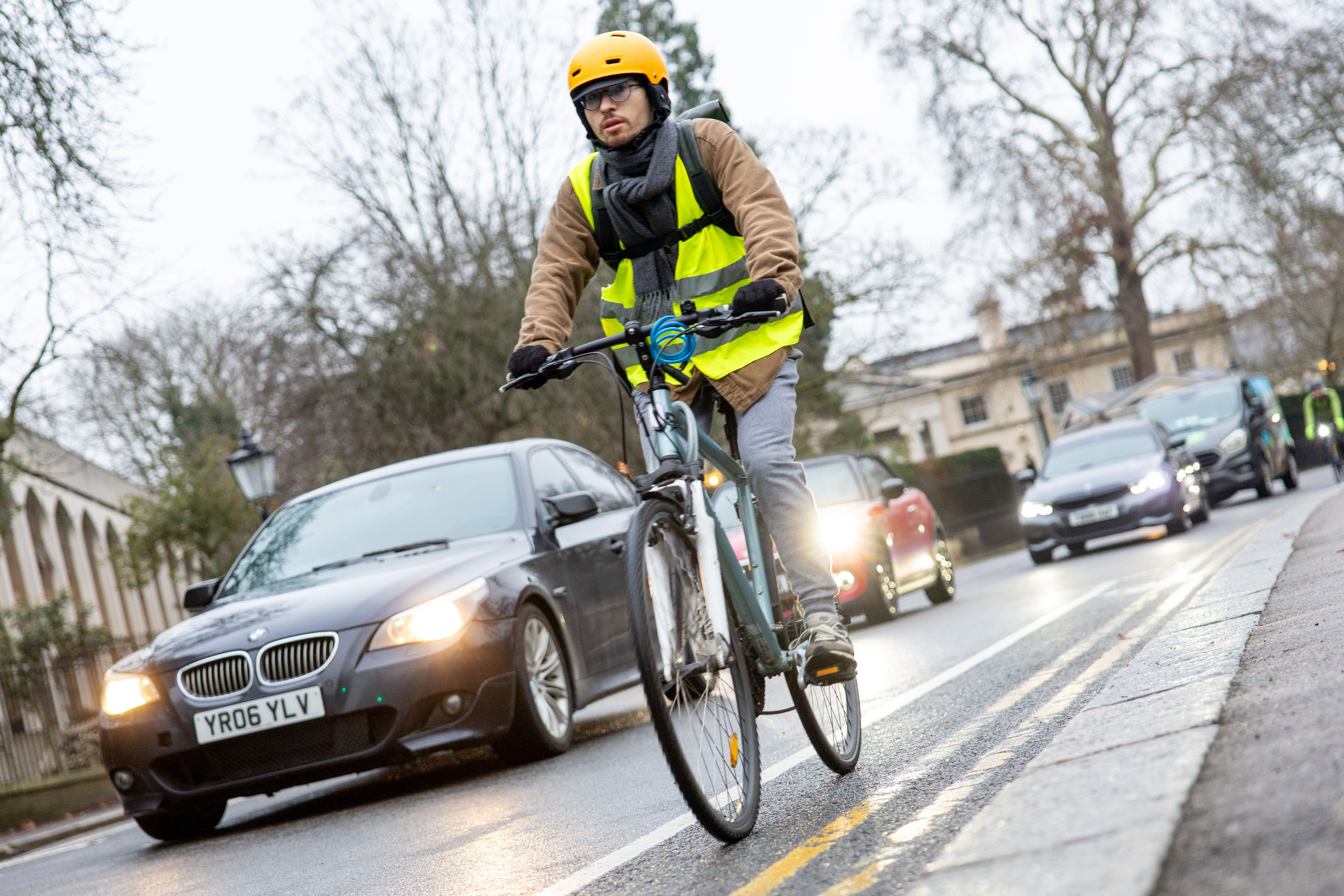
Cyclists point out that cars are more dangerous to other road users
TOBY SHEPHEARD FOR THE TIMES
As an Australian living in London, I miss the wide-open spaces, even in cities such as my hometown of Brisbane, where groups of cyclists meet most mornings to tackle the 25-mile “river loop” before breakfast. In Sydney’s Centennial Park — the closest inner-city comparison to Regent’s Park — there is a dedicated circuit for cyclists inside the park. Number of traffic lights? None.
Unlike most London locals, Australian cyclists instinctively stop at a red traffic light, even at 6am — no doubt a legacy of growing up in a former penal colony. Other major breaches of Australian cycling etiquette, including the alarming lack of bike helmets on casual cyclists and the wearing of headphones, are par for the course in London.
But unless you admit defeat and stick to a stationary bike in the gym, which is sometimes a more attractive option during London’s never-ending winter, it looks as if laps of beloved Regent’s Park will remain the best option, even if it will soon be more stop/start than usual.
But please, do not suggest speed bumps.