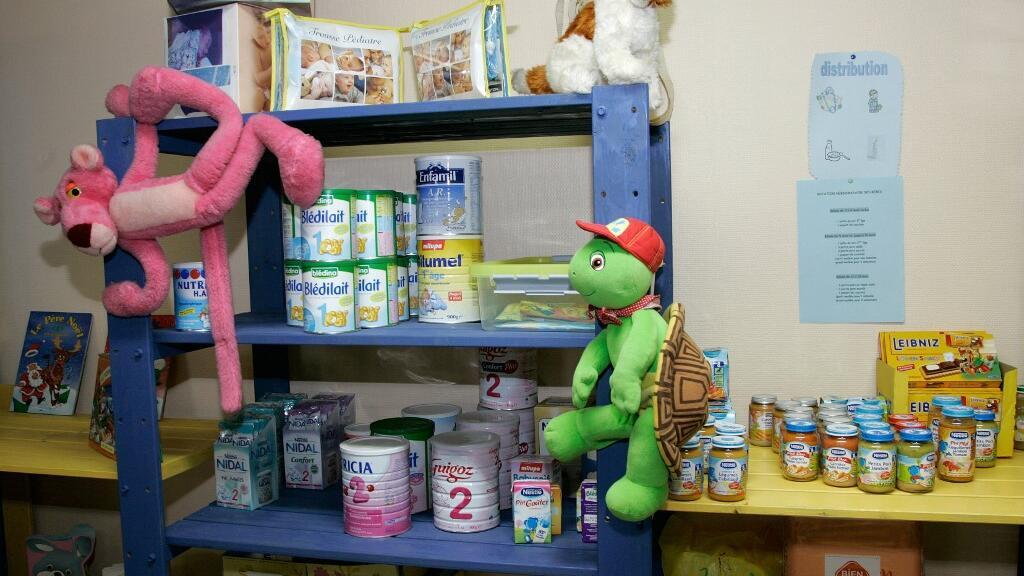
The infant formula industry has been rocked in recent weeks by several firms recalling batches that could be contaminated with cereulide, which can cause nausea, vomiting, and diarrhoea.
“Protecting the health of infants is the top priority for health authorities,” the French agriculture ministry said late Friday.
The new threshold will be 0.014 micrograms of cereulide per kilogram of body weight, compared to 0.03 micrograms per kilogram of body weight, it said.
“France has chosen to anticipate new scientific recommendations,” the ministry added.
The recall of potentially contaminated infant formula has heaped scrutiny on Chinese firm Cabio Biotech, the supplier of an ingredient used in infant formula and suspected of being tainted.
The European Commission has asked the European Food Safety Authority (EFSA) to establish a standard for cereulide in children’s products.
It will issue an opinion on 2 February.
Investigations underway
Several manufacturers, including giants like Nestlé, Danone, and Lactalis have issued recalls of infant formula in France and dozens of countries since December.
“Testing for bacteria of the Bacillus cereus family is routinely offered,” Francois Vigneau of lab testing firm Eurofins said last week. He added however that tests for cereulide were “not part of standard checks.”
“In the current context of milk recalls, this test is currently being requested because all stakeholders in dairy products in general, and infant formula in particular, are concerned about the situation,” added Vigneau.
French dairy giant Lactalis recalls baby milk over bacteria fears
French authorities launched an investigation into the deaths in December and January of two babies who were thought to have drunk possibly contaminated powdered milk.
At this stage investigators have not established a direct link between the symptoms and the milk consumed.
Swiss food giant Nestlé this week acknowledged that it waited days for a health-risk analysis before alerting authorities after detecting a toxin in its baby milk at a Dutch factory.
But in an open letter to campaign group Foodwatch France Friday it denied accusations of negligence.
French newspaper Le Monde reported Friday that traces of cereulide had been found in late November – 10 days before the first recalls of the product – because the company waited for a “health risk analysis” before informing regulators.
Nestlé said in a statement online that routine checks at its Dutch plant at the end of November 2025 had detected “very low levels” of cereulide after new equipment was installed in a factory.
It argued that in the absence of “European regulations on the presence of cereulide in food”, it had followed standard procedures.
Legal complaint
The company said they had acted in December and January as soon as they had identified there was an issue.
“We recognize the stress and worry that the recall has caused for parents and caregivers,” the company said.
French authorities open judicial inquiry into food poisoning of children
“To date, we have not received any medical reports confirming a link to illness associated with our products,” it added.
The company has said from the start of the affair that the recall stemmed from a “quality issue” and that it had seen no evidence linking its products to illness.
Friday’s open letter responded to claims by Foodwatch France, which a day earlier announced it was filing a legal complaint in the French courts against Nestlé on behalf of several families whose babies had fallen ill.
(with AFP)