
The Manchester music scene has warned it will become irrelevant if something is not done to give artists from different backgrounds equal opportunities
The Lottery Winners say we will lose out on huge amounts of talent if the industry isn’t equal(Image: Tom Oxley)
Greater Manchester artists are being forced into poverty by the glorified ‘playground of the wealthy’ music scene that is becoming dominated by southerners and the middle class.
That’s according to musicians and venue owners, who are speaking out against inequality following last week’s report that found the region’s art scene is ‘too posh’. The report stated that the sector is becoming dominated by members of the middle class who can rely on the ‘bank of mum and dad’ and called on Manchester to recognise class as a protected characteristic.
In light of the calls to support working class artists, musicians from the region have recalled years of struggling financially and say they fear Manchester is losing out on talent due to inequality.
Thom Rylance, from the band Lottery Winner, said: “As a working-class band from Greater Manchester, the idea that class should be treated as a protected characteristic really resonates with us. Not because we want special treatment, but because access has quietly become unequal. Talent is everywhere, but opportunity isn’t, and the arts should be one of the few places where background doesn’t decide how far you’re allowed to go.”
He described years spent touring on a shoestring, and how the lack of a financial safety net made everything harder. He said: “There were definitely moments where it felt like we were doing everything right, but without the safety net of money or connections it just took longer. You don’t realise how much the ‘bank of mum and dad’ helps until you don’t have it. If the industry only works for those who can afford to take risks for free, then we lose huge amounts of talent.

“If you can’t afford to fail for a few years, it’s incredibly hard to stay in the game long enough to break through.”(Image: Tom Oxley)
“This isn’t about jealousy or being angry at people who grew up more comfortably. Plenty of them work incredibly hard and deserve their success. It’s about recognising that not everyone starts from the same place, and if the industry only works for those who can afford to take risks for free, then we lose huge amounts of talent.
“That financial struggle is still very real for young Northern musicians. Unpaid gigs, low-paid early careers, and the expectation that you’ll somehow subsidise your own path shuts a lot of people out before they even get started. If you can’t afford to fail for a few years, it’s incredibly hard to stay in the game long enough to break through.”
Rylance welcomed initiatives like the Co-op’s plan to fund creative apprenticeships, saying paid opportunities, mentoring, and practical industry knowledge would have made a massive difference when they were starting out.
He said: “Milestones like playing a stadium show in Leigh mean so much. It feels like proof that working-class bands can still smash through the ceiling, but it also shows why we need to make sure the door stays open for the next generation.
“That’s why we take time out to go into local schools and talk to kids about the jobs that exist in music and the arts, not just being on stage, but everything around it too. A lot of young people don’t see those paths as options for them, and sometimes all it takes is someone saying, ‘this is possible, and here’s how people actually get there.’”
Grassroots venues are feeling the strain too, according to Jonny Booth, Venue Manager at The Castle Hotel and Gullivers. Booth described how rising costs and the crisis facing grassroots venues make it harder to support underfunded artists, resulting in the loss of ‘vital voices’ being heard due to price increases.
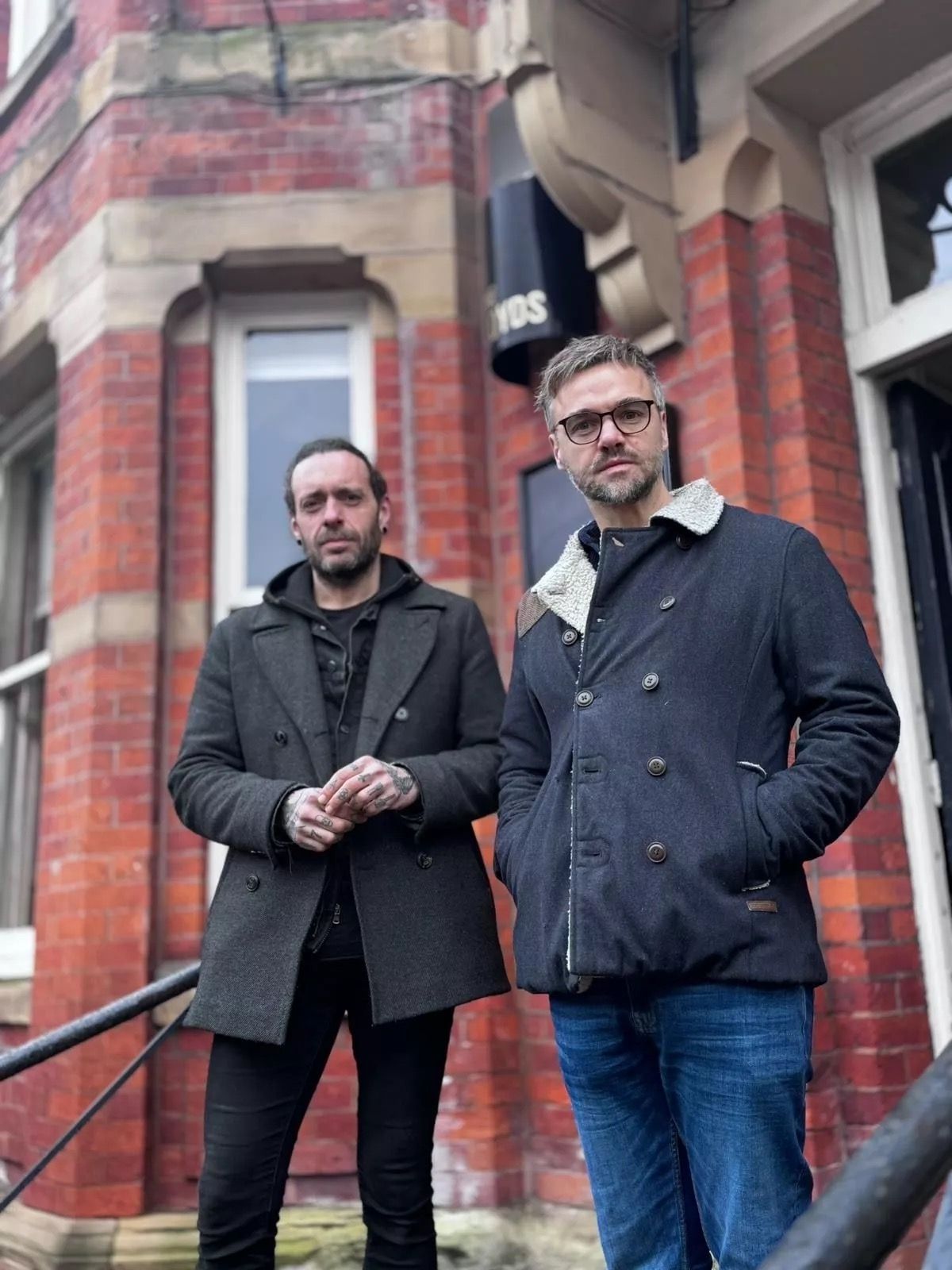
Jonny Booth and co-owner Rupert Hill, known for restoring historic Manchester venues like The Castle Hotel and Gullivers(Image: MEN Media)
He said: “Once art becomes heavily monetised it ceases to have any value. If art is a lifestyle choice for rich people, it will never capture the zeitgeist or say anything worth listening to. We help where we can by keeping costs low and offering free rehearsal space, but many can’t even afford studio or rehearsal space to put a project together in the first place. We’re losing vital voices as a result.
“For many people, choosing art goes hand in hand with choosing poverty. That will always be a barrier to success because you just don’t have access in that situation. Privilege has nothing to say for itself.”
He added that in order to hear real and marginalised voices, experiences and commentary on our culture – ones that mean something – then the arts need to stop being a “playground of the wealthy”.
The Class Ceiling report released earlier this week is the result of a review into the arts sector in Greater Manchester, led by the chancellor of the University of Manchester, Nazir Afzal, and Avis Gilmore, former deputy general secretary of NEU.
It says the rungs of the ladder that led to stardom for those in the region such as Oasis’ Gallagher brothers, comics Peter Kay and Caroline Aherne or poet John Cooper Clarke, are no longer there.
For Gavin Sharp, CEO of Band on the Wall, his own journey coming from a northern town has allowed him to witness the importance of supporting working class talent. He credits his progressive state school with a strong creative focus for helping him and his classmates achieve success in both arts and sciences – and states that the current education system still holds back working-class kids.
He said: “It’s simple – we still have a historic two-tier education system that is designed to systematically under-educate a large proportion of the population from an early age and purposefully stifle creativity and we, as a sector, are now dependent on the (often eroded) enthusiasm of an ever diminishing cohort of teachers in state schools trying to do something better for their students, despite the state failing to meaningfully resource them.

Gavin Sharp, CEO of Band on the Wall(Image: Manchester Evening News)
“For a small first world country in rapidly developing world built on creative thinking, we have for decades missed the opportunities provided by the potential of our own majority and incredible and richly diverse population, often demonstrated in research and in comparisons to alternative systems in other countries.”
Sharp said the solution is to reduce class sizes, educate children to think creatively, and resource schools properly, which will empower students and give them the confidence to develop their creative skills.
He said: “Unless we do something about the education our kids are receiving and the resources provided in schools, we are going to become irrelevant, creatively, culturally, and ultimately, economically, and the arts will continue to attract only those who have had the benefit of a ‘top-tier’ education.”
Co-chairman of the review, Nazir Afzal, who is also the chairman of the Lowry theatre, said this was an opportunity for the region to lead the way on a national challenge and build a better sector “where talent is discovered everywhere, nurtured properly, paid fairly and allowed to rise”.
Gary Briggs, Director of Factory Academy, which operates alongside Factory International to address skills shortages in the creative industries, said that the review’s findings were unfortunately no surprise, but they were glad to see the issues being recognised.
He explained that Factory Academy was founded with a mission to tackle underrepresentation in the arts, and that its industry-focused training had already connected with over 2,000 Greater Manchester residents, especially those from diverse and working-class backgrounds, to create access to paid work and career development.
He said: “The findings of the review unfortunately come as no great surprise, but we are glad to see that they are being recognised. When Factory International was founded, a significant part of our mission and work was to tackle underrepresentation in the arts, therefore we have a whole arm of our work dedicated to doing so. Factory Academy’s industry-focused training is proven to create access to paid work and career development opportunities, for the widest possible range of people, and particularly those from diverse and working-class backgrounds who have historically been excluded from the industry.
“We offer industry-focused training, proven to create access to paid work and career development opportunities and 2000 Greater Manchester residents have connected with the academy so far over a range of courses, workshops, college enrichment programmes, one-to-one mentoring, skills sharing and networking events which provide an essential range of support. One of the results of this work is that many Academy graduates now work at Factory International, and our workforce is far more representative than the industry norm.”
The organisation also supports artists’ development through programmes like Artist Takeovers and Factory Sounds, which have provided over 100 Northern artists with significant opportunities, including national commissions and international residencies.