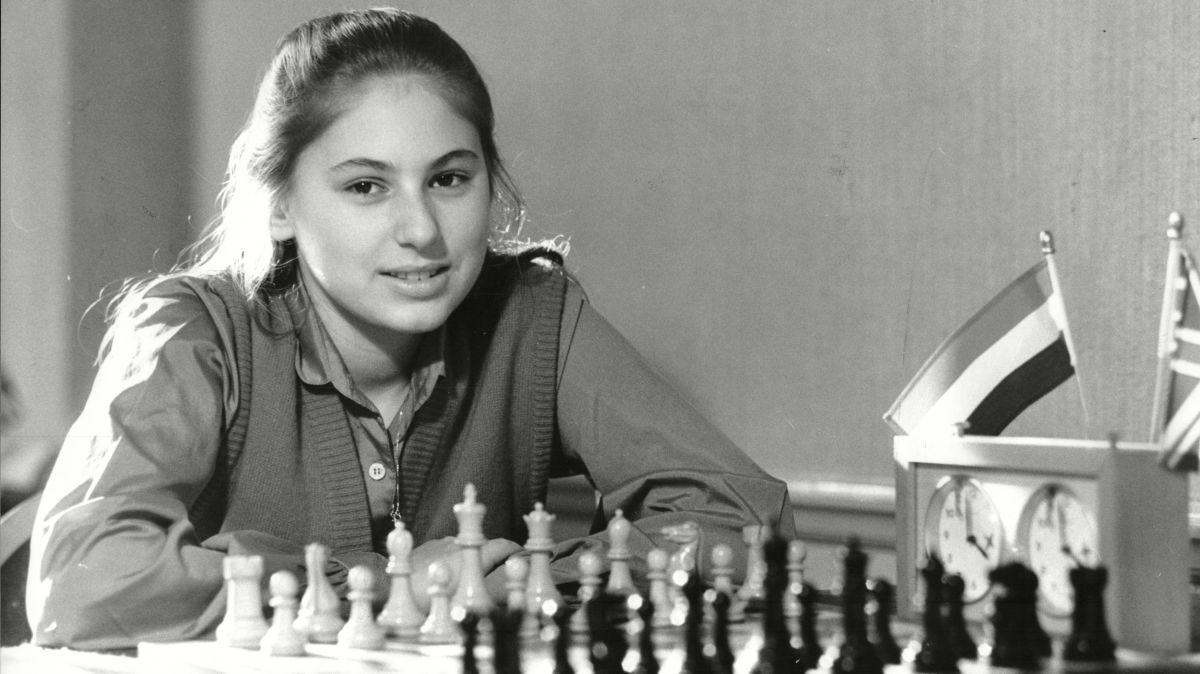
Well, it’s about time. In 2020 Netflix made a brilliant move with its drama The Queen’s Gambit, about Beth Harmon, a woman who became the world’s best chess player. It was fiction from first to last. Yet there really is a woman who rose close to the very top of a game completely dominated by men. Her name is Judit Polgar, and finally Netflix has made a documentary about the Hungarian genius.
Except in the film, Judit, who turns 50 this year, says: “I never felt myself to be a genius. It was the work and dedication that came from my parents.” I got a sense of that when, in 1988, I travelled to visit the family in their small, damp apartment in Budapest (still behind the Iron Curtain). Judit, then 12, had a higher chess rating than anyone of either sex had achieved at such an age. When I, a mere English county-standard player, asked for a game, her father Laszlo, by way of demonstration, instructed her to play me “blindfold”, with her back to the board. I stared at her ponytails while she remorselessly annihilated me.
Her two elder sisters, Susan and Sofia, could have done the same. All were part of an experiment by their educational psychologist father, who had long been convinced that what we call genius could be taught. What better way to demonstrate this than turn three daughters into world-class practitioners of a pursuit which was a purely male domain at the top level? Somehow, he and his wife Klara managed to defy the authorities and home educate all of them with chess as the sole subject (besides Esperanto, which they all speak). The grim and unsmiling Laszlo explains in the documentary how he hired chess tutors who would work in three shifts a day, from morning to night. Or as Judit puts it: “There was no relaxation, no weekends. I started my training at the age of five and every day was work.”
Susan, seven years older than Judit, became the strongest female player in the world before being comprehensively overhauled by her youngest sister. Sofia, the middle sister, won a tournament in Rome in 1989, annihilating a master-strength male field, but abandoned the game. As she says in the film: “It took my whole life up. The 64 squares of the chessboard, there’s more to life than that.”
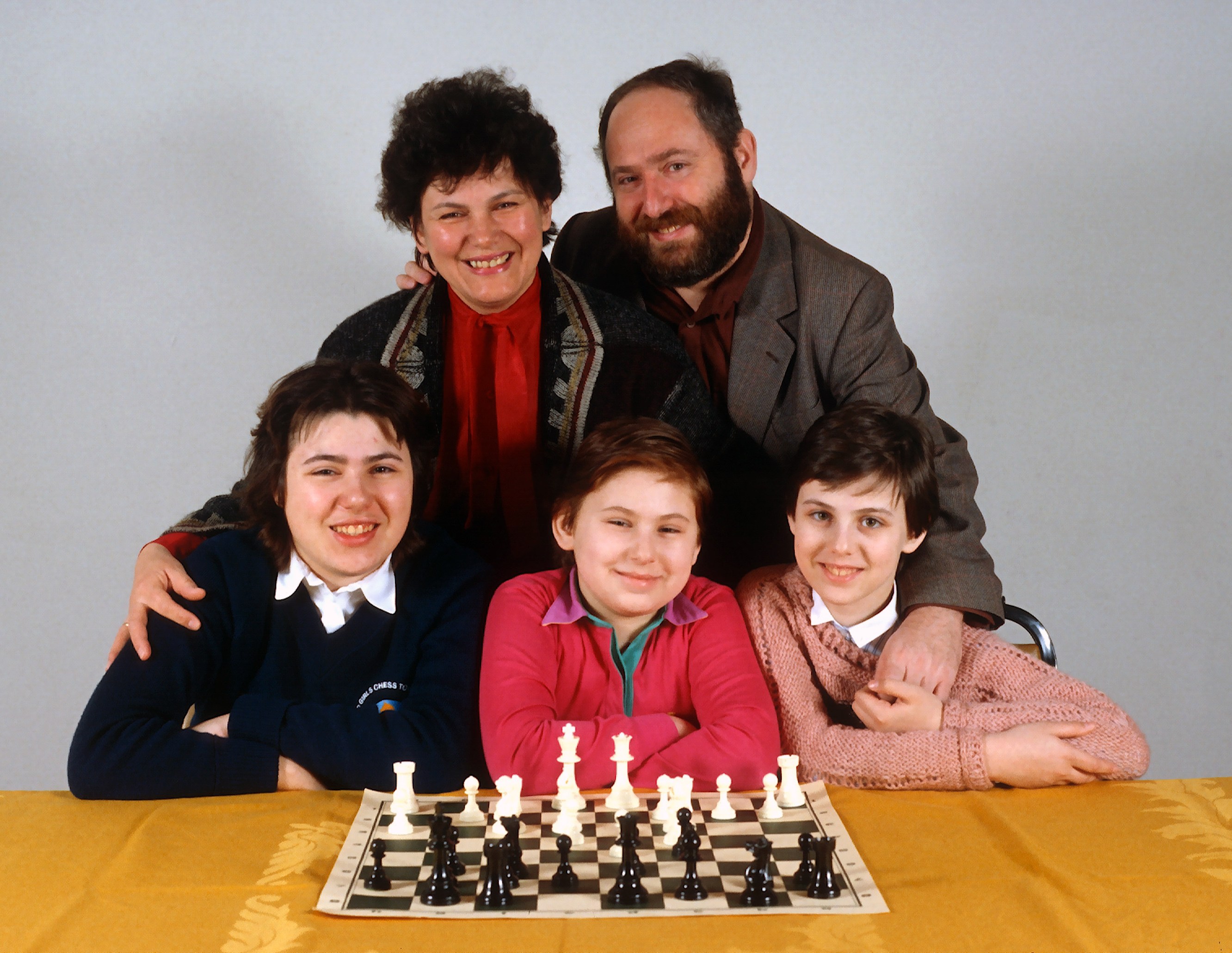
Klara and Laszlo Polgar in 1992 with, left to right, Susan, Judit and Sofia
YVONNE HEMSEY/GETTY IMAGES
Judit was much more motivated. When I watched her in play and spoke to her afterwards, at a tournament when she was 11, I noted: “She has killer eyes. The irises are a grey so dark they are almost indistinguishable from her pupils. Set against her long red hair, the effect is striking. Her favourite English word, emphasised with a flash of her eyes, is ‘crushed’, as in: “He played mistake and then I kraarshed heem.” In the documentary, she recalls what I had witnessed in her childhood: “I was a killer … The feeling I got from winning was exceptionally powerful.”
By 2003, when she was in her late twenties, Judit reached her peak, becoming the world’s eighth highest-ranked player. To get a sense of just how astounding this is, bear in mind that before Judit, no woman had even got into the top 200 on the modern official ranking lists. Even now, the world’s strongest active female player, China’s grandmaster Hou Yifan, a prodigy who became women’s world champion at the age of 16, lies behind more than 120 men in the overall rankings.
In 2012 I visited Judit at her Budapest home, where she lives with her husband Gusztav and children Oliver and Hanna. She said she had quit the game for two years just after reaching her peak rating. “We wanted to have kids earlier. But I had a miscarriage. And funnily enough after that I had my best ever tournament result. So it was a terrible time personally but a great time professionally. It was then that I decided to stop playing … I thought, perhaps if I stop playing then I will be able to get pregnant again.”

She did realise one of her greatest ambitions in 2002, when, at the 15th attempt, she finally won a game against Garry Kasparov, perhaps the best chess player of all time. (She was representing the Rest of the World against Russia). The documentary revolves around her struggle to compete against that terrifying force: as Judit describes it, playing Kasparov, “you had the feeling he wants to eat you alive”.
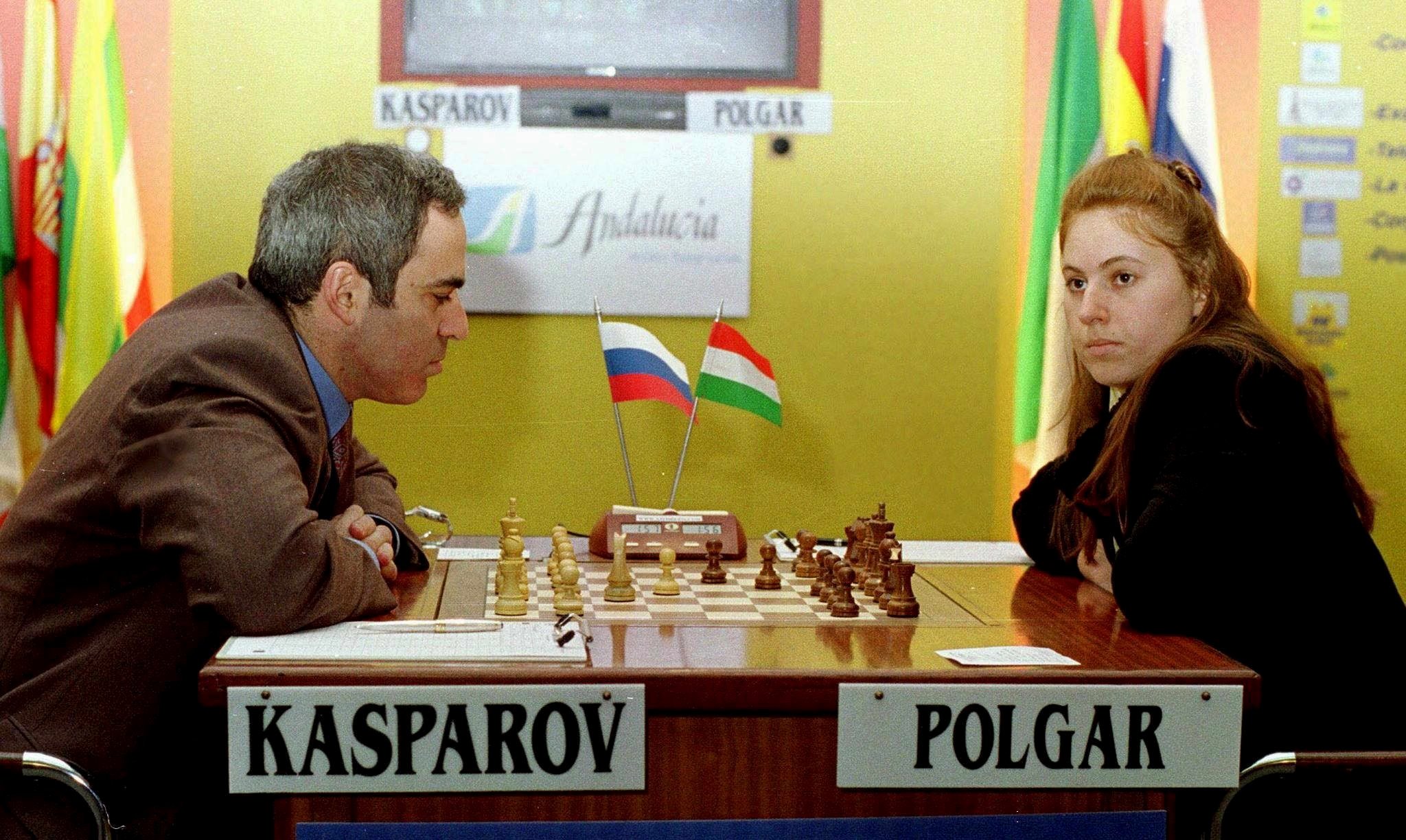
Judit Polgar takes on Garry Kasparov in Spain, 2001
ENRIQUE ALONSO/EPA/SHUTTERSTOCK
In the film, Laszlo’s comment on this high point in his daughter’s career is characteristic: “It was a fabulous achievement and that’s why I felt our experiment worked. But you can only say that Judit was one of the best chess players in the world. To be number one, she would have had to work three or four hours a day more.” He goes on to express his regret that all his daughters’ husbands had “taken them in a different direction”. That is, spending time on something other than chess and the full validation of his “experiment”.
As a friend of Judit’s remarks in the film: “The fact that with this background Judit is such a very normal pleasant person is something like a miracle.”
And she is, as I rediscovered when taking part in an exhibition event in Budapest in 2024, part of the annual Judit Polgar’s Global Chess Festival. She was to play against eight teams in a simultaneous display; I was on one of them, representing chess writers. Cheekily, I asked if I could smuggle on to our team the nine-year-old English prodigy Bodhana Sivanandan, who was there representing England in the Women’s chess Olympiad. No problem, said Judit.
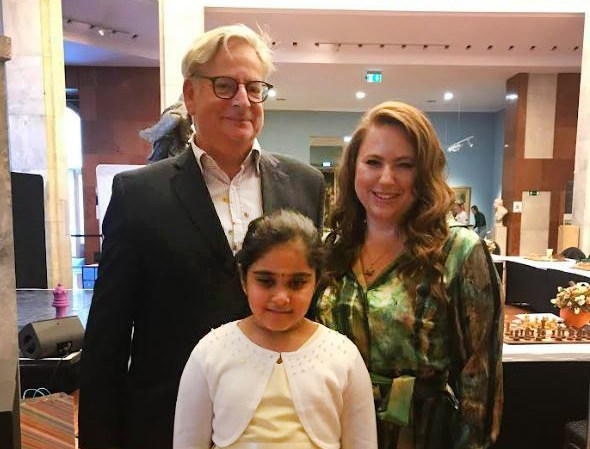
Dominic Lawson, Bodhana Sivanandan and Judit Polgar in Budapest in 2024
At one point in our game, Bodhana came up with a fiendish little trap. As Judit approached our board to consider her next move, we tried to hide our excitement. Judit looked at us, then at the board. Of course, she saw it, and laughed: “Such innocent faces!”
What a woman.